
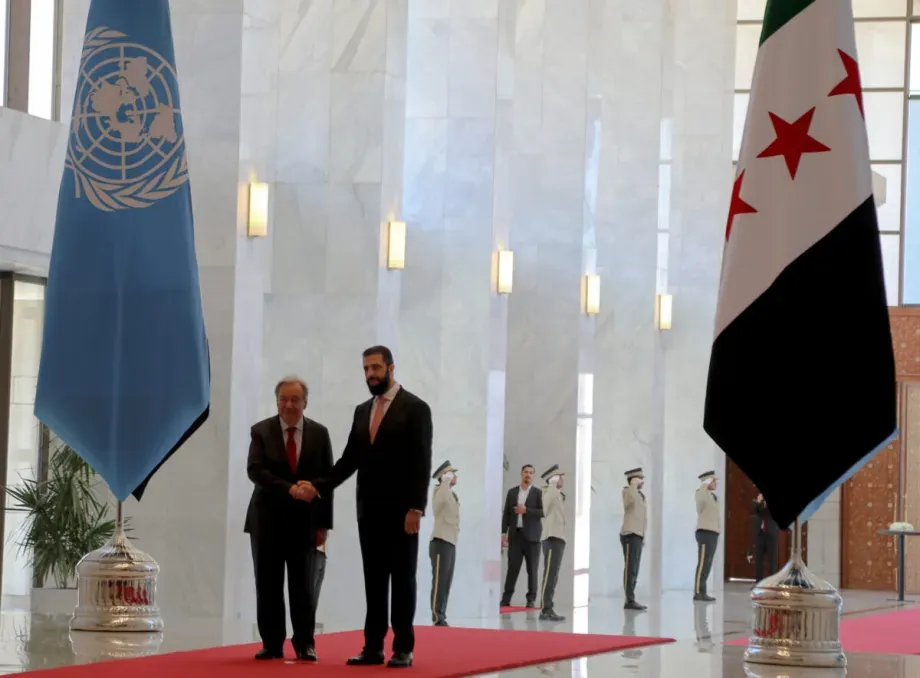
On Saturday, UN Secretary-General António Guterres toured the Sednaya prison outside Damascus. The facility functioned as a torture center under Bashar al-Assad until his government collapsed in December 2024. Today, Syria faces a tense transition. They’ve got decades of violence they are still recovering from.
And the trip marks a historic diplomatic shift. A United Nations chief hasn’t visited the nation since 2009. Accompanied by Syria’s Permanent Representative to the UN, Ibrahim Olabi, Guterres walked through the empty cell blocks. Two years ago, opposition fighters captured the complex. They freed the remaining political prisoners on that exact day.
The compound stands empty.
Guterres addressed the atrocities directly. In a Sunday statement, he said the site demonstrated “how horrendous the oppression was during the previous Syrian regime.” For the country to heal, the nation must build a stable future. He urged global allies to support the country’s recovery and stabilization efforts.
The secretary-general kept a tight schedule across the capital. At the People’s Palace, he met with Syrian President Ahmad al-Sharaa, who recently confirmed security agreement talks. From there, Guterres conducted talks with members of transitional commissions at the Tishreen Palace in Damascus. Those groups include the National Transitional Justice Commission and the National Commission for Missing Persons. Later in the day, he held a separate session with People’s Assembly Speaker Abdul Hamid Al-Awak.
Geopolitics extend beyond domestic recovery. To monitor the Syria-Israel ceasefire, Guterres planned to inspect the UN Disengagement Observer Force in the occupied Golan Heights. He’ll submit a formal report to the Security Council. The dossier outlines recent violations within Syrian territory. So the international body demands strict adherence to borders. The UN reaffirmed its commitment to Syrian sovereignty as the new administration attempts to govern their land.