
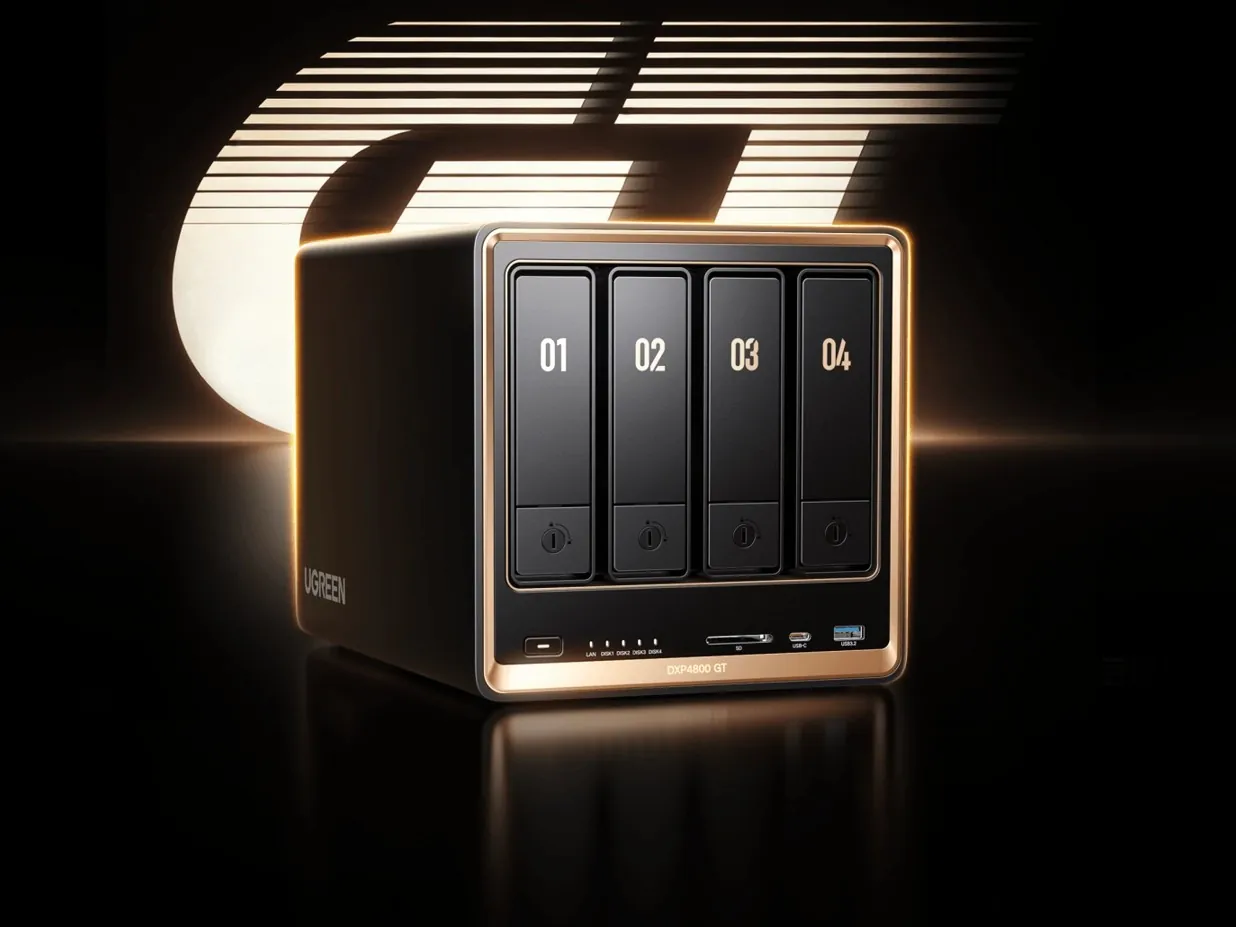
Network storage manufacturer Ugreen just initiated the first major architectural split in its product lineup. The company released two new network-attached storage models—the four-bay DXP4800GT and two-bay DXP2800GT—that abandon Intel processors in favor of the AMD Ryzen Embedded R2514 CPU. This hardware shift clearly segments Ugreen’s offerings between mainstream home media servers and high-bandwidth storage vaults intended for heavy data transfers.
The move replaces the Intel Pentium Gold 8505 chip found in the older Plus models. While losing the Intel architecture means sacrificing native Quick Sync capabilities, Ugreen compensates by equipping the GT series with dual 10GbE networking ports powered by Aquantia controllers and support for ECC memory. Buyers looking to upgrade have a short window to secure launch pricing, as Ugreen is running a promotion that expires tomorrow, June 22.
What We Know
- The DXP4800GT drops from $660 to $525 using the promotional code DXP4800GT2.
- The two-bay DXP2800GT falls from $510 to $408 with the code 2800GTOFF3.
- Both new models feature 64GB of eMMC system storage and utilize DDR4 memory instead of the DDR5 found in the previous generation.
The transition to AMD hardware fundamentally alters how these machines perform in a home lab environment. According to the published hardware specification changes, the embedded Ryzen processor provides the necessary PCIe lanes to drive the Marvell AQC113 network interfaces at full speed. This raw network bandwidth appeals directly to independent reviewers and storage enthusiasts who move terabytes of data daily and prioritize network throughput over onboard computing power.
Why the AMD Swap Frustrates Media Server Enthusiasts
The decision to drop Intel processors creates a distinct complication for a vocal segment of the home server community. Users running media platforms like Plex and Jellyfin rely heavily on Intel’s Quick Sync technology for hardware-accelerated video transcoding. Because the AMD Ryzen R2514 lacks comparable native AV1 hardware transcoding, the new GT models are less efficient at converting high-resolution video files for remote playback.
To maximize the value of the new hardware, power users are already recommending software alternatives. Rather than relying on Ugreen’s default operating system, enthusiasts advise installing third-party platforms like TrueNAS or Unraid. These operating systems allow users to fully exploit the dual 10GbE ports and ECC memory, turning the GT series into pure, high-speed network storage vaults rather than all-in-one media centers.