
Remember when Windows 11 arrived and caused a stir? It promised better security, but only if your computer had a special TPM 2.0 chip. That requirement left millions of users out in the cold. Microsoft stood firm, making the chip a must-have for its new system. Now, it seems history is repeating itself. Canonical, the company behind Ubuntu, is bringing the same TPM technology to Ubuntu 25.10, which is set to launch soon.
This TPM integration won’t be mandatory for Ubuntu users, at least not yet. Instead, it’s a core part of a new feature for hardware-backed encryption. This news quickly made many users unhappy. They worry Linux is moving closer to restrictive standards it vowed to avoid for years. Ubuntu 25.10 is coming in October. It will also serve as the foundation for the next Long Term Support, or LTS, version.
You’ll find this new option during installation. It lets you encrypt your entire disk with TPM 2.0 support. This change aims to boost security, especially for businesses. Many companies need these types of hardware certifications to meet legal rules. Didier Roche, a developer at Canonical, confirmed that this feature will be optional. He also said it will not affect how you normally use Ubuntu.
If you choose not to activate it, your system will still work just fine. But the fact that it’s even in the installer has created some unease. Windows 11 taught us a tough lesson. What starts as an extra feature can quickly become a mandatory requirement. This new encryption tool relies on full disk encryption. When your computer starts up, the TPM chip checks to make sure everything is in order.
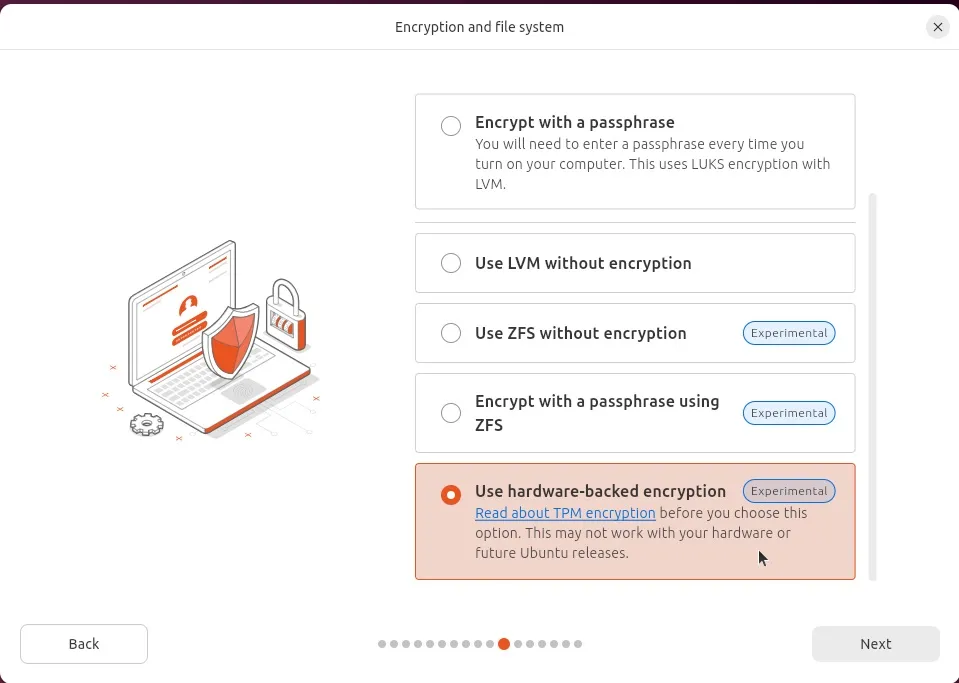
Ubuntu will also get a new panel within its security center. This panel will help you manage passwords. It will also assist in recovering access if you change computers or update your TPM. For now, this panel is still experimental. Your computer needs TPM 2.0 to use this feature. It’s not recommended for computers used for work. It might cause errors, problems with some drivers, or other issues.
Canonical explains this move with three clear goals:
- To meet the security demands of business environments.
- To align with current Linux development trends that push for stronger standards.
- To get ready for working with hybrid systems that already include hardware security modules.
For businesses, this is good news. But for many everyday users, including TPM feels like the opposite. They see it as a step towards a more closed system. They worry that hardware will limit their choices once more, even if the feature remains optional for now.