
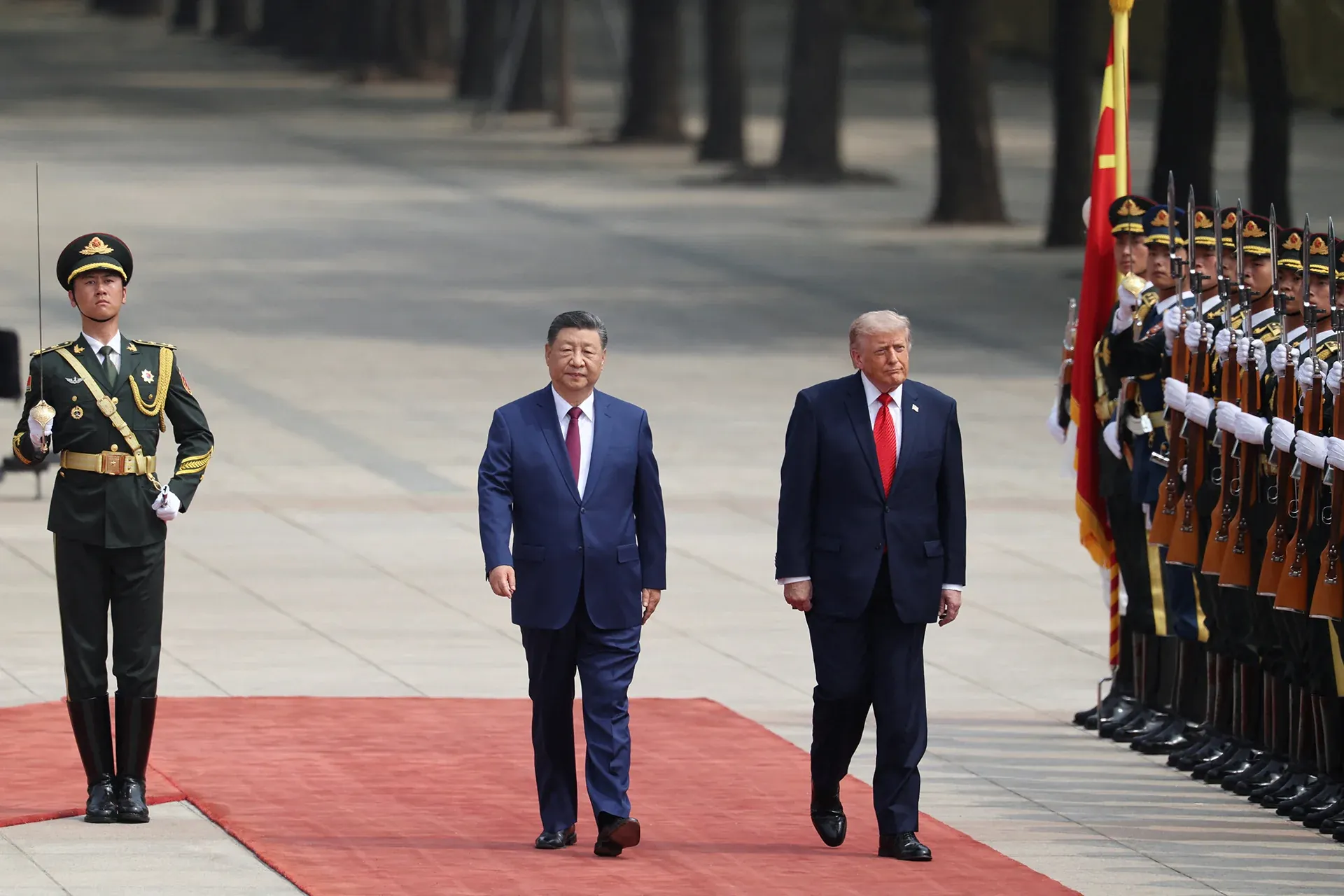
President Donald Trump received a formal state welcome in Beijing on Thursday, initiating talks with Chinese President Xi Jinping regarding the ongoing 75-day US-Iran war. The summit focuses on the security of global energy supplies as the conflict continues to disrupt shipping in the Persian Gulf.
Following the initial meetings, the White House released a diplomatic readout outlining shared principles between the two leaders. The statement indicated a mutual consensus that the Strait of Hormuz must remain open to international shipping, though no formal treaty or binding enforcement framework was announced.
The reception outside the Great Hall of the People featured a military honor guard and a 21-gun salute. During unscripted remarks at the event, Trump praised his counterpart. According to a report by the BBC, Trump referred to Xi as a “great leader” and told reporters the bilateral relationship is going to be “better than ever before.”
The diplomatic discussions heavily featured maritime security. A statement from the White House confirmed the leaders discussed opposition to the militarization of the waterway. The US administration also noted that Xi expressed opposition to Iranian efforts to charge a toll for transit through the strait.
The White House readout further stated the two nations discussed the principle that Iran must not possess nuclear weapons. Before arriving in Beijing, Trump publicly rejected an Iranian counter-proposal to his peace plan, calling their demands “totally unacceptable.” The administration faces domestic economic pressure to secure regional stability as US inflation sits at 3.8%.
How the Strait of Hormuz Blockade Defines the US-China Talks
The diplomatic focus on the Persian Gulf highlights China’s reliance on Middle Eastern energy imports. The White House summary indicated that the talks included discussions regarding China potentially exploring American oil imports to reduce its exposure to the naval disruptions. This marks the first time a sitting US president has visited China in nearly nine years, shifting the immediate focus of bilateral relations from trade disputes to global maritime security.