
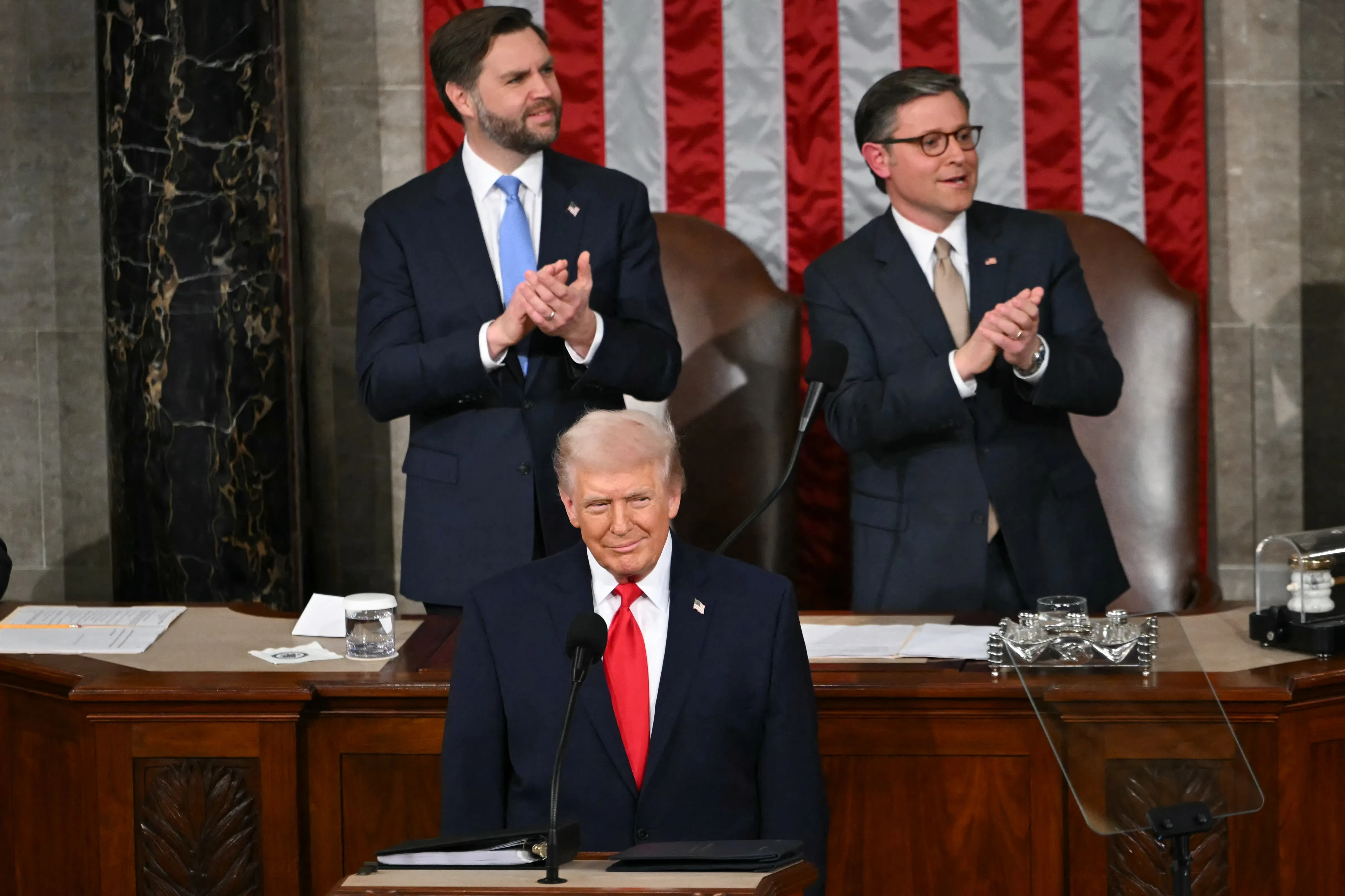
President Donald Trump’s ongoing pressure campaign against major media networks escalated sharply ahead of the 2026 midterms. The president demanded that ABC and NBC lose their broadcast licenses after both networks refused to air his Thursday evening primetime address on their live television channels. Network executives instead relegated the speech, which focused heavily on election integrity claims and the SAVE Act, strictly to their digital streaming platforms.
The decision to bypass traditional cable and over-the-air feeds entirely for a presidential address marks a sharp operational pivot for the broadcasters. White House press secretary Karoline Leavitt previously urged the networks to carry the 9:00 p.m. address live across all primary channels. They declined. ABC News Live and NBC News NOW carried the feed digitally with special reports appended afterward.
Key Details
- Digital Exile: ABC and NBC restricted the Thursday night broadcast entirely to digital streaming feeds, preempting no regularly scheduled television programming.
- The Content: The address centered on election security initiatives and demands to pass the SAVE Act.
- Political Resistance: Senate Minority Leader Chuck Schumer publicly rejected the legislative demands during the broadcast, calling the SAVE Act “dead on arrival.”
- Deplatforming Push: Rep. Alexandria Ocasio-Cortez (D-NY) actively encouraged network executives to deplatform the speech prior to broadcast.
Trump renewed the threat on Friday to revoke the broadcast operations of both networks over their programming choice. The administration views the streaming-only decision as a deliberate suppression of executive communication. Broadcasters maintain they have editorial discretion over how and where to distribute unclassified political addresses outside of national emergencies.
The regulatory mechanics required to execute Trump’s threat are complex but actively shifting. Broadcast television licenses are issued to individual local stations, not national corporate networks. However, the Federal Communications Commission (FCC) holds the authority to review the corporate parents that own and operate major local affiliates in primary media markets.
The FCC’s Regulatory Pivot Under Brendan Carr
This conflict does not exist in a vacuum. The FCC, under Chairman Brendan Carr, has already initiated unprecedented regulatory actions aligned with the administration’s grievances regarding public interest standards. The agency fundamentally altered the traditionally procedural license renewal process for media conglomerates earlier this year.
In April 2026, the FCC forced Disney’s ABC to apply for early license renewals following a clash over late-night programming. The public comment period for ABC’s early renewal applications remains open until August 5. That ongoing review provides a direct regulatory mechanism for the administration to exert immediate pressure on Disney’s broadcast assets.
The agency is aggressively shifting its enforcement mechanisms. Instead of standard technical compliance checks, the FCC now utilizes equal employment opportunity (EEO) obligations and diversity, equity, and inclusion (DEI) probes as structural tools to challenge broadcast licenses. This operational shift forces network executives to navigate a hostile compliance environment where routine programming decisions can trigger direct challenges to their local station licenses.