
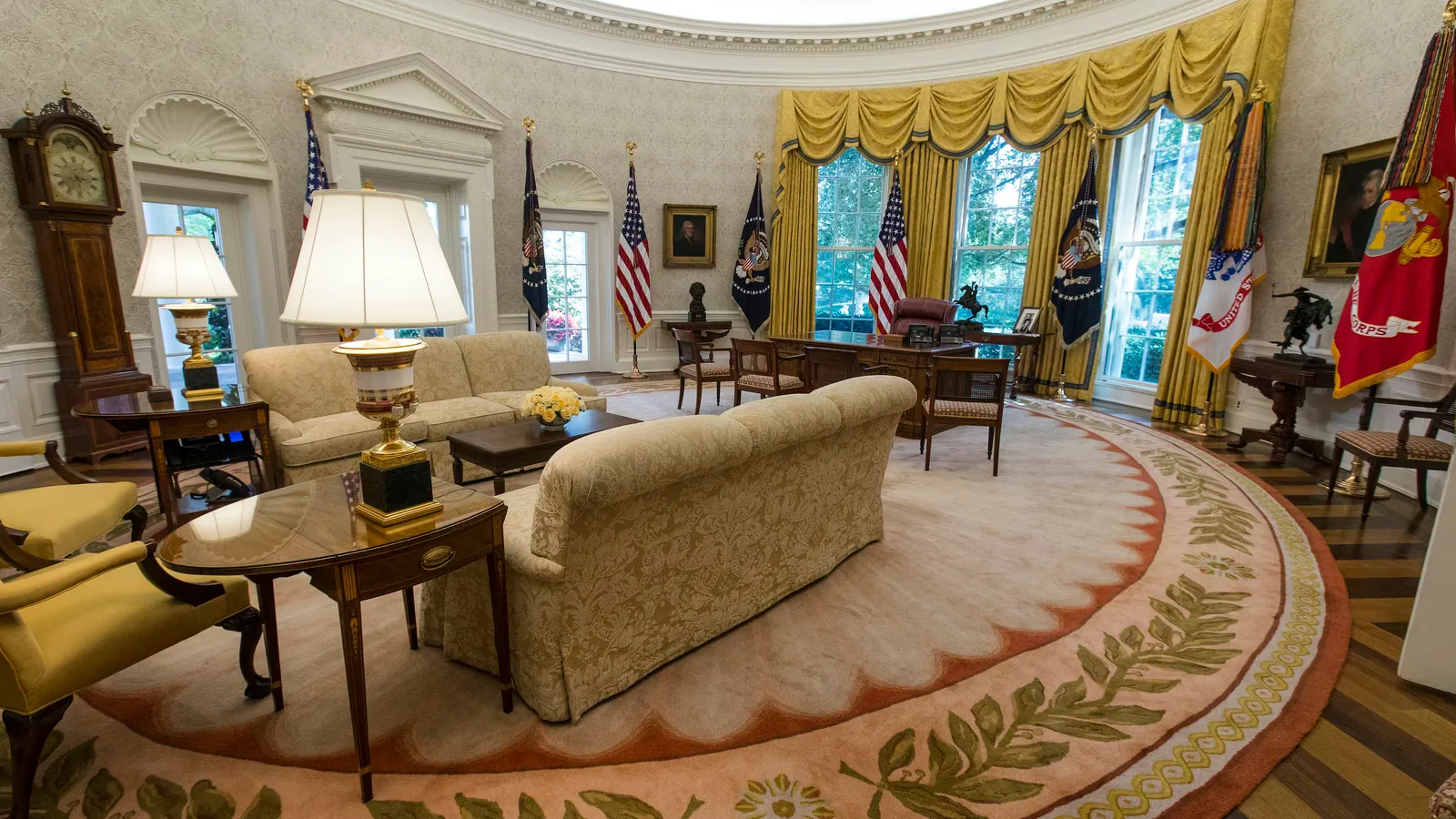
President Donald Trump abruptly canceled a scheduled Thursday afternoon signing ceremony for a highly anticipated executive order on artificial intelligence, halting a federal push to regulate the next generation of digital technology. Speaking to reporters in the Oval Office, Trump stated that he postponed the measure because he disliked specific elements of the draft proposal. The sudden delay unfolded against a backdrop of escalating technical friction between national security agencies and Silicon Valley developers over the computational capabilities of advanced software systems.
The decision to scrap the White House event occurred just hours before prominent tech industry executives were slated to arrive for the official signing. Among those scheduled to attend was Anthropic CEO Dario Amodei, whose company has been at the center of recent policy discussions regarding frontier AI systems. Trump emphasized that his primary concern was safeguarding American corporate dominance in the global marketplace, declaring that he refused to let federal oversight stall domestic job creation or market expansion.
Maintaining the Global Technological Lead
According to an official account of his Oval Office remarks, Trump made it clear that geopolitical competition heavily influenced his decision to pause the framework. “We’re leading China, we’re leading everybody, and I don’t want to do anything that’s going to get in the way of that lead,” Trump said during the briefing. He further clarified his stance by stating that he does not want the federal government to act as a “blocker” to the industry, pointing directly to the significant volume of employment opportunities currently being generated by tech firms.
The draft executive order was designed to establish a voluntary 90-day vetting protocol. Under this framework, federal agencies would have gained the authority to evaluate highly advanced AI models for systemic national security and cybersecurity vulnerabilities prior to their public rollout. However, the administration’s internal pivot reflects a delicate balancing act between commercial freedom and defense infrastructure protections.
The Battle Over Frontier Infrastructure Vetting
The administration’s push for a structured vetting protocol was originally catalyzed by specific technical alarms raised by intelligence officials. Federal agencies had grown increasingly concerned over the advanced coding and algorithmic capabilities of the newest generation of private software models. Security analysts warned that these systems could potentially be exploited by foreign adversaries to launch sophisticated cyberattacks against critical infrastructure, including regional community banks and healthcare networks.
Had the document been signed on Thursday, it would have instituted a multi-agency defense framework. The order was written to empower the National Security Agency to conduct classified technical evaluations of frontier models, while simultaneously directing the Department of the Treasury to set up a dedicated cybersecurity clearinghouse. This clearinghouse was intended to share real-time software vulnerability data with vital financial and civic sectors to prevent widespread digital breaches.
Industry insiders note that the regulatory debate has intensified following recent private sector product launches. Advanced models have demonstrated an unprecedented capacity to chain together complex software exploits autonomously. While national security teams viewed these capabilities as an urgent risk to public infrastructure, the decision to hold back the executive order indicates that economic competition with foreign rivals remains the administration’s top priority.