
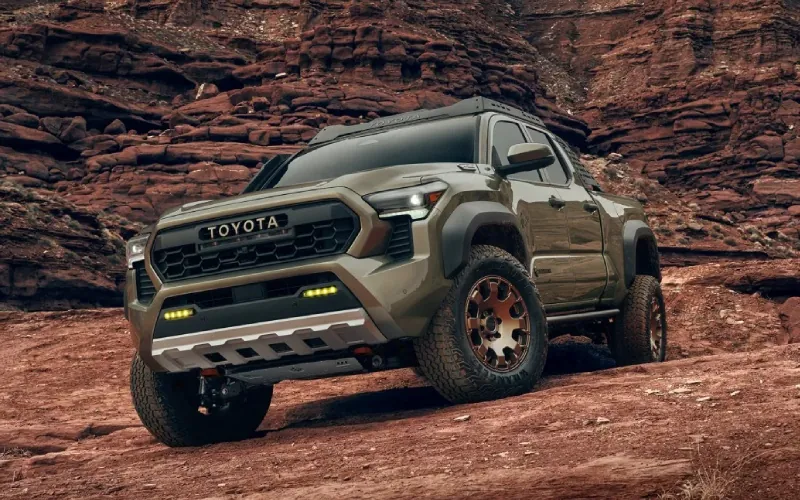
Toyota will invest $3.6 billion to vastly expand its manufacturing campus in San Antonio, Texas, bringing production of its best-selling Tacoma pickup truck back to the United States. The automaker plans to construct a second assembly line and shift the mid-size truck’s assembly away from its Baja California facility over a four-year period.
This strategic pivot follows mounting trade pressures from President Donald Trump’s administration, which recently implemented a 25% tariff on automobile imports from Mexico. The shift also mitigates risk driven by Washington’s refusal to fully renew the US-Mexico-Canada Agreement (USMCA) for a 10-year term, opting instead for annual reviews that have fueled cross-border supply chain uncertainty.
Key Details
- The expansion will add 2.5 million square feet to the existing Texas facility by 2030.
- Toyota projects the creation of 2,000 high-paying jobs, pushing the local workforce to approximately 6,000 employees.
- The San Antonio plant gains an additional annual production capacity of 150,000 units.
- Texas, Bexar County, and San Antonio secured the deal with a competitive $303 million incentive package encompassing grants and property tax abatements.
The decision marks a geographic reversal for Toyota. The company previously built the Tacoma in San Antonio but relocated its production entirely to Mexico in 2021. With the new expansion, the Tacoma will be assembled in Texas alongside the Tundra and Sequoia models on shared architecture. Some production will remain at the Guanajuato, Mexico facility during the four-year transition.
Toyota North American President and CEO Ted Ogawa addressed the transition directly. “By expanding our San Antonio plant, we are deepening our commitment to American manufacturing, creating meaningful and sustainable jobs, while advancing our mission to deliver high-quality vehicles that meet the changing needs of customers today and into the future,” Ogawa said.
How the 25% Tariff and USMCA Review Reshape Auto Manufacturing
The return of Tacoma production reflects a broader industry realignment triggered by federal trade policies. Rival automakers, including Honda, have also recently accelerated their U.S.-based vehicle production to bypass the import penalties.
The operational adjustment is a direct response to the recent geopolitical catalyst, specifically Washington’s move to shift the USMCA trade pact to an annual review structure, according to Free Malaysia Today. By localizing the supply chain within Texas borders, Toyota avoids the 25% tariff margin and stabilizes its most profitable truck line against future diplomatic disputes.