
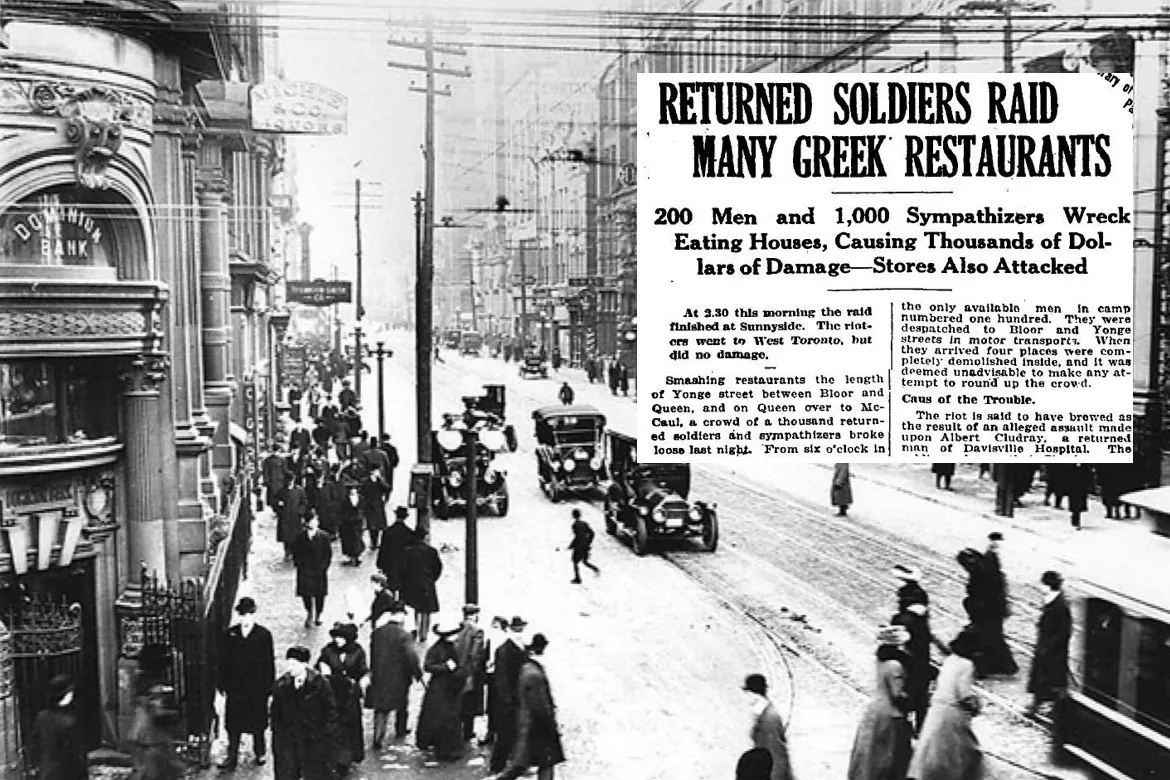
Historians and Greek community leaders in Canada are examining the August 1918 anti-Greek riots in Toronto, drawing parallels between the xenophobia of that era and modern anti-immigrant rhetoric. Over a single summer weekend, a mob of tens of thousands moved through the city center, destroying over a dozen Greek-owned businesses.
During World War I, the Canadian government prohibited most Greek immigrants from military service due to fears of pro-German sympathies. Returning Canadian veterans, angered by perceived social injustices, viewed the able-bodied Greek men as draft dodgers. This environment allowed resentment to escalate into localized violence.
The unrest began on August 1, 1918, when an intoxicated and disabled Canadian war veteran, Claude Cludernay, was ejected from the White City Café. Embellished rumors quickly spread among thousands of veterans attending a city convention, falsely claiming immigrants had severely beaten a veteran.
The violence escalated from August 2 to August 5. At its peak, the conflict involved an estimated 50,000 participants, encompassing rioters, police, and local militia. The severity of the street battles forced Toronto’s mayor to invoke the Riot Act and deploy the military to restore order.
The 1918 conflict remains the largest riot in Toronto’s history and one of the largest anti-Greek pogroms globally. Following the destruction, the local Greek community prioritized rebuilding and assimilation, resulting in the events being largely erased from history until recent historical literature and documentaries revived public awareness.