
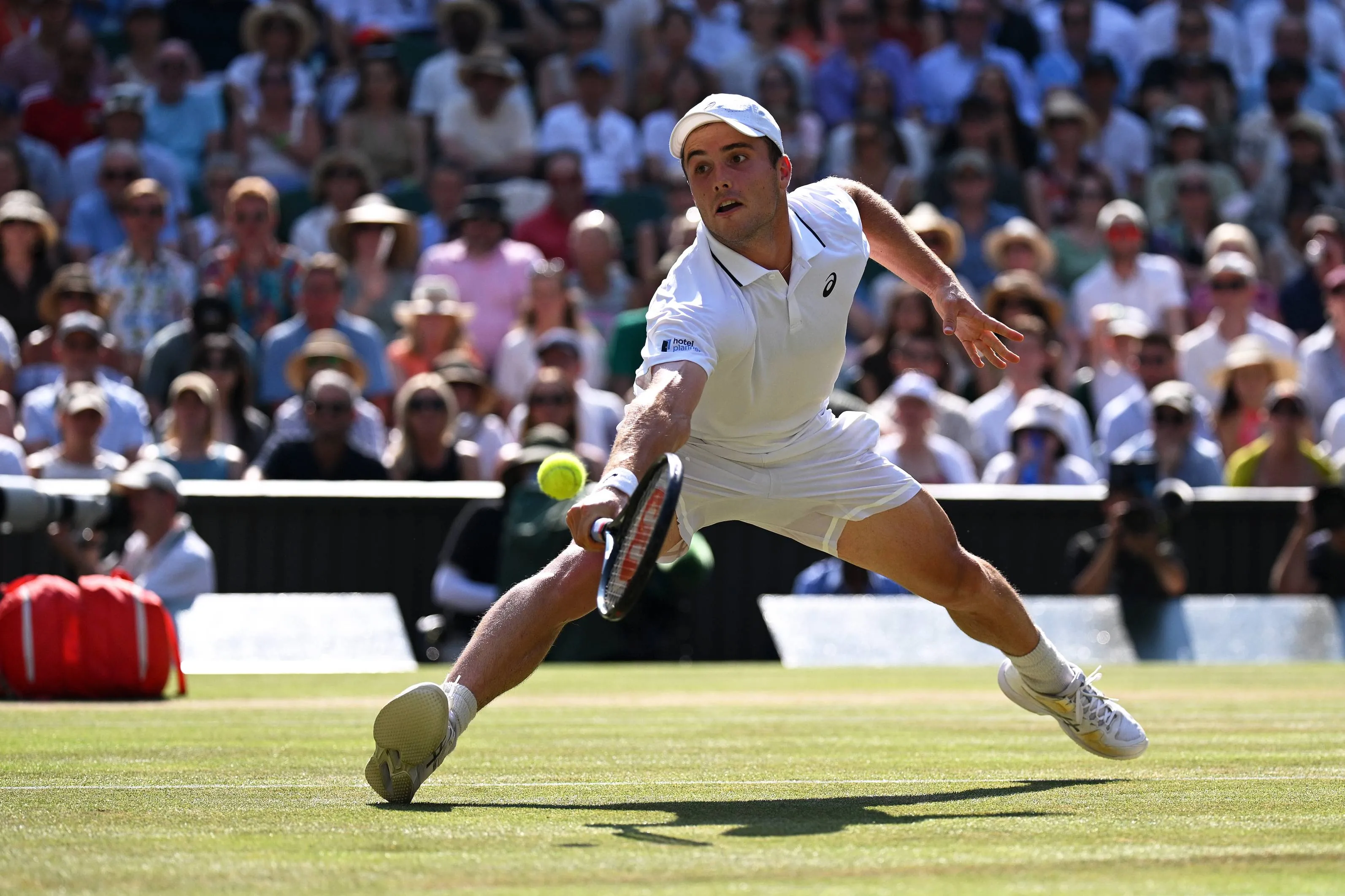
British No. 1 Arthur Fery is packing his bags for the American hard-court swing, and the expectations are completely different this time around. The 24-year-old is preparing for the final Grand Slam of the year riding the momentum of a massive grass-court season. But despite his recent success, there is still plenty of room for growth.
That remaining upside is exactly what makes his upcoming schedule so compelling, according to former British star Tim Henman. Henman evaluated Fery’s recent form this week, explicitly stating that while the young player still has “areas he can improve,” that very fact is “exciting” as he prepares for the grueling North American courts.
Fery recently captivated fans by fighting his way to the semi-finals at Wimbledon. Entering the tournament as a wildcard ranked outside the top 100, he eliminated Grigor Dimitrov in a five-set marathon. He followed that up by sweeping world No. 9 Flavio Cobolli. His run ultimately ended with a loss to French Open champion Alexander Zverev.
But the damage was already done. The deep tournament push catapulted Fery to a career-high No. 36 ranking. He is now on the absolute cusp of securing a seeded spot at the US Open. Lawn Tennis Association head of men’s tennis Leon Smith called Fery’s progression “outstanding.” Smith pointed directly to Fery’s background playing in the U.S. collegiate system at Stanford University as a key reason he handled the sudden main-stage pressure without breaking a sweat.
The Ivanisevic Parallel Reshapes US Open Expectations
Fery didn’t just win a few matches in London. He rewrote a specific piece of tennis history during his recent semi-final appearance. By advancing to the final four, he became the first men’s singles wildcard to reach the Wimbledon semi-finals since Goran Ivanisevic accomplished the feat in 2001.
In fact, he is only the fourth wildcard to reach that stage at any Grand Slam in the entire Open Era, joining a highly exclusive list consisting of Ivanisevic, Henri Leconte, and Jimmy Connors. That historical connection completely alters how the tour views him entering New York.
Fery is no longer an unknown underdog benefiting from a home-crowd advantage. The hard-court swing will test his ability to consistently execute his game against top-tier opponents who now have recent, high-level scouting tape on him. His Stanford background means he is intimately familiar with the American climate and surface speeds. If he tightens up those specific areas of improvement Henman identified, Fery enters the US Open not just as a dark horse, but as a legitimate threat to the established top 10.