
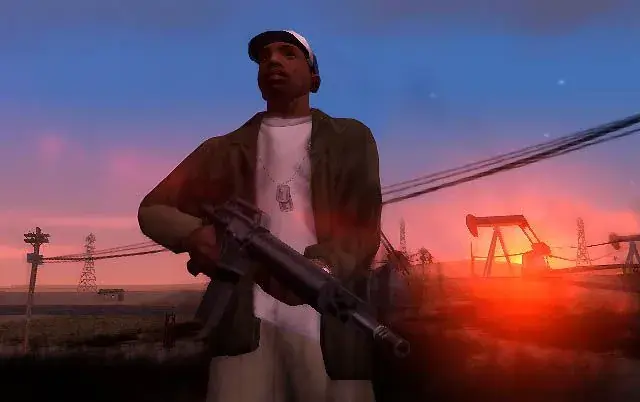
The 20-year-old RenderWare engine just hit a completely absurd new milestone. A newly released modification for Grand Theft Auto: San Andreas allows players to boot up fully playable versions of GTA III and GTA: Vice City directly on an in-game television set.
You walk Carl “CJ” Johnson into his living room, turn on the TV, and instantly swap control to Claude or Tommy Vercetti. Both game worlds run simultaneously. The host game stays active in the background while the nested game renders right into the physical television texture.
Sharing the GPU
Modder DryxioGTA pulled this off without relying on cheap video overlays or external capture software. The magic happens because GTA III renders directly into the live GPU texture of the San Andreas television. The games share the exact same Direct3D device.
According to a report detailing the GPU mechanics, this setup allows real-time swapping between protagonists without breaking a sweat. The modder even pushed the concept a step further into total inception territory. After launching GTA III on the San Andreas television, DryxioGTA booted up Vice City on a map table texture entirely inside the nested Liberty City world.
This project is a direct evolution of DryxioGTA’s earlier work from February 2026. Back then, the developer ported GTA III using the open-source re3 project, alongside a Vice City port via reVC. Those engines ran as independent processes inside San Andreas, allowing them to retain completely separate save files and story progress. Now, those independent engines are visually integrated into the physical geometry of the host game.
Why Modders Keep Pushing RenderWare
This technical feat highlights the enduring flexibility of classic PC engines. Rockstar Games never locked down these older titles with the heavy encryption and anti-cheat layers seen in modern iterations like GTA Online.
That structural freedom makes them an ideal sandbox for community engineers. While modern proprietary engines fight against memory injection, the classic trilogy architecture still allows developers to share textures and resources across multiple running executables without triggering a crash. The result? A digital dollhouse that refuses to close its doors.