
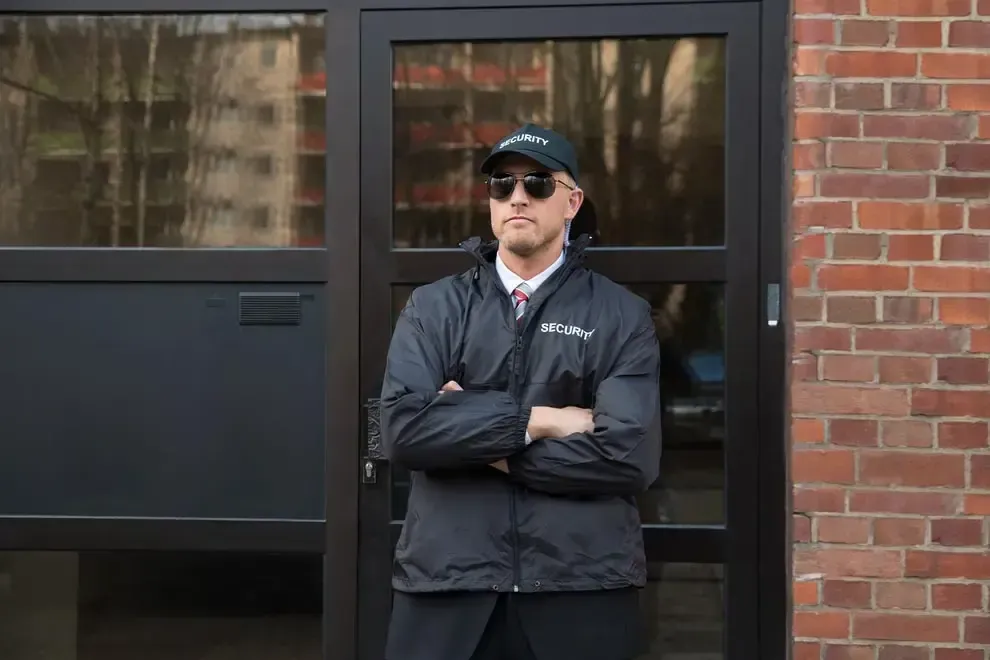
When an A-list celebrity or a major studio throws a private party in the middle of a congested city, security teams rely on a multi-layered perimeter architecture to filter access progressively. They divide the event space into outer, middle, and inner zones. This operation utilizes biometric scanners, centralized transport hubs, and decoy motorcades to keep uninvited guests out and the talent safe. The logistics require military-grade precision and constant communication.
Establishing these protective perimeters in residential or downtown areas often involves strict adherence to local civilian private security regulations to ensure safe boundaries. Throwing a party for billionaires and movie stars is not just about velvet ropes and guest lists anymore. It is a highly coordinated defensive operation.
The Anatomy of a Private Perimeter
Urban event security uses a specific zonal architecture to control crowds long before they reach the front door. Experts at Nobel Guard Security detail how they structurally divide event spaces into three distinct perimeters. The outer perimeter manages street-level traffic flow and adjacent property boundaries. Guards station themselves blocks away to redirect unauthorized vehicles.
The middle zone acts as the primary checkpoint for credential verification. Setting up these effective screening checkpoints stops unauthorized individuals before they get near the actual venue. The inner perimeter consists of VIP safe rooms and secure corridors. Representatives at Global Risk Solutions confirm this layered approach is standard protocol for high-profile gatherings.
Modern access control goes far beyond paper lists. Security teams now employ digital bouncers to monitor the middle zone. Specialists at Rowan Security point out that event planners use RFID passes and biometric scanners. These systems cross-reference credentials in milliseconds. Gatecrashers or compromised vendors fail the scan immediately, preventing unauthorized access to the inner zone.
Getting A-Listers Through the Gridlock
Managing VIP transit through busy urban environments requires a specific operational mindset. Planners at Rowan Security operate on the philosophy that “predictability is a liability.” When everyone knows a famous actor is walking through the main hotel lobby, the risk level spikes. Security details favor evasion tactics over confrontation.
They utilize decoy motorcades to confuse paparazzi and onlookers. A fleet of black SUVs pulls up to the front entrance, drawing the cameras, while the real talent enters through alternative entry points. Loading docks and underground service elevators allow VIPs to slip into the building unseen.
For massive private events requiring coordinated city-wide movement, logistics teams rely on centralized Transport Hubs. Coordinators from Wiz Team integrate vehicle access, parking permits, and fleet management into a single Transport (TPT) Hub system. This infrastructure allows them to securely move thousands of guests and VIPs across multiple urban locations simultaneously.
Moving the physical assets required for these events also takes specialized planning. Logistics managers at TIBA Group handle the international movement of high-value event assets and specialized security equipment. They utilize temporary import and export handling via ATA Carnets to bypass standard customs delays. This ensures metal detectors and secure communication servers arrive on time.
The Real Threats Aren’t Always Outside
Security risks extend well beyond physical borders and uninvited fans. Analysts at Global Risk Solutions warn about the digital footprint danger. Geolocation data embedded in social media photographs taken by actual guests can reveal exact property locations.
These seemingly harmless posts expose camera blind spots and entry points to criminal elements. Thieves use this embedded data to map out the property. They scout the location entirely online without ever conducting physical surveillance on the street.
High-profile private events are also highly vulnerable to the “insider threat.” Advisors at Global Risk Solutions and Security In Florida highlight the danger of compromised catering staff, valet services, and vendor credentials. Residential properties are especially susceptible to this kind of vendor and staff infiltration.
Another major concern is synchronized asset vulnerability. Specialized theft operations often time their infiltration to the exact moments when high-value assets move. When handlers transfer loaned jewelry or expensive art from secured vaults to event display areas, security attention is temporarily diverted to guest arrival. Criminals capitalize on this specific window to strike.
The “Golden Hour” Protocol
When things go wrong, event security teams structure their emergency responses around a strict “Golden Hour” protocol. Experts at Security In Florida explain this timeline is necessary to contain chaos efficiently. Detailed security operations planning ensures every guard knows their exact role during these critical sixty minutes.
- 0-5 Minutes: The first five minutes are strictly dedicated to immediate threat containment. Guards lock down the area and prioritize the notification of emergency services.
- 5-15 Minutes: The subsequent ten minutes involve proactive crowd management. Teams coordinate evacuation routes to prevent crowd surges or trampling near exits.
- 15-60 Minutes: The remainder of the hour focuses entirely on media management and stakeholder communication.
In the era of rapid social media updates, silence during a crisis allows dangerous rumors to spread. Security teams use the final 45 minutes of the Golden Hour to issue clear statements. Specialists at Rowan Security and Security In Florida agree this communication prevents public panic.
Where to Spot These Tactics in Action
You can often see the results of these logistics by looking at the perimeter edges of major industry parties. Professional urban security delineates clearly between crowd management and crowd control. Analysts at Groups360 define crowd management as the proactive planning of walkways and exit flow to prevent bottlenecks.
Crowd control is a reactive response to a disruption. Planners want to rely entirely on proactive management so they never have to use reactive control. They use a calculated risk matrix to prepare for the worst. The team at Groups360 states planners score potential threats on a scale of 1 to 5 for both “likelihood” and “impact.”
Threats that score high on the matrix receive dedicated mitigation plans and clear escalation paths. Medical emergencies require just as much logistical foresight as crowd movement. For VIP events, basic first-aid kits are entirely insufficient.
Planners at Rowan Security secure on-site paramedics well in advance. They also pre-negotiate guaranteed response times with local urban hospitals before the event doors ever open. This guarantees immediate surgical care if a high-profile guest requires it.
What Security Experts Are Saying
Private gatherings pose unique challenges that stadium shows do not. Analysts at Global Risk Solutions point out that residential properties often lack the permanent security infrastructure of commercial venues. Security directors must build temporary perimeter controls that extend beyond the property to adjacent streets.
They have to manage vulnerabilities like catering access that standard residential alarms simply cannot handle. Figuring out the headcount for the guard detail is a standardized process. Directors at Titan Security Europe state that organizers aim for a baseline of one security guard per 100 attendees.
They also calculate this as one guard for every 10 to 15 square meters of event space. Organizers significantly increase this ratio for events featuring high-profile VIPs, high crowd energy, or alcohol service. A quiet dinner needs fewer guards than a loud afterparty.
During an incident, teams immediately partner with PR firms to issue clear statements. Experts at Rowan Security and Global Risk Solutions monitor social media constantly. They do this to stop unauthorized guests from using embedded geolocation data to map out security camera positions and property boundaries.