
When casual viewers ask, “how does a driver’s performance fluctuate during a professional auto racing season?”, they usually expect an answer about engine wear, aerodynamic upgrades, or tire degradation. The truth lies entirely within human biology. A professional racing driver loses performance across a 20-plus race calendar because their central nervous system, cardiovascular system, and muscular endurance take a sustained beating. The human body simply runs out of capacity to handle the intense heat, sustained high heart rates, and repeated physical impacts required to pilot a high-downforce race car over nine months.
Drivers do not just sit in a chair and turn a wheel. They operate highly sensitive machinery while enduring physical conditions similar to a marathon runner inside a sauna. By the middle of a competitive season, the physical toll stacks up. To truly understand how a driver’s performance fluctuates during a professional auto racing season, you have to look past the garage and examine the driver’s biological metrics.
How Racing Fatigue Works
The physical demands of elite motorsport break down into three main categories: cardiovascular strain, thermal stress, and muscular loading. Each of these systems is pushed to its absolute limit every single race weekend.
The Cardiovascular Engine
A professional race car driver maintains a sustained heart rate at 65% to 85% of their maximum capacity during a race. This means they are frequently sitting between 150 to 186 beats per minute (bpm) for up to two hours. This heart rate is driven by two factors. The physical exertion of controlling the car requires immense oxygen delivery to the muscles. Simultaneously, the high psycho-emotional stress of driving inches away from concrete barriers at 200 miles per hour keeps adrenaline levels constantly elevated.
Thermal Stress and Fluid Loss
Heat is the silent enemy of lap time consistency. During a Grand Prix, the extreme cockpit temperatures routinely climb above 50°C (122°F). The driver sits inches away from a turbocharged power unit, encased in a fireproof Nomex suit, with very little airflow.
As a result, drivers sweat profusely to keep their core temperature down. They routinely lose 2 to 4 kilograms of fluid weight per race. This rapid hypohydration directly attacks their stamina. When a driver loses that much water, their blood volume drops. Their heart has to work even harder to pump thick blood to the muscles and the brain, which accelerates the onset of physical exhaustion.
Muscular Loading Under G-Forces
A high-performance race car generates immense grip. Negotiating fast corners and executing heavy braking zones subjects drivers to lateral and longitudinal forces ranging from 4 to 6 Gs. Under 5 Gs of force, a driver’s head and helmet, which normally weigh around 15 pounds, suddenly weigh 75 pounds. The neck muscles have to hold that weight upright repeatedly for hundreds of corners.
The limbs take a similar beating. Drivers apply up to 61 kg of force to the brake pedal at the end of long straights. They also pull with 16 kg of rotational force on the steering wheel. This places continuous stress on the upper body, neck, and core. Researchers have captured detailed physiological measurements proving that this repeated heavy muscular loading directly correlates with late-race muscle failure.
Why Teams Focus On This / When Fatigue Hits Hardest
Performance degradation over a long season is rarely tied to a single bad race. Instead, teams monitor what they call the “repeated load principle.”
The Repeated Load Principle
Drivers take high G-forces through the exact same spinal and neck tissues week after week. Over time, if recovery is inadequate, the body loses load tolerance. The micro-tears in the muscle tissue do not fully heal. A driver might feel fine in March, but by October, their neck starts giving out 10 laps earlier than it did in the spring.
Degradation of Movement Quality
As cardiovascular and heat fatigue builds across a race weekend, a driver’s load distribution and postural control shift. They stop sitting perfectly upright. They lean slightly into the cockpit padding. They push the brake pedal differently. This subtle breakdown in body mechanics narrows the margin for error. We see clinical data on this accumulated fatigue directly causing slower reaction times and erratic lap consistency.
Cognitive Decline at High Speeds
Mental and physical fatigue are fundamentally linked. Navigating a race car requires split-second processing of steering wheel telemetry, changing track grip levels, and competitor positions. When the body runs out of water and the neck is in pain, the brain receives less oxygen. Decision-making precision drops. Drivers miss braking points by a few feet, or they misjudge an overtaking maneuver, leading to costly mistakes late in the season.
Famous Examples from Major Seasons
If you track how a driver’s performance fluctuates during a professional auto racing season, the data usually points to specific environmental and logistical hurdles that occur mid-year.
Global Travel and Logistics
Top-tier racing series travel to over 20 different global locations in a single calendar year. This introduces immense environmental variation. One weekend, a driver is racing in the cool, high-altitude air of Mexico City. A few weeks later, they are racing in the suffocating heat and humidity of the Singapore Grand Prix.
Singapore is famous for physically breaking drivers. Competitors routinely stumble out of their cars after the checkered flag, completely drained. Furthermore, chronic jet lag from crossing multiple time zones disrupts drivers’ physiological baselines. Their sleep cycles break. Their digestion changes. This lack of proper circadian recovery causes visible mid-season dips in form.
Vehicle Ergonomics and Weight Restrictions
The physical build of the driver interacts directly with the car’s engineering. Historically, teams forced drivers to starve themselves to keep the overall car weight down. A lighter car is a faster car.
Following the introduction of the heavy “halo” safety device in 2018, teams demanded even lighter drivers. The sport eventually introduced an 80 kg minimum driver weight rule in 2019 to stop extreme starvation diets. But teams still manage weight meticulously. Even marginal fluctuations in driver weight (2–4 kg) can alter a car’s tire degradation and fuel efficiency. Taller or heavier drivers still face a physical and competitive disadvantage, as they have less freedom to build upper body muscle without exceeding weight limits.
Common Misconceptions
Fans often misunderstand the realities of driver preparation. The most common myths surround how drivers train away from the track.
The Simulator Trap
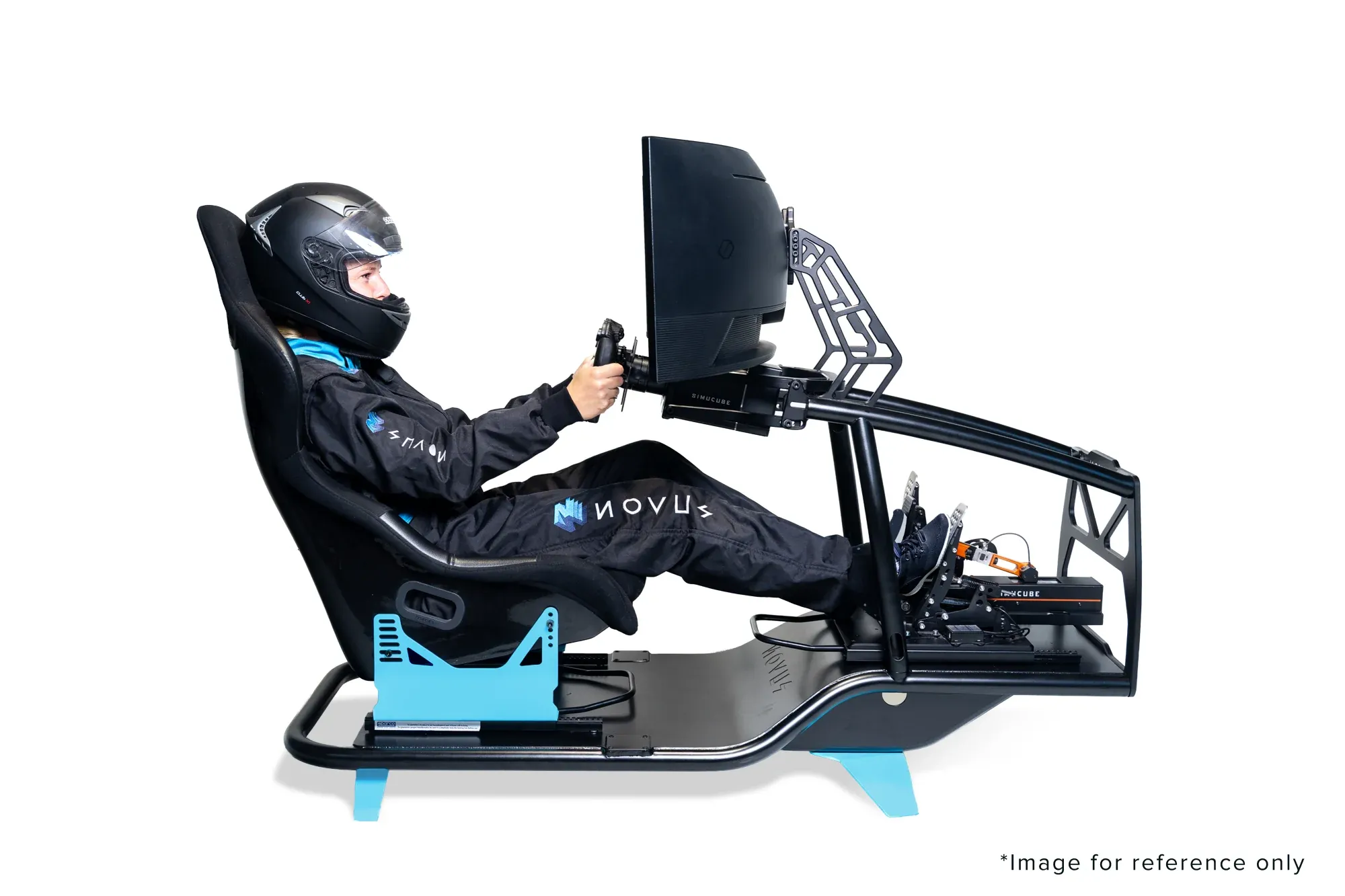
Teams use advanced, multi-million-dollar simulators for technical practice. Drivers spend hours in these rigs learning track layouts and testing suspension setups without risking actual car parts. But simulators have a major physical limitation.
Clinical data shows that simulators generate vastly lower metabolic work and core temperatures than authentic racing. They lack genuine G-forces. A driver’s neck and heart are not stressed the way they are in real life. Drivers cannot rely on simulators for fitness. They must rely on real-world conditioning to maintain authentic in-car physiological tolerance.
The “Anyone Can Drive” Myth
Because the car does the accelerating, many assume the driver does not need traditional athletic endurance. This is false. Modern physical preparation dictates developing high VO2 max levels. Elite drivers average 60–62 mL/kg/min for their VO2 max. This puts their cardiovascular fitness on par with elite professional soccer or rugby players. They run marathons, cycle up mountains, and perform heavy resistance training just to survive the Sunday race.
Frequently Asked Questions
Do race car drivers lose weight during a race?
Yes. Due to extreme cockpit temperatures often exceeding 50°C (122°F) and immense physical exertion, a driver can sweat out 2 to 4 kilograms of fluid weight during a single race. This severe fluid loss heavily impacts their stamina and concentration as the race progresses.
How many G-forces do Formula 1 drivers experience?
During high-speed cornering and heavy braking, elite open-wheel drivers regularly experience lateral and longitudinal forces ranging from 4 to 6 Gs. This requires highly specialized strength training to prevent the neck and core from collapsing under the intense pressure.
Are race car drivers considered elite athletes?
Yes. Clinical sports medicine data demonstrates that drivers have high cardiovascular fitness profiles akin to field-sport athletes. They possess VO2 max levels around 60 to 62 mL/kg/min and routinely operate at 65% to 85% of their maximum heart rate during a full two-hour competition.