
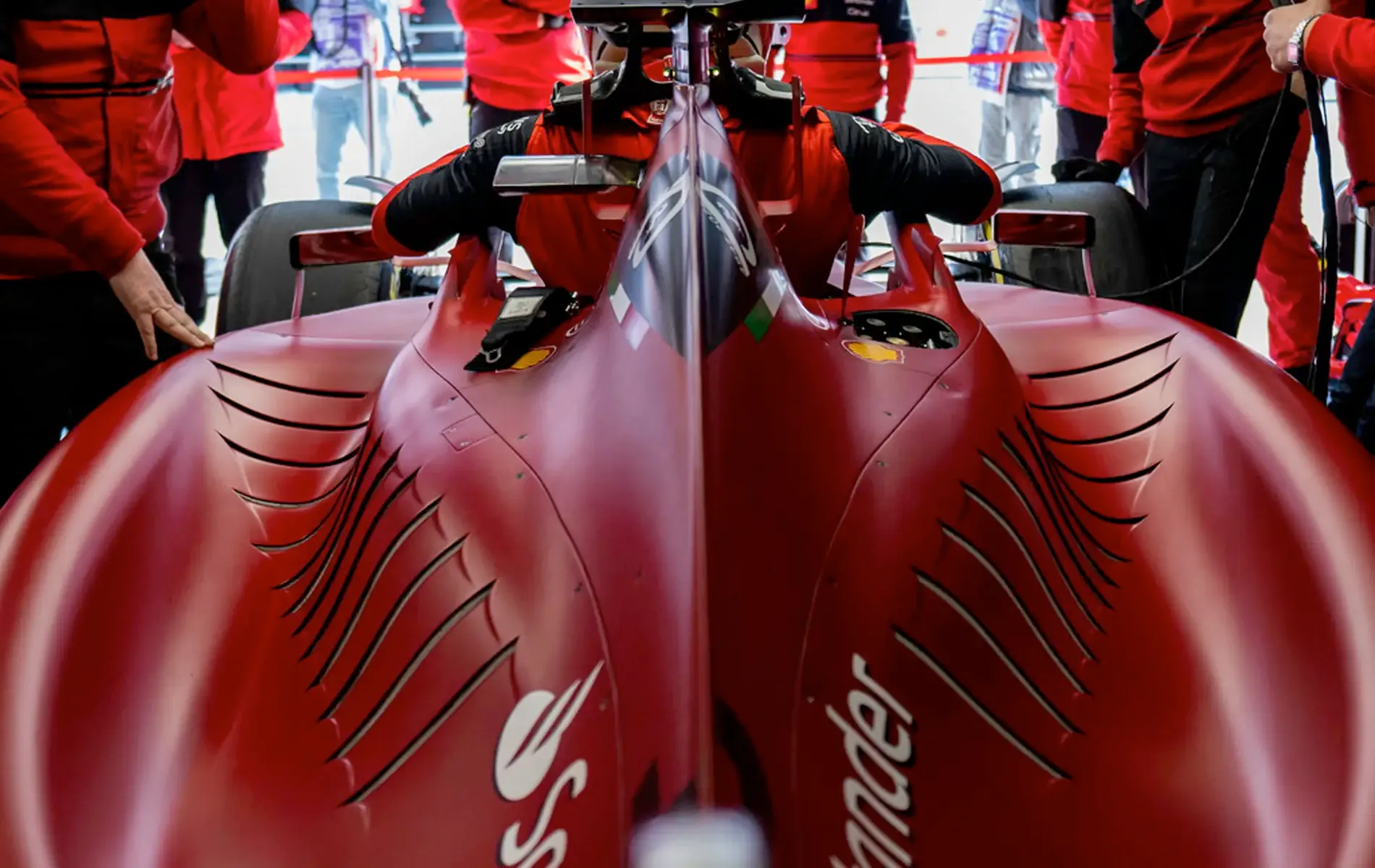
An in-season engine upgrade affects a Formula 1 team’s aerodynamic balance by altering the car’s internal packaging, exhaust gas energy, and heat management demands. When engineers introduce a modified power unit, it typically requires changes to the sidepod shapes, cooling louvers, and engine cover bodywork. These modifications disrupt the clean air flowing over the chassis and toward the rear wing, shifts the downforce distribution, and changes how the car handles through corners.
F1 cars operate as interconnected systems where mechanical components and aerodynamic surfaces work in unison. A boost in engine power is never a simple drop-in swap. If a power unit produces more heat or demands altered intake plumbing, the aerodynamic department must adjust the outer skin of the car to compensate, frequently sacrificing some aerodynamic efficiency for mechanical reliability.
How Engine Upgrades Affect Aerodynamics
Every internal combustion engine generates intense heat during operation. In top-tier motorsport, the instantaneous gas temperature at the point of combustion inside a modern power unit can reach up to 2,600°C. Managing this thermal output requires continuous airflow through internal radiators and intercoolers. When a team brings a performance upgrade to the engine, the power unit often runs hotter or requires a higher volume of air to sustain its new power levels.
To deal with this increased heat, aerodynamicists must open up the car’s bodywork. They do this by expanding the sidepod inlets or adding cooling louvers along the engine cover. While this keeps the engine safe from overheating, it creates an aerodynamic penalty. Air that enters the sidepods for cooling becomes turbulent and slows down, which creates extra drag. This process is known as aerodynamic cooling and it alters the clean flow of air over the rear of the car.
The external air that avoids the radiators must travel cleanly over the engine cover to reach the rear wing and the beam wing. If the engine cover is bulkier to accommodate new engine components or wider cooling paths, it deflects the air away from its intended path. This disruption can cause the air to separate from the bodywork prematurely. When air separates before reaching the rear wing, the wing loses its ability to generate consistent downforce, causing the car’s aerodynamic balance to shift forward or become unpredictable.
Another critical area of impact is the exhaust gas energy. The pressure and velocity of the gases exiting the tailpipe interact directly with the rear aerodynamic structures, including the floor diffuser and the beam wing. A revised engine changes the tuning of these exhaust pulses. If the exhaust pressure drops or shifts in frequency, it changes the pressure gradient beneath the car, which can weaken the floor’s ability to suction the chassis to the track surface.
Why Teams Use This / When It Applies
Teams opt for in-season engine updates when they find a deficit in straight-line speed or electrical deployment compared to their rivals. However, strict modern regulations limit how and when these upgrades can occur. Under the standard rules, power unit designs are frozen to control costs, meaning teams cannot freely change their engine blocks or energy recovery systems whenever they want.
A specific regulatory system allows exceptions for manufacturers that fall significantly behind the pack. The sport utilizes the ADUO engine upgrade system to help balance the field. If an engine builder’s performance falls two percent or more behind the leading power unit on the official index, the rules grant them special permission to introduce mid-season upgrades to close the gap.
When a manufacturer qualifies for these concessions, they receive extra development budget and additional testing hours on the engine dyno. This framework is a cost cap relief method. It allows the trailing team to redesign internal components without exhausting the financial resources needed to maintain their daily operations. But because any change to the engine alters weight distribution and cooling parameters, the team must also use its wind tunnel hours to redesign the surrounding bodywork.
Teams must carefully time the introduction of these updates. Bringing an upgraded power unit to a high-altitude track or a circuit with high ambient temperatures requires maximum cooling bodywork. This choice increases drag significantly. Conversely, introducing the upgrade at a low-drag circuit allows the team to run tighter bodywork, minimizing the balance penalties while maximizing the horsepower gains on long straights.
Famous Examples from Major Games
A clear demonstration of this engineering challenge occurred when Ferrari introduced a highly anticipated update to its power unit. Having qualified for development concessions under the governing body’s performance balancing system, the Italian squad brought a revised internal combustion engine to the Austrian Grand Prix. The update focused on improving driveability and extract extra performance from their machinery.
The mechanical changes to the power unit came alongside a new biofuel blend developed with their technical partners. Analysts estimated the update provided a performance boost of roughly six to eight horsepower. To verify these changes, fans and technical experts tracked the vehicle’s telemetry during practice sessions. But the real story was the extensive bodywork packaging that accompanied the new hardware to the circuit.
Ferrari did not simply bolt the new engine into the chassis. To counteract the altered heat signatures and airflow blockages caused by the new internal components, the team introduced a parallel aerodynamic overhaul. They arrived at the track with a completely redesigned floor edge and modified airflow channels inside the rear diffuser. These changes aimed to seal the underfloor from external turbulence, an issue often aggravated by altered rear-end packaging.
The update showed that an engine upgrade requires a complete re-balancing of the car’s ground-effect surfaces. By revising the brake ducts and floor geometries alongside the power unit, the engineers successfully maintained their downforce levels. The weekend proved that tracking engine progress requires looking at the wings and floors just as much as the internal pistons.
Common Misconceptions
A frequent misunderstanding among casual racing fans is that an engine upgrade is a standalone mechanical change that takes place entirely under the skin of the car. Many believe that if a team gains ten horsepower from a new fuel pump or a modified cylinder head, that power translates directly into faster lap times across every section of the track. In reality, that extra power can be entirely wiped out if the aerodynamic department has to widen the sidepods to keep the new components cool.
Another common myth is that modern downforce is generated entirely by the visible front and rear wings. While the wings are highly adjustable, the underside of the car generates the vast majority of total downforce through the ground effect. This system relies on clean, high-speed air passing under the car floor. If an upgraded engine requires bulky lower packaging that interferes with the floor’s Venturi tunnels, the car loses floor downforce. The team then has to add angle to the upper wings to compensate, which increases drag and slows the car down on the straights.
People also tend to think that active aerodynamics solve all packaging problems automatically. The sport features systems where the front and rear wings alter their angles dynamically during a lap to minimize drag on straights and maximize downforce in corners. While this helps balance the car, it does not fix the air turbulence created by bad sidepod design or excessive cooling vents. The middle sections of the bodywork remain static, meaning internal engine packaging still dictates the baseline efficiency of the entire aerodynamic map.
Finally, there is a belief that more engine power always makes a car easier to drive. If a power unit upgrade delivers its power abruptly, it can break the traction of the rear tires during acceleration. When the rear tires slip, the car changes its physical attitude relative to the incoming wind. This sudden movement disrupts the airflow entering the underfloor tunnels, causing a sudden loss of downforce right when the driver needs stability. Power and balance must progress together, or the car becomes slower.
Frequently Asked Questions
What temperature does a Formula 1 engine reach during a race?
The gas temperature inside the combustion chamber of a modern Formula 1 engine routinely reaches up to 2,600°C during operation. Managing this extreme heat requires highly efficient radiators and precise airflow management through the car’s bodywork inlets. When teams increase engine performance, they must alter their cooling configurations to prevent these systems from failing under race conditions.
Why do engine upgrades require teams to change their car’s bodywork?
Engine upgrades often change the physical dimensions, exhaust layout, or cooling requirements of the power unit. To accommodate these internal changes, engineers must redesign the external engine cover and sidepods. If a team fails to modify the outer skin of the car, the upgraded engine may overheat, or the air flowing over the bodywork can separate early, reducing downforce at the rear wing.
How does the ADUO system help trailing engine manufacturers?
The ADUO system allows engine manufacturers whose performance sits two percent or more behind the benchmark power unit to introduce mid-season upgrades. This mechanism provides cost cap relief by granting extra dyno testing hours and development budget. It allows trailing teams to fix power deficits without taking resources away from their ongoing aerodynamic programs.
What is aerodynamic cooling drag in top-tier open-wheel racing?
Cooling drag is the aerodynamic penalty created when air enters the sidepods and louvers to cool internal mechanical parts like the engine and intercoolers. This air slows down and becomes highly turbulent as it passes through the radiators. While necessary to keep the engine functional, opening up wide cooling vents increases the car’s overall drag and can compromise the clean air needed by the rear wing.