
The framerate counter on your gaming handheld is lying to your thumbs.
You boot up a first-person shooter, the overlay proudly displays a buttery 75 FPS, but the crosshair feels like it is dragging through wet cement. This sluggish disconnect happens because spatial upscaling and AI frame generation on mobile devices actively separate your physical button presses from the visual updates on the screen. The hardware is creating a highly convincing visual illusion. Your input lag remains permanently tied to a much lower, native base framerate.
The Processing Penalty on Mobile Chips
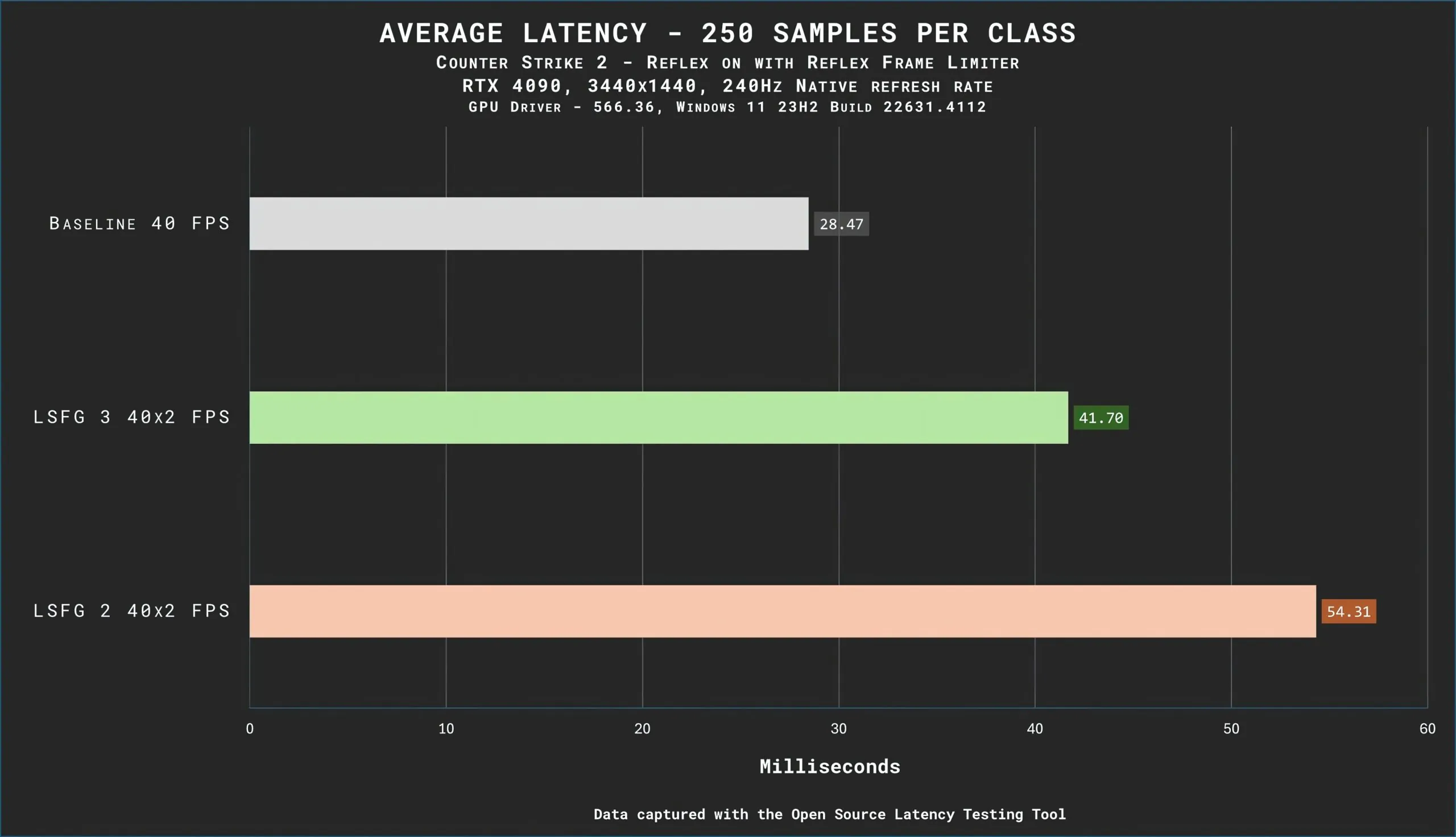
Frame generation requires allocating limited mobile GPU power away from the game to run AI models. Every generated frame inserted between real frames is a measurable chunk of time where the device is not registering your controller inputs. This heavily degrades the experience when the native framerate is already low.
Handhelds frequently struggle to hit a stable 60 FPS natively. When the AI has less physical data to work with, forcing frame generation on a 30 FPS base results in heavy input lag inflation, ghosting, pixel-level shimmering, and warping across the user interface. The game looks smoother to a spectator, but the player feels completely disconnected from the action.
Following Asus’s official Fluid Motion Frames rollout to the ROG Ally, industry standard guidance actually shifted. Hardware manufacturers now explicitly recommend treating frame generation strictly as an “FPS enhancer” for games already exceeding 60 FPS natively. Using it as a crutch to make poorly optimized, 30 FPS ports playable is exactly what breaks the aiming mechanics.
Traditional interpolation ruins the aiming feel through a very specific sequence of events:
- The mobile GPU renders a native frame.
- The system holds that frame in a queue instead of showing it to the player.
- The AI analyzes the data to generate a synthetic “in-between” frame.
- Both frames are finally pushed to the screen, heavily inflating the button-to-photon latency.
How Intel’s Extrapolation Algorithm Fixes the Input Lag
While Nvidia introduced frame generation in 2022 with DLSS 3.0, the rapid 2026 boom in handheld computing completely exposed the limitations of traditional interpolation on thermally constrained hardware. Holding frames in a queue just doesn’t work for competitive mobile gaming.
Intel researchers recently demonstrated a 6.6-millisecond extrapolation process designed to solve this exact problem. Instead of holding rendered frames back, the AI actively predicts the next frame. Intel is pivoting away from standard interpolation for their upcoming Arc G3 handheld chips, such as the B390, utilizing this new predictive method to eliminate the latency hit on handhelds entirely.
Until extrapolation replaces traditional interpolation on mobile chips, true handheld optimization requires a different approach. Players are consistently finding that abandoning artificial frame counters, turning off generation tech when base performance is low, and locking down a consistent, native 40 FPS provides a vastly superior aiming experience.