
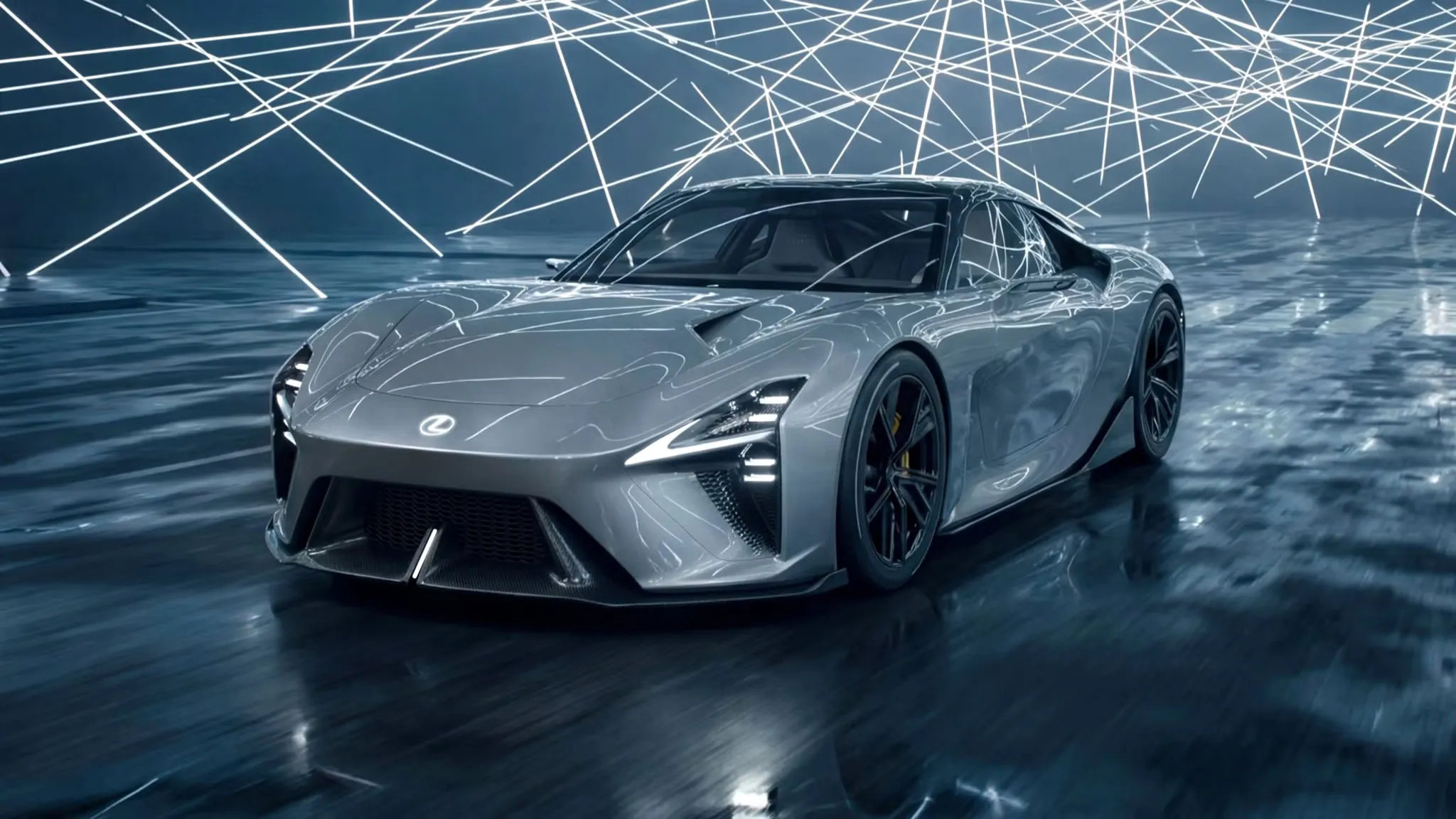
The Lexus LFA is officially returning as a 2027 model, but automotive enthusiasts are going to have to adapt to a radically different machine. The legendary naturally aspirated V10 engine is gone for good, completely replaced by a fully electric powertrain. A camouflaged prototype of this all-electric successor recently made a public appearance, running the hill climb at the 2026 Goodwood Festival of Speed.
This debut proves Lexus is taking zero-emission track performance seriously. The engineering team is actively attempting to show that an electric supercar can rival the visceral emotion of traditional gas-powered exotics without relying on cheap nostalgia tricks.
The New Dimensions and Shared Architecture
Conceived by designer Shogo Kasamatsu, the new EV concept is significantly larger and lower than the original LFA, measuring 184.6 inches long and 80.3 inches wide while sitting very close to the ground at just 47 inches tall. The two-seater rides on a 107.2-inch wheelbase and shares a lightweight, aluminum-intensive architecture with the upcoming Toyota GR GT and the track-only GR GT3, according to a report by Motor1 detailing the shared Toyota GR GT aluminum platform and dimensional specs. However, while its Toyota counterparts will utilize a twin-turbocharged 4.0-liter V8, the LFA successor is strictly relying on battery power.
Kasamatsu intentionally stepped away from the current Lexus design language. He styled the exterior to physically express the intent of the vehicle rather than forcing it to match the rest of the corporate lineup.
Solid-State Batteries and the Sound Problem
The 2027 LFA successor is widely reported to be the first production Lexus vehicle to utilize high-density solid-state batteries. This leap in energy capacity allows the engineers to bypass the extreme weight penalties typically associated with liquid-chemistry EV packs, as noted in an Autocar analysis regarding the solid-state batteries and new sensory feedback.
The biggest hurdle for this car is replicating the sensory thrill of the original model. Exactly 17 years ago, the original V10-powered LFA prototype appeared at the very same Goodwood Festival of Speed. General Manager Yukihiro Yukita acknowledged the synthesized audio currently used by competitors like Porsche and Hyundai. Rather than simply imitating old internal combustion sounds, Lexus intends to redesign the sound itself to create a bespoke sensory experience. The long history of this ambition is chronicled in a Drive timeline tracking the concept’s development and production roadmap.
What the Solid-State Shift Means for Supercars
If Lexus successfully brings solid-state batteries to a production supercar by 2027, the entire performance industry will have to accelerate its own engineering timelines. Current electric supercars often weigh over 4,000 pounds, which severely compromises track handling and tire wear. Solid-state technology solves the density problem directly. By offering more power in a smaller, lighter package, Lexus is attacking the single biggest complaint purists have against electric sports cars. Competitors like Ferrari and McLaren are still relying heavily on hybrid setups to bridge the gap, meaning an ultra-lightweight, solid-state LFA could catch the European establishment entirely off guard.
The Verdict
If you are an automotive traditionalist holding out hope for another naturally aspirated V10, you need to let that dream go. However, if you care about the absolute bleeding edge of automotive engineering, the 2027 Lexus LFA is shaping up to be an engineering marvel. The promised integration of solid-state batteries makes this a hypercar worth paying close attention to, even if the exhaust note will never be the same.