
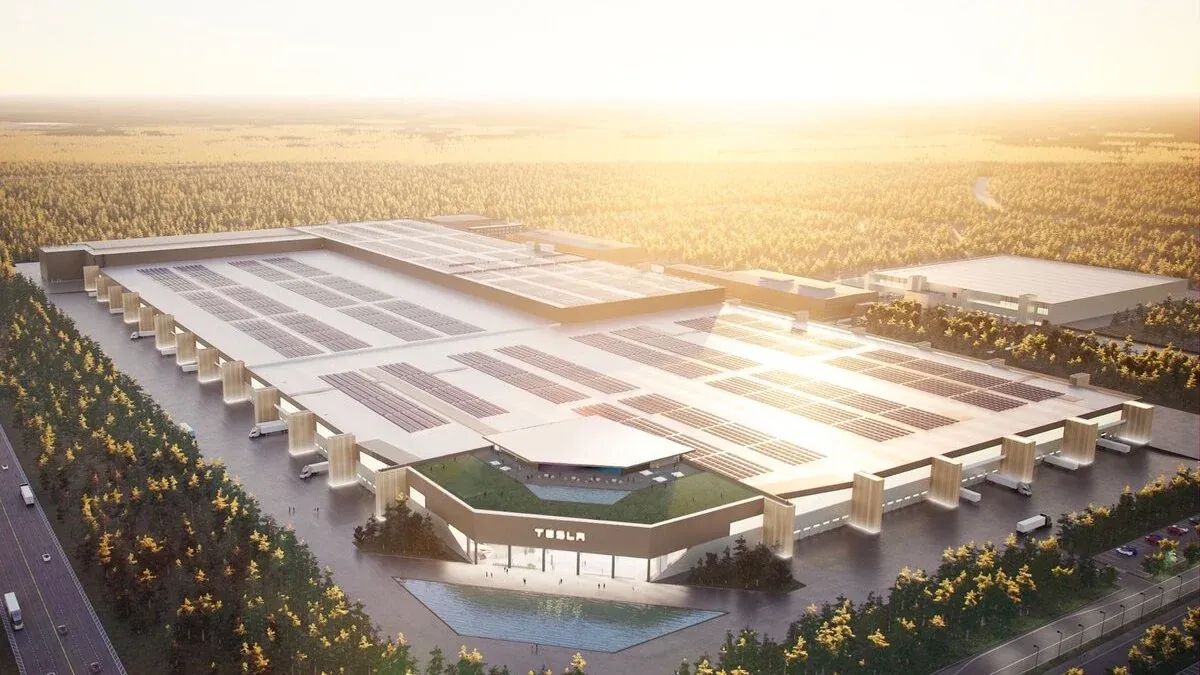
Tesla is throwing the doors of its most guarded European facility wide open. The automaker launched the “Cell Giga Challenge” this week, a direct invitation for outside startups to pilot their technologies inside the live 4680 battery cell production line at Gigafactory Berlin-Brandenburg.
The program targets pre-seed and early-stage companies capable of making cell manufacturing faster and more scalable. Tesla partnered with JUNI, a German startup platform backed by the federal economics ministry, to execute the five-phase program ahead of its July 24, 2026 application deadline. The winning teams will secure a paid pilot project working alongside internal manufacturing engineers when the initiative kicks off in August.
Tesla needs the outside talent to support a heavy industrial ramp-up. The company is actively pushing 4680 cell output at the Grünheide site toward a targeted 18 GWh of annual capacity. At that volume, the facility would generate enough batteries to supply 250,000 to 350,000 vehicles per year.
The initiative follows an open call from Giga Berlin plant manager André Thierig, who invited external founders to pitch solutions across five specific verticals: materials, equipment, operations, automation, and artificial intelligence.
That footprint requires serious capital and labor. The site expects to need over 1,500 specialized employees for cell production alone. Thierig announced a May 12 $250 million investment to expand the site, officially ending a multi-year freeze that began in 2022 when the automaker diverted cell production to the United States to capture Inflation Reduction Act tax credits. This challenge marks a formal return to European battery manufacturing.
Why Outsourcing the Dry Battery Electrode Problem Makes Financial Sense
Inviting third-party startups directly onto a proprietary manufacturing line is a rare move for a legacy automaker. But Tesla’s in-house 4680 program has historically struggled to hit internal cost and yield targets. The core bottleneck remains the complex Dry Battery Electrode (DBE) process, a technology that is notoriously difficult to scale without severe quality control issues.
By outsourcing innovation through the Cell Giga Challenge, Tesla is acknowledging the limits of its internal engineering bandwidth. Rather than burning billions on trial-and-error R&D internally, the automaker can crowdsource incremental improvements in yield and automation from Germany’s robust industrial startup ecosystem. The startups get a highly lucrative, real-world testing environment inside a billion-dollar factory. Tesla gets a low-risk mechanism to identify and immediately absorb technology that actually works on the factory floor.