
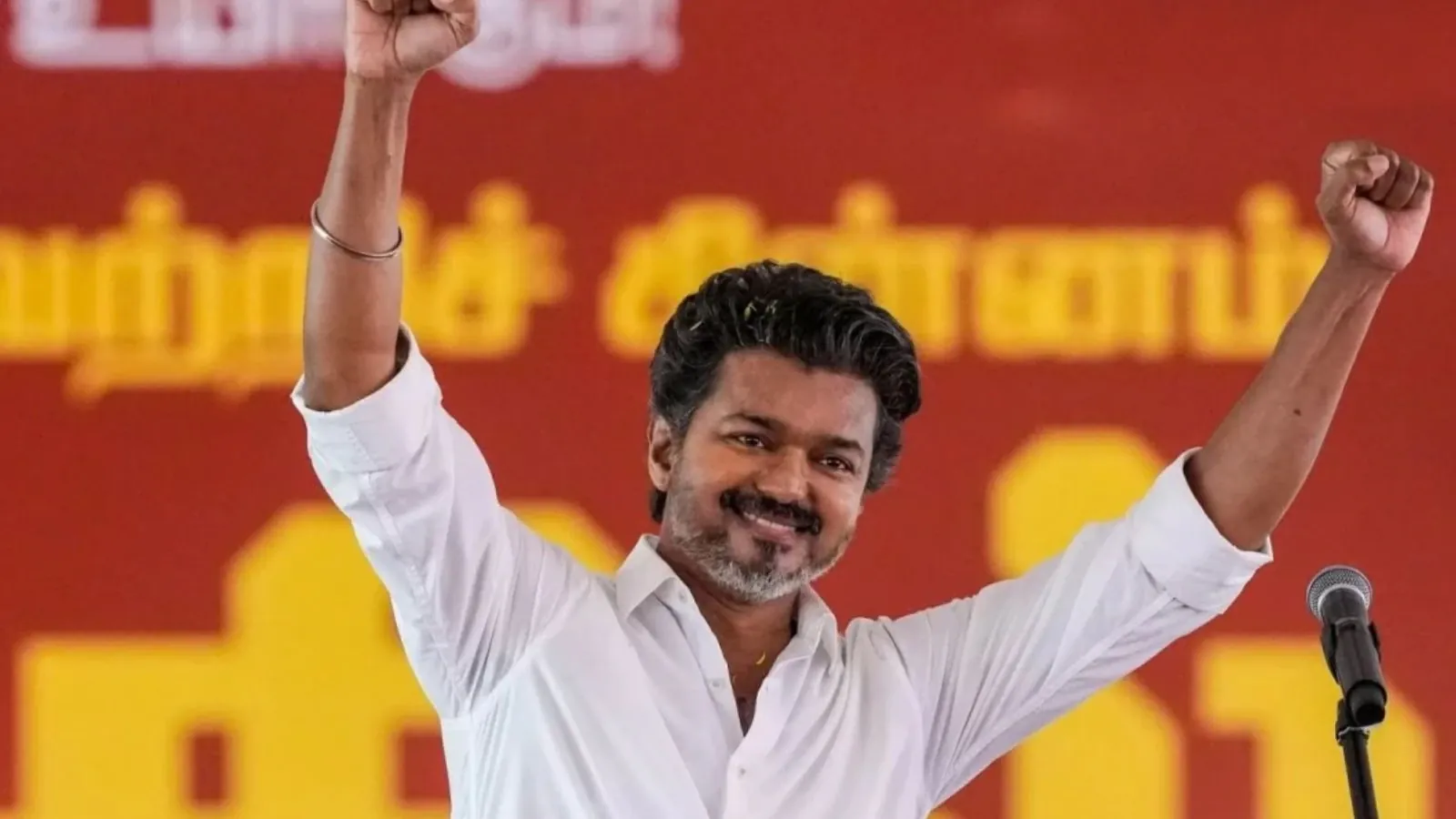
Actor-turned-politician C. Joseph Vijay officially took the oath as the Chief Minister of Tamil Nadu on the morning of May 10, 2026, ending a 60-year political duopoly held by the DMK and AIADMK. During the ceremony at the Nehru Indoor Stadium, Vijay asserted absolute authority over his new administration, telling supporters and allies that there will be no power center other than himself. This definitive stance comes as the state shifts away from decades of traditional Dravidian party governance following a tense five-day political stalemate. He warned rivals against attempting to destabilize the government.
The TVK leader’s path to power was finalized after VCK support ended a 48-hour deadlock that followed the May 4 election results. Vijay expressed gratitude to DMK allies, including the Congress, CPI, and CPI(M), for helping his party reach the 120-seat threshold in the 234-member assembly. According to a report by NewsOnAir, the event was attended by high-profile figures including Congress leader Rahul Gandhi, whom Vijay publicly thanked as a brother. The new CM addressed the crowd with a “only 1 power” pitch that emphasized his role as the sole decision-maker.
Nine ministers joined the new cabinet, including veteran leader KA Sengottaiyan and strategist Aadhav Arjuna. S. Keerthana was also sworn in as the youngest member of the council. Within hours of taking office, Vijay signed his first three executive orders. These directives provide 200 units of free electricity for all households, establish a dedicated Women Protection Force, and create a specialized anti-drug task force. Data from the Times of India confirmed the TVK secured the required magic number just before a constitutional deadline set by Governor Rajendra Vishwanath Arlekar. The administration now faces the task of proving its majority by May 13.
Why the TVK victory signals a permanent fracture in Tamil Nadu’s political identity
The emergence of C. Joseph Vijay as Chief Minister represents the most significant disruption to South Indian politics since the rise of MGR in the 1970s. By explicitly labeling himself as the “only power center,” Vijay is attempting to bypass the era of coalition-heavy governance that often paralyzed previous administrations. This paradigm shift suggests a move toward a more centralized, populist leadership style that mirrors national trends rather than the localized Dravidian ideologies of the past. Competitors in the DMK and AIADMK now face an existential crisis as their traditional vote banks have been successfully courted by a non-traditional political entity. The immediate rollout of free electricity and specialized security forces indicates a strategy focused on rapid, visible deliverables to cement public trust before the first assembly session.