
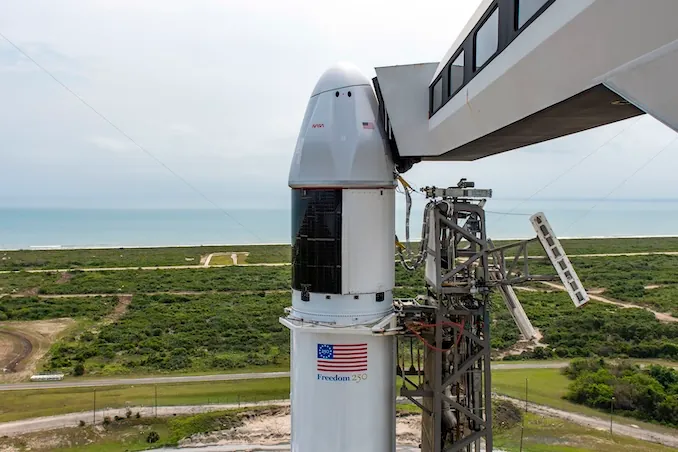
Funded by a historic $1.77 trillion public offering on June 12, SpaceX is on track to deploy roughly 3,000 Starlink satellites into orbit by the end of 2026. The aerospace company crossed the halfway mark this week, having already launched over 1,500 satellites this year to support a growing broadband network.
That network now serves 10.3 million subscribers across 30 countries. The aggressive launch cadence is physically altering the near-Earth environment and placing extreme pressure on competing telecommunications projects.
Key Details
- Recent Deployment: The company successfully launched 24 Starlink satellites from Vandenberg Space Force Base on June 24.
- Orbital Capacity: There are now over 9,600 Starlink satellites currently operating in orbit.
- Regulatory Scale: The FCC officially authorized 12,000 low-Earth orbit satellites, and SpaceX formally filed paperwork to approve an additional 42,000 units.
Trading under the Nasdaq ticker SPCX, the company executed the largest initial public offering in history by raising $75 billion at a fixed price of $135 per share, according to Zacks financial data. This influx of capital is directly funding heavy infrastructure projects, primarily the development of the Starship rocket and the expansion of direct-to-cell networks.
SpaceX is preparing to transition the broader space economy to a Starship-centric model to bypass the physical payload limits of the older Falcon 9 rocket. A single Starship vehicle can carry roughly 600 v2 Starlink satellites, offering over 20 times the capacity of a Falcon 9 flight. Commercialization for the Starship platform is slated for 2027.
The upcoming Starlink Broadband V3 satellites will carry 1,024 gigabits per second of bandwidth each. This hardware upgrade is forcing rival direct-to-device satellite providers to alter their business strategies. Competitor AST SpaceMobile is actively rushing carrier partnerships to keep pace with the expanding network, detailed in a PR Newswire industry report. Meanwhile, heavy-lift competitors like Blue Origin are pushing the timelines for their New Glenn rockets to challenge the current launch monopoly.
How Starship Payload Economics Squeeze Competitors
The transition from the Falcon 9 to the Starship platform alters the financial math of orbital infrastructure. By lifting 600 satellites per flight, SpaceX effectively collapses the cost per megabit of space-based internet. This engineering leap makes it exceptionally difficult for legacy aerospace firms to compete on price.
When the Starlink Broadband V3 satellites come online, the sheer volume of available bandwidth will likely commoditize basic satellite internet. Companies like AST SpaceMobile and Blue Origin are now racing against a 2027 deadline. They must establish their own operational networks before Starship commercial flights begin flooding low-Earth orbit with unprecedented data capacity.