
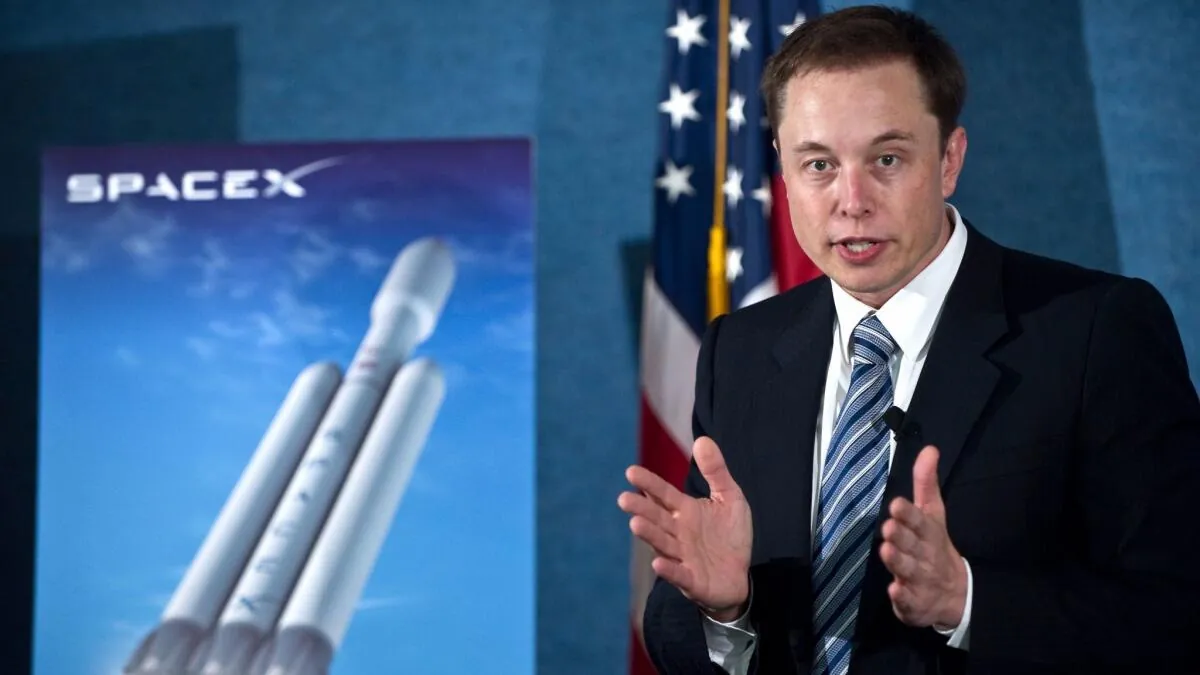
SpaceX launched its institutional IPO roadshow on June 4, 2026, ahead of a scheduled Nasdaq listing on June 12, driven by an acute terrestrial power crisis where data center electricity demand outpaced global grid supply by 13 GW last year. To bypass these energy constraints, the company is racing to fund orbital GPU data centers while simultaneously managing a $657 million operating loss from Starship development in 2025. Financial institutions began reviewing the details after filing preliminary paperwork with federal regulators.
The public offering prices shares at $135 to raise up to $75 billion, targeting a corporate valuation between $1.5 trillion and $1.75 trillion. Investors are analyzing the capital structure as the company positions its Starship rocket to disrupt commercial aviation by offering point-to-point terrestrial travel under 90 minutes, which could eliminate the necessity for long-haul overnight business flights. The Associated Press verified the details of the submission tracking the planned June IPO framework.
Financial Objectives and Market Valuation
The scale of this share issuance makes it the largest public market debut in history, exceeding the previous $29 billion record established by Saudi Aramco in 2019. The capital influx is designated to offset the significant research and development outlays required to build out the space-based network infrastructure. Investment firms are evaluating the stock against established aerospace companies like Boeing and Airbus, tracking how capital allocation transitions from traditional commercial airline manufacturing toward heavy-lift reusable launch vehicles.
According to business filing documentation, the operational costs of maintaining the Starship testing pipeline require steady liquidity. The deployment of space-based data infrastructure requires continuous orbital insertion missions, making vertical integration of launch capabilities a primary financial asset for the corporate balance sheet.
Starship Terrestrial Transit Mechanics
Disrupting Traditional Long-Haul Aviation
The point-to-point transport model relies on utilizing the upper atmosphere for rapid transit between global financial hubs. By launching into a suborbital trajectory, the vehicle bypasses weather systems and standard atmospheric drag, reducing a 15-hour flight between New York and Shanghai to less than an hour. Industry assessments indicate this capability directly threatens high-yield premium international business travel segments currently dominated by commercial airlines.
Logistics and Cargo Applications
Beyond passenger traffic, the configuration permits rapid cargo transportation for time-sensitive supply chains. Freight carriers including FedEx and UPS face long-term competition from 90-minute global delivery windows for critical components, medical supplies, and high-value tech infrastructure. The payload capacity matches traditional freight configurations while operating at speeds standard jet aircraft cannot replicate.
Regulatory Frameworks for Oceanic Reentry
Operational deployment depends heavily on ongoing civil aviation approvals and environmental clearances. The Federal Aviation Administration advanced these capabilities by publishing a specialized environmental assessment for the “Starfall” reentry vehicle profile. This administrative action establishes the necessary regulatory framework to govern point-to-point oceanic splashdowns off the U.S. West Coast.
The policy outlines safety zones, acoustic monitoring criteria, and maritime coordination protocols required for frequent suborbital reentries. Local atmospheric rules must align with international maritime laws to ensure flight corridors remain clear during active landing sequences near coastal waters.
How Orbital Infrastructure Displaces Terrestrial Logistics and Aviation
The convergence of heavy launch infrastructure and high-density computing marks a structural shift in corporate asset deployment. Legacy logistics providers operate within fixed territorial boundaries governed by regional grid access and sovereign airspace restrictions. By shifting data processing and physical transit to suborbital frameworks, capital operations bypass traditional cross-border regulatory bottlenecks and energy limits.
This structural change forces legacy aerospace firms to compete against a launch cadence that operates outside standard manufacturing cycles. The capability to execute oceanic landings under established civil frameworks anchors the legal viability of space-to-earth transit, transforming speculative transport models into an active segment of global commercial infrastructure.