
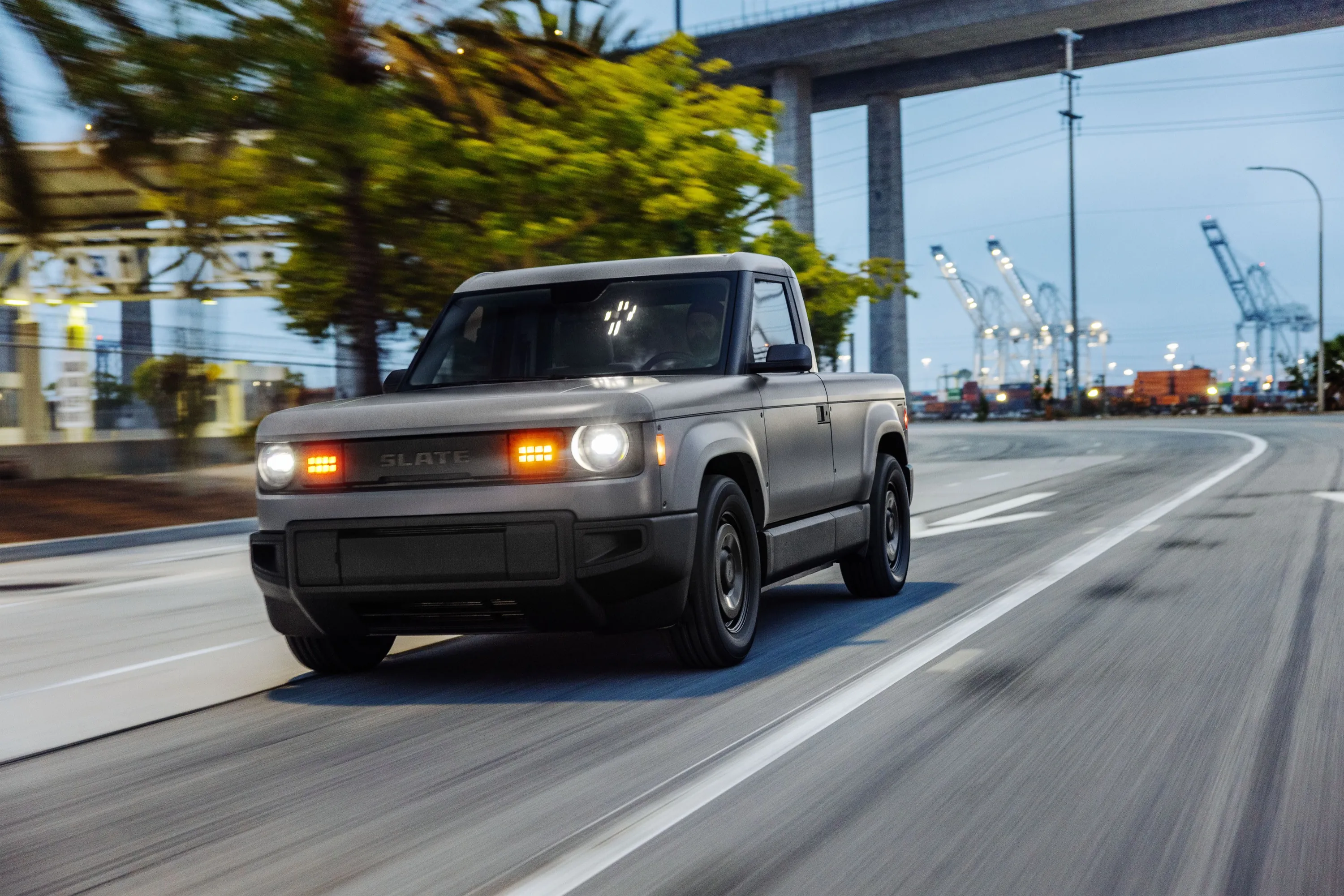
American startup Slate Auto will not sell its highly anticipated $24,950 electric truck in Canada. The geographic restriction is a direct consequence of the United States government’s July 1 refusal to grant a 16-year extension to the USMCA trade agreement. That diplomatic standoff forces the North American pact into a precarious annual review cycle and sustains the threat of heavy cross-border duties.
Because Slate manufactures its vehicles at a retrofitted facility in Indiana, exporting them north would trigger Canada’s retaliatory 25 percent import tariff on American-built cars. A company spokesperson confirmed the US-only strategy, leaving Canadian buyers without access to the cheapest new electric pickup on the market.
Key Details
- The base Slate Truck costs $24,950 and features hand-crank windows, unpainted composite panels, and no infotainment screen.
- Upgrading the vehicle with an SUV bed cap adds $5,000 to the base price.
- Slate has secured roughly 180,000 reservations from U.S. buyers ahead of initial deliveries later this year.
- The U.S. rejection of the USMCA extension means the trade deal will undergo annual reviews until a potential expiration on July 1, 2036.
The Cost of Cross-Border Economics
Slate built its entire business model around offering a stripped-down utility vehicle. Keeping the starting price under $25,000 required extreme cost-cutting measures. But the reality of retaliatory 25 percent tariffs destroys that core advantage.
Factoring in the import duties, standard logistics, and currency exchange rates, the truck’s low price tag vanishes. Slate would be forced to sell a bare-bones vehicle at standard, uncompetitive EV prices in Canada. Rather than fight those margins, the automaker opted to keep the truck exclusive to the United States.
To hit its domestic pricing targets after losing federal tax incentives, Slate recently shifted the truck’s architecture to utilize lithium-iron-phosphate (LFP) batteries. That move held the base price at $24,950 while boosting the estimated range to 205 miles. American buyers clearly want the formula. The company currently holds approximately 180,000 domestic reservations.
How Tariff Disputes Hand Ford a Northern Monopoly
Slate’s retreat leaves a lucrative gap in the Canadian auto sector. Competitors with established global supply chains are already positioning themselves to capture the budget EV demographic.
Ford is currently developing a sub-$30,000 electric truck built on its new Universal EV (UEV) platform. Designed by a dedicated skunkworks team, the compact pickup is scheduled to enter production at the Louisville Assembly Plant in 2027. Unlike Slate’s offering, Ford plans to launch its competing 2027 compact pickup in Canadian showrooms.
By absorbing the regulatory hurdles that Slate cannot afford to navigate, Ford secures a clear runway to dominate the affordable electric truck segment north of the border. The legacy automaker expects to leverage its extensive dealership network and scalable LFP battery architecture to outmaneuver smaller startups constrained by volatile trade policies.