
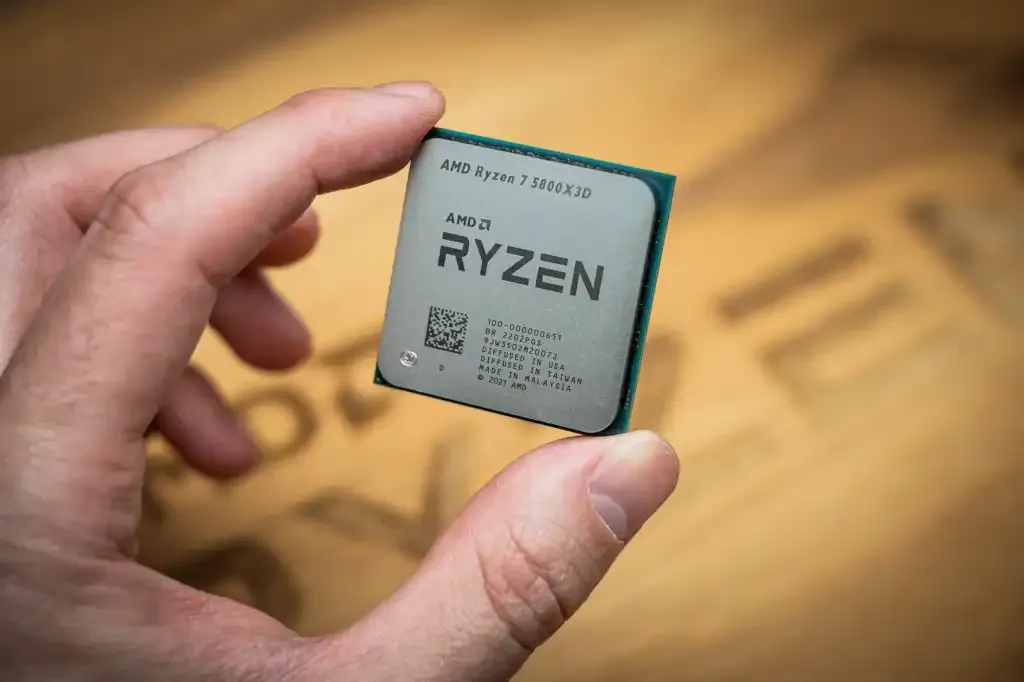
AMD has officially brought back the Ryzen 7 5800X3D as a “10th Anniversary Edition” CPU, hitting retail shelves on June 25 for $349. The re-release keeps the decade-old AM4 socket alive for builders looking to maximize gaming performance without replacing their entire system.
But the launch arrives with some highly opportunistic pricing. At $349, the four-year-old processor architecture actually costs more than AMD’s newer AM5-based Ryzen 7 7700X3D, which currently retails for $329. The retail strategy targets a specific demographic of PC gamers who are entirely frozen in place by the high financial barrier of modern DDR5 memory platforms.
Key Details
- Available as of June 25 for $349 with commemorative anniversary packaging.
- Ships with a Carbice Ice Pad instead of a traditional tube of thermal paste.
- Requires a completely retooled second-generation cache-stacking manufacturing process.
- Faces internal price competition from the newer $246–$300 Ryzen 5 7600X3D.
Rebuilding this processor required actual engineering work, not just a simple repackaging of old deadstock. The original Ryzen 7 5800X3D launched in April 2022 using TSMC’s first-generation System-on-Integrated-Chips hybrid bonding technology. Because that specific manufacturing line is now decommissioned, AMD Corporate VP David McAfee confirmed the company had to shift production lines to a second-generation stacking process. This required fresh reliability testing and completely new bonding validation.
AMD also changed what comes inside the box. Buyers will find a carbon nanotube thermal interface instead of standard thermal paste. The peel-and-stick pad eliminates application mess and provides sustainable heat transfer for the CPU.
The performance still holds up beautifully. The massive 96MB of L3 V-Cache allows the older Zen 3 architecture to maintain pace with modern silicon. In benchmark testing, the anniversary edition actively trades blows with the Ultra 7 270K Plus and the Core i7-14700K in DDR4-based systems.
Why the AM4 Platform Outlasted Its Own Replacements
Hardware manufacturers rarely keep a motherboard socket active for ten years. The underlying economic driver forcing this unprecedented CPU re-release is the severely inflated cost of DDR5 memory in 2026. AI-driven hardware demand and ongoing supply chain constraints have pushed DDR5 prices well beyond the reach of average consumers.
To successfully upgrade to the modern AM5 platform, builders must purchase a new motherboard and a DDR5 memory kit simultaneously. That high financial toll effectively trapped a huge portion of the PC building community on the older AM4 ecosystem. By pricing the 5800X3D at $349, AMD is directly monetizing that trapped user base. Builders are willingly paying a premium for the older chip simply because it remains vastly cheaper than executing a full platform rebuild.