
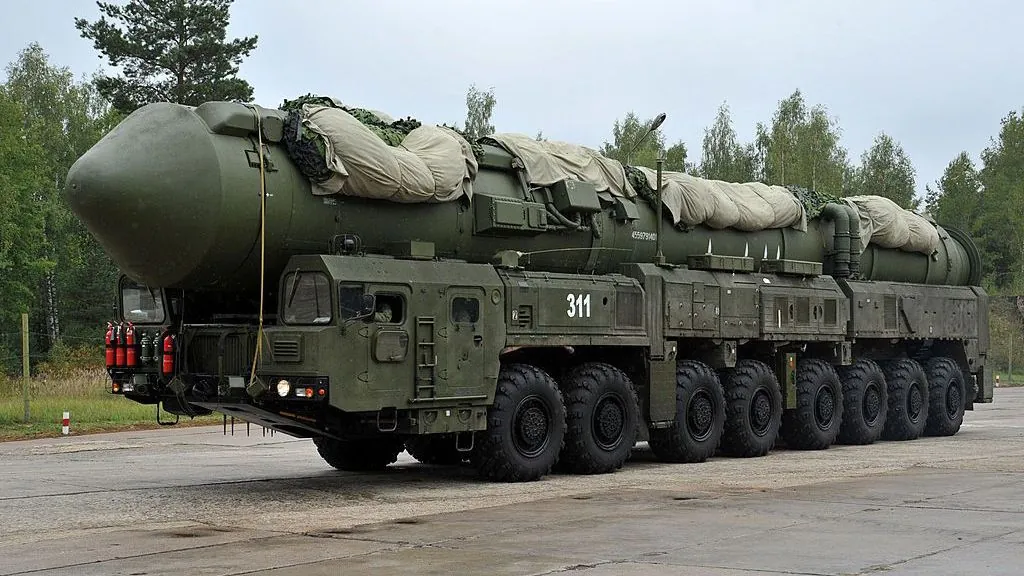
Russia is deploying the Oreshnik intermediate-range ballistic missile primarily as a psychological deterrent against Western capitals rather than a weapon of decisive conventional destruction. The strategy shift occurs as Moscow faces severe domestic and military pressures. According to a July analysis by the Center for Strategic and International Studies, Russian forces have suffered an estimated 1.4 million casualties and lost the broader military initiative. Ukrainian long-range strikes have severely damaged Russian logistics, enforcing fuel rationing across 56 Russian regions by late June and driving up grocery prices.
The Oreshnik, which translates to “hazelnut tree” in reference to its cluster of independently targetable warheads, travels at speeds between Mach 10 and Mach 11. It can strike any target in Europe. But its combat record remains distinct from its imposing profile. The weapon was launched at least three times, including a heavy 90-missile barrage targeting the Kyiv region in May. That strike killed at least four people, yet experts indicate the missile’s true value lies in its signaling rather than its conventional yield.
President Vladimir Putin first unleashed the experimental missile, based on the RS-26 Rubezh ICBM, in November 2024 against the city of Dnipro. The Kremlin framed the launch as direct retaliation against the U.S. and the U.K. for allowing Ukraine to use Western long-range weapons on Russian territory. Its deployment has intensified this year. In January, Russia fired the missile into the western Lviv region near the Polish border, striking a vital artery for NATO military supplies according to an AP News report.
The international community forcefully condemned the weapon’s use following the early 2026 strike on Lviv. The U.S. and the U.K. hauled Russia before the UN Security Council, where U.S. deputy ambassador Tammy Bruce called the deployment a “dangerous and inexplicable escalation.” The Oreshnik gives Moscow a unique geopolitical instrument to launch an unstoppable conventional strike anywhere in Europe without physically tapping its nuclear arsenal. This blurs traditional escalation lines. The missile’s original combat debut coincided directly with Putin signing a revised nuclear doctrine, a policy update that explicitly allows for a nuclear response to a conventional attack supported by a nuclear power.