
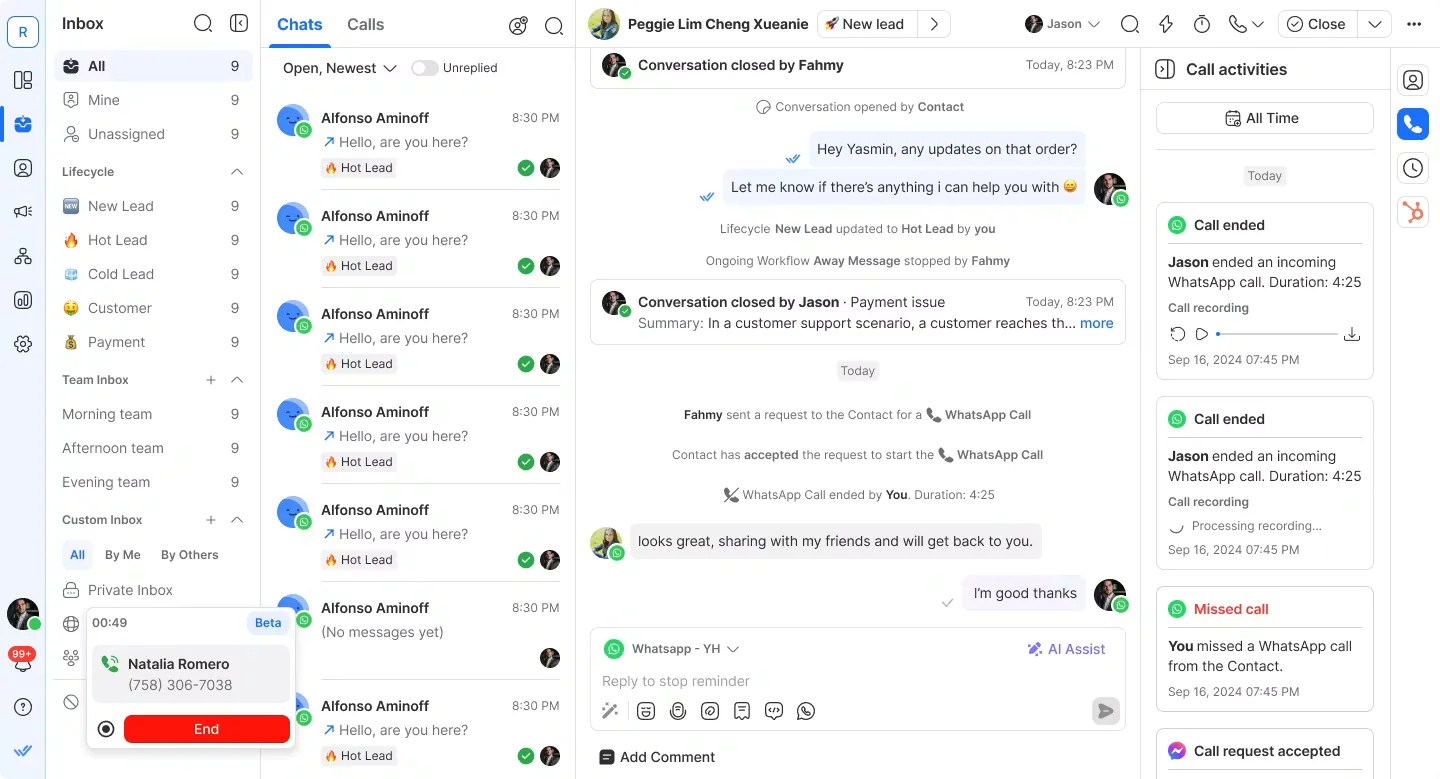
Meta opening up the WhatsApp Business API completely flipped how companies talk to us. We are looking at a future where waiting on hold is practically extinct. Right at the front of this shift is Respond.io. The Malaysia-based messaging platform just raised a $62.5 million Series B funding round. New York growth equity firm Camber Partners led the investment, with Endeavor Catalyst jumping in too.
The numbers behind this are absolutely fascinating. Respond.io is already profitable, sitting on a 30% profit margin and pushing a 169% year-over-year growth rate. They confirmed a $35 million ARR as they prepare to scale. Their autonomous agents are currently chewing through roughly 2 billion messages every single quarter. They don’t just route tickets anymore; the AI actually qualifies leads and closes sales across WhatsApp, Instagram, TikTok, and regular old SMS without a human ever touching the keyboard.
The backstory is just as interesting. The platform originally launched as a Hong Kong startup named Rocketbots back in 2017. They moved operations to Kuala Lumpur two years later and officially rebranded in 2020. Since securing a $7 million Series A in late 2022, they clearly figured out the math on unifying complex API channels into one smart workspace. Now, they plan to use this new capital to hunt for strategic acquisitions in North America and Europe.
How Respond.io Threatens Legacy Helpdesk Giants
This isn’t just another software update. This $62.5 million raise is one of the most substantial recent up-rounds for a Southeast Asian enterprise SaaS company. It signals a direct geographical pivot toward Western markets where older giants operate. Companies like Zendesk and Intercom dominated customer service for years. Now they have to compete with a platform built entirely around multi-channel API stability and AI workflow routing.
Even regional competitors like the WhatsApp-focused Wati rely heavily on simpler bot-driven systems. Respond.io gives businesses a unified brain for all their direct messages. The push into North America means European and US businesses might soon replace human helpdesk floors entirely with these automated Malaysian agents.