
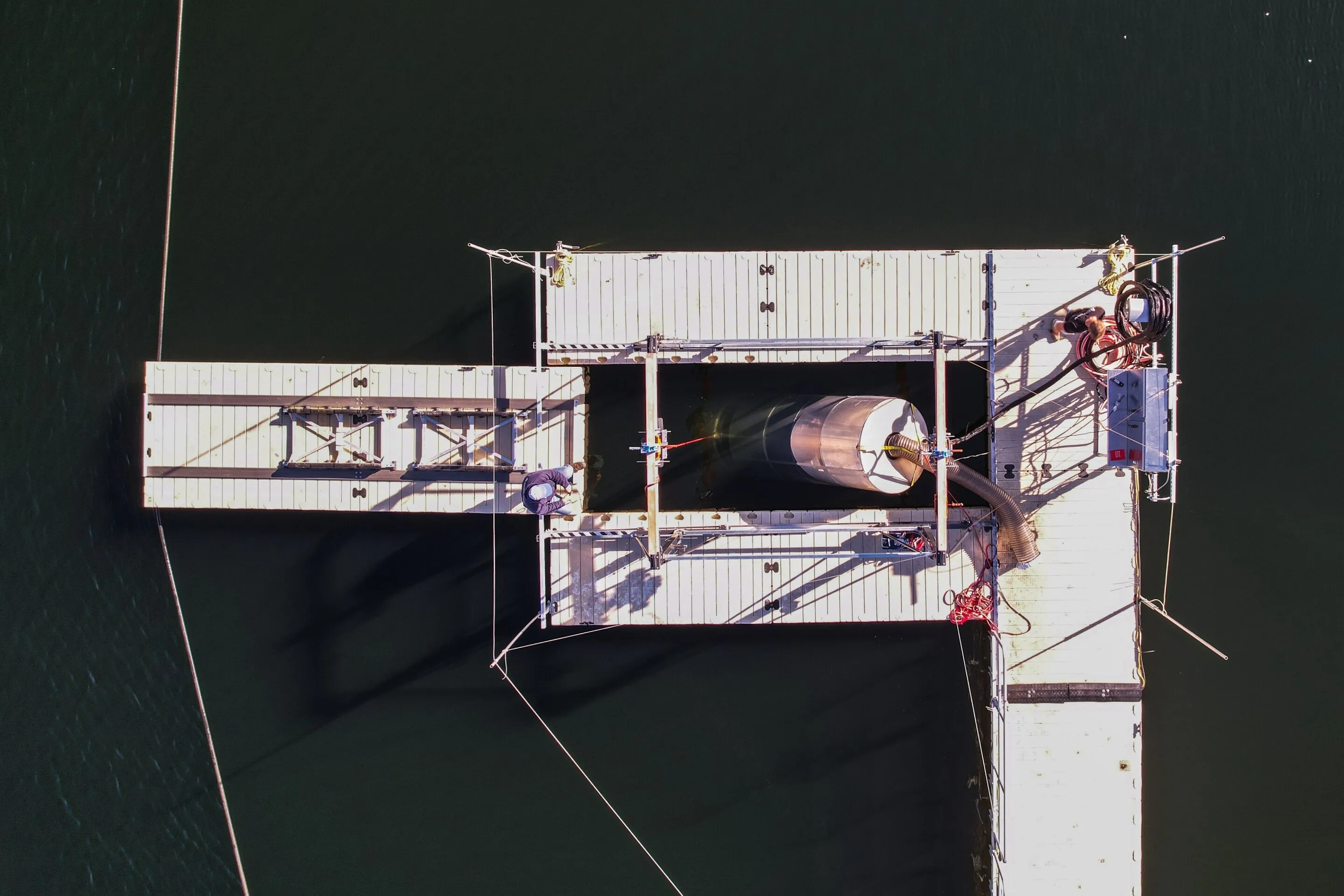
Prolonged droughts and a shrinking Sierra Nevada snowpack have pushed California’s freshwater systems to the breaking point. With traditional sources like the Colorado River under immense strain, Menlo Park startup OceanWell is partnering with the Las Virgenes Municipal Water District in Los Angeles County to test a radical new approach to ocean desalination.
Instead of building sprawling onshore facilities that pump huge volumes of seawater to the surface, engineers are dropping specialized desalination pods 400 meters below the ocean. These subsea units rely on naturally occurring high hydrostatic pressure to drive the reverse osmosis process. This clever physics trick cuts overall energy consumption by up to 40% compared to conventional land-based plants.
The engineering behind these underwater units solves a critical flaw in older coastal systems. A specialized membrane wraps the pods to prevent marine life from being drawn into the intakes. The 400-meter depth requirement provides the exact natural pressure needed to force water molecules through the filters, as detailed in a technical Forbes overview.
The race to commercialize subsea water technology is accelerating globally. OceanWell is currently competing against European rivals like Norway’s Flocean and the Netherlands’ Waterise, both of which are concurrently testing their own deep-sea reverse osmosis pods, according to a recent Associated Press report.
Solving the Coastal Brine Problem
Historically, coastal desalination was viewed as a costly last resort. North America’s largest seawater facility, the Carlsbad Desalination Plant, has faced intense environmental scrutiny over its highly concentrated toxic brine discharges into shallow waters since opening in 2015.
Pushing the reverse osmosis process deep underwater diffuses the brine naturally across vast ocean currents before it can accumulate into localized dead zones. The Las Virgenes Municipal Water District confirmed the ongoing pilot program is part of local resiliency strategies. If successful, these subsea pods could eliminate the need for expensive coastal real estate while securing drought-resistant water supplies for millions.