
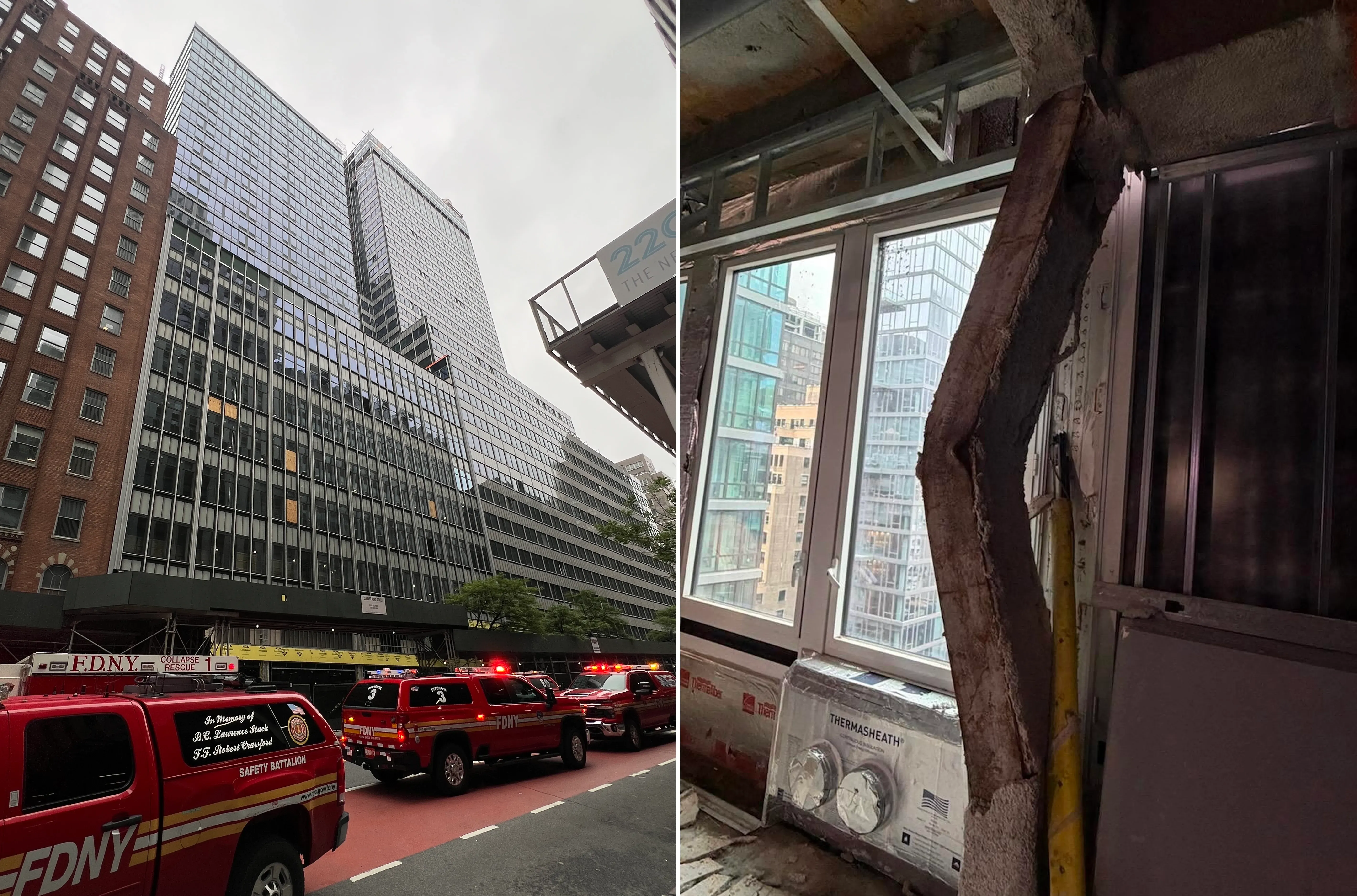
Emergency crews and structural engineers spent Tuesday night executing a delicate rescue operation, ultimately completing the overnight stabilization efforts at the Midtown Manhattan building. Workers secured the 37-story structure at 235 East 42nd Street after two main steel support columns suddenly buckled on Tuesday morning. The failure caused the 21st and 22nd floors to visibly sag.
The swift engineering response worked. The 37-story Manhattan high-rise has been deemed stable, allowing officials to begin lifting evacuation orders for some of the nine surrounding buildings cleared during the emergency. Hundreds of people fled the area on Tuesday, including students from a 400-person school and staff operating inside the Israeli Consulate.
Mayor Zohran Mamdani and the FDNY established a strict “frozen zone” around the property as the crisis unfolded. Fire officials deployed drones to monitor the exterior glass and steel for continuous movement before sending engineers inside.
The compromised tower is the former global headquarters of pharmaceutical company Pfizer. Developer Metro Loft is currently gutting the structure to build over 1,600 luxury apartments. They are also adding 11 floors to an adjacent building on the lot. It is the largest office-to-residential conversion attempt in New York City history.
How the DOB Complaint Threatens Metro Loft’s 1,600-Unit Conversion
City regulators are immediately shifting their focus to the construction parameters. The NYC Department of Buildings filed an official construction-safety complaint against the developers on Wednesday. Investigators directly cited a lack of required approvals for foundation work at the property.
This citation introduces immediate financial and logistical friction for Metro Loft and the project’s architectural firm, Gensler. Office-to-residential conversions operate within tight municipal oversight and strict load tolerances. The unauthorized foundation work citation will likely freeze vertical construction on the adjacent 11-story addition while engineers reassess the structural integrity of the original Pfizer framework.