
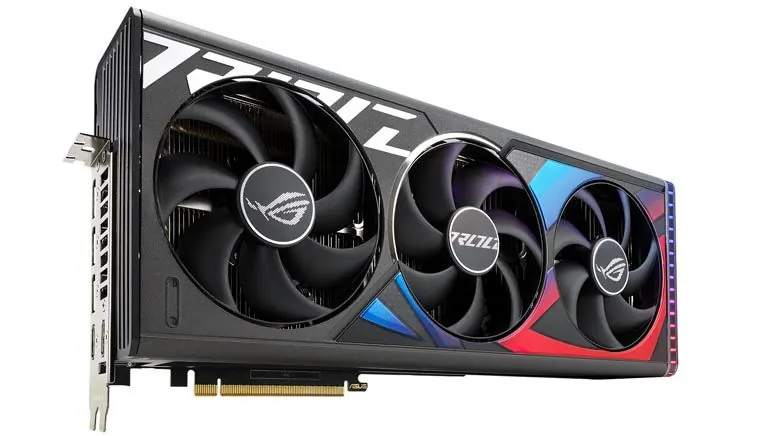
Nvidia’s latest mid-range graphics cards are finally on store shelves, but the price-to-performance ratio is causing a serious case of sticker shock. Rather than paying a steep premium for a new RTX 50-series GPU, many buyers are realizing that a secondhand flagship card from nearly four years ago makes a lot more sense.
The RTX 4080 originally hit the market in November 2022 for an eye-watering $1,199. Today, finding a used one is becoming the smartest upgrade path available. The new mid-tier alternative launched with a base MSRP of $549, but board partner versions from MSI and Asus push the actual street price significantly higher. Worse, buying that new mid-range hardware traps you with a severe physical memory limit.
Nvidia’s main pitch for the Blackwell architecture is entirely software-based. The company locked DLSS 4 Multi Frame Generation strictly behind the RTX 50-series hardware. This feature creates up to three AI-generated frames for every single frame your computer actually renders. It sounds incredibly impressive on paper.
Is the promise of AI-generated frames really worth taking a downgrade in raw memory? The answer is a hard no.
The RTX 4080 still supports standard DLSS 3 frame generation, DLSS 4.5 upscaling, and RTX HDR. That is more than enough to handle modern releases without breaking a sweat.
When you try to push 1440p or 4K resolutions, raw hardware specifications matter a lot more than software tricks. The older RTX 4080 ships with 16GB of video memory. If you buy the new hardware, you are stuck with the RTX 5070’s 12GB of VRAM, a limitation that is already causing bottlenecks in visually demanding titles. Hardware reviewers at XDA Developers recently pointed out that missing out on Nvidia’s newest frame generation simply doesn’t justify paying the new mid-range tax for less physical memory.
Why Raw VRAM Outlasts Artificial Software Barriers
We saw a similar market distortion during the cryptocurrency mining boom of 2021 and 2022. During that hardware shortage, PC builders learned that sheer memory capacity dictates how long a graphics card stays relevant. Nvidia is currently betting that software magic can replace physical silicon. They want you to accept a 12GB memory ceiling on a mid-range card by promising AI frame generation will smooth out the performance gaps.
AI frames can’t fix a hard VRAM bottleneck. If a game requires 14GB of memory to load its high-resolution textures, a 12GB card will stutter aggressively, regardless of how many fake frames the Blackwell architecture tries to inject into the sequence.
That physical reality is exactly why the used RTX 4080 remains a high-performance powerhouse. You are trading an artificial software restriction for genuine physical hardware horsepower. For anyone playing at 4K, having that extra 4GB of VRAM buffer on a used flagship easily beats the software gimmicks of a brand-new mid-range card.