
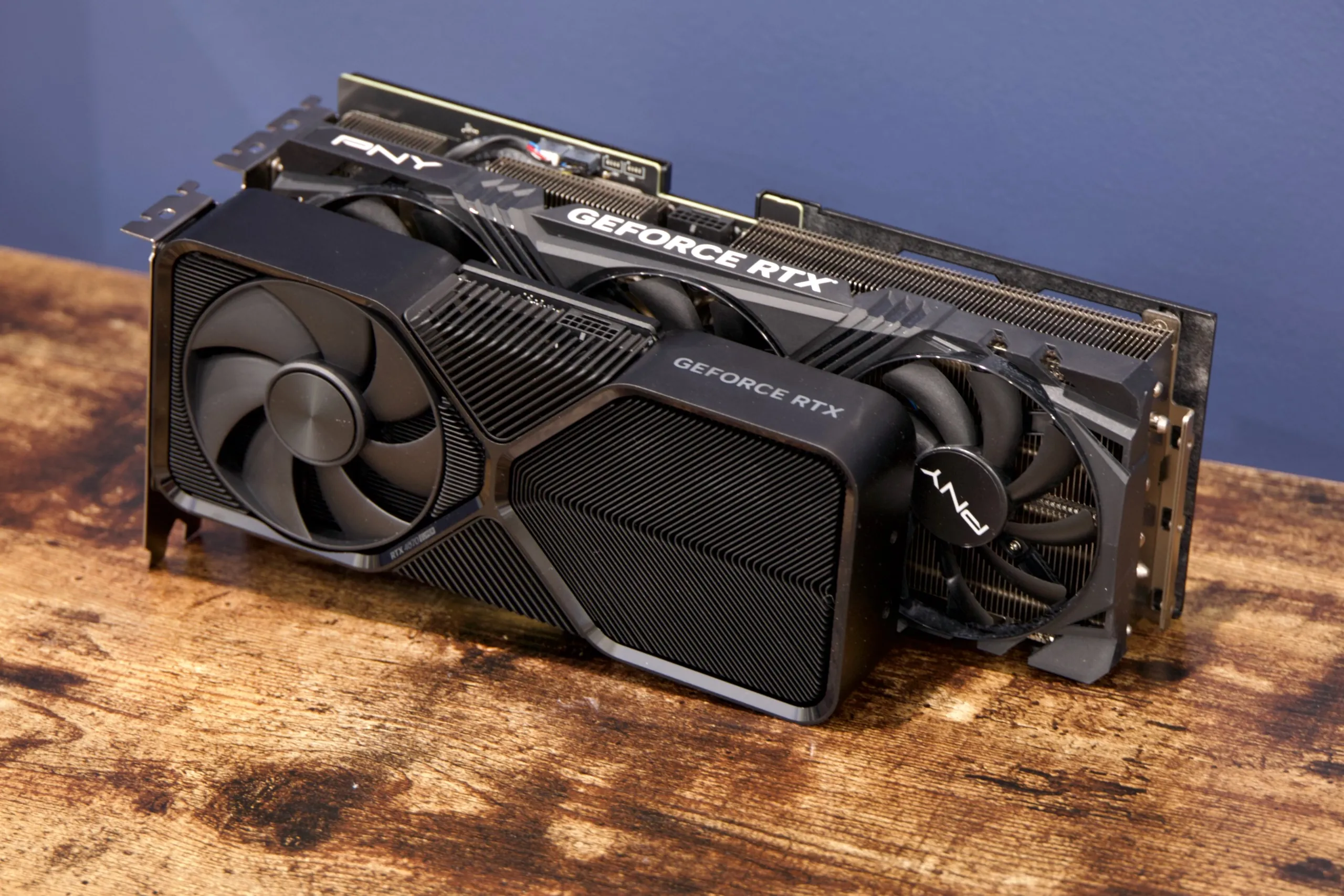
XDA Developers just tested Nvidia’s neural upscaling against native rendering on a two-year-old RTX 4070 Ti Super paired with an OLED display. The benchmark results disrupt the traditional PC gaming hierarchy completely. Native resolution rendering is no longer the gold standard.
The reviewer used Hogwarts Legacy, an open-world title infamous for traversal hitches, to push the hardware. Toggling DLSS Quality erased micro-stutters instantly. Frame pacing smoothed out, and the average frame rate jumped from 64 FPS to 85 FPS. This performance leap confirms that the 1440p sweet spot is now entirely dominated by AI upscaling techniques.
But performance gains usually come with a visual cost. Not here. The neural upscaling introduced practically no legible sacrifices to image quality. Fine details like snow textures and off-road safety fencing stayed perfectly sharp. Even distant structures, such as the Avengers Tower in separate tests, retained their clarity without breaking a sweat.
The upscaling space advanced aggressively early this year. Nvidia fundamentally changed the math with its CES 2026 announcement of DLSS 4.5. The technology uses a 2nd Generation Super Resolution Transformer that requires five times the compute power of previous generations. That raw compute minimizes ghosting and stabilizes temporal artifacts that used to plague older upscaling algorithms.
To understand how modern GPUs are abandoning native rendering, look at the new underlying sequence:
- The GPU renders an internal frame at a significantly lower resolution, typically 960p.
- The Super Resolution Transformer analyzes the data to reconstruct the missing pixels.
- Dynamic Multi Frame Generation draws up to five entirely AI-generated frames for every conventionally rendered one.
- The final output is delivered to the monitor as a flawless 1440p image.
This architecture forces a hard reality on PC builders. Relying heavily on AI upscaling burns through memory. As a result, 12GB of VRAM is now the absolute baseline standard for mid-range enthusiast builds. Older 8GB cards simply lack the buffer to hold these high-resolution AI textures, pushing them out of the modern gaming conversation entirely.
How Neural Upscaling Rewrites the Hardware Upgrade Cycle
Early iterations of upscaling technology were treated as a necessary crutch. Budget gamers turned on DLSS or FSR just to make unoptimized titles playable. The XDA benchmark proves that era is over. Neural upscaling is now a core necessity engineered directly into high-end native replacement.
AMD continues to compete aggressively with FSR 4.1, while Intel pushes XeSS into budget systems. But Nvidia’s integration of 6x Multi Frame Generation alters the fundamental metrics of the industry. Reviewers can no longer evaluate a graphics card based solely on how many raw pixels it pushes per second. The hardware is now a vessel for AI frame prediction.
This shift extends the lifespan of older mid-range cards like the RTX 4070 Ti Super. Gamers do not need to upgrade their silicon to chase native 1440p performance when the software delivers an identical visual experience at 85 FPS. The benchmark renders pure native rendering an inefficient waste of GPU resources.