
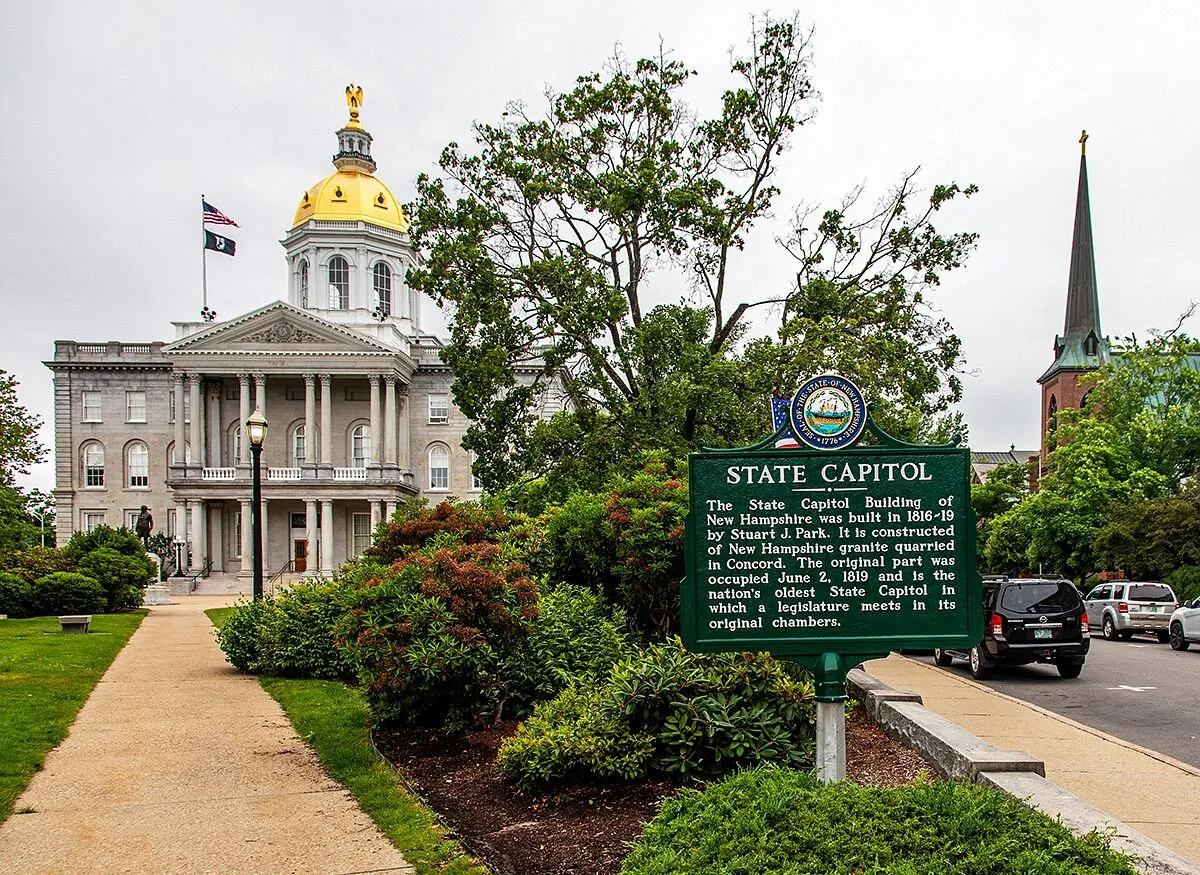
The legislative race among U.S. states to capture cryptocurrency capital just accelerated. New Hampshire has officially signed the “Blockchain Basic Laws” into effect, establishing a comprehensive legal framework to protect digital asset ownership and mining operations.
The move arrives immediately on the heels of the state establishing a formal Bitcoin Reserve to diversify its treasury assets.
Key Details
- The legislation expressly forbids state and local agencies from restricting an individual’s right to self-custody digital assets or using them for purchases.
- Digital asset mining and staking operations are officially exempt from being classified as securities under state law.
- The state superior court system will establish a specialized “blockchain dispute docket” to handle complex industry litigation.
The new policy severely limits municipal overreach. Home miners are now protected from discriminatory local zoning regulations, provided they comply with standard local noise ordinances. If local government entities attempt to restrict the right to use or mine digital assets, residents have direct legal recourse.
The enactment of HB 639 explicitly grants civil remedies and attorney’s fees to individuals whose rights are violated, according to legislative tracking data detailing the implementation timeline.
This legal clarity removes a significant operational hurdle for institutional staking operations. State law will no longer treat the technical validation of blockchain networks as an investment contract. The structural change provides regulatory cover for infrastructure firms wary of conflicting federal enforcement actions.
New Hampshire’s aggressive push into the sector is deliberate, confirmed by Decrypt’s coverage of the recent bill signing. By coupling a state-level Bitcoin Reserve with a specialized judicial docket, the state is actively positioning itself as a corporate domicile for digital asset firms seeking legal predictability.
What This Means for Municipal Zoning and Tech Investment
The creation of a specialized blockchain dispute docket is a highly consequential structural change for the industry. Most U.S. jurisdictions lack judges with the technical expertise to parse decentralized finance protocols or cryptographic key management. By centralizing these conflicts into a dedicated court, New Hampshire is offering tech firms a streamlined, predictable legal environment.
At the local level, the law directly preempts municipal zoning boards from using energy regulations to zone out miners. As long as operators meet standard noise thresholds, local governments cannot single them out for elevated utility rates or operating bans. This establishes New Hampshire as one of the most legally secure operating environments for digital asset firms on the East Coast.