
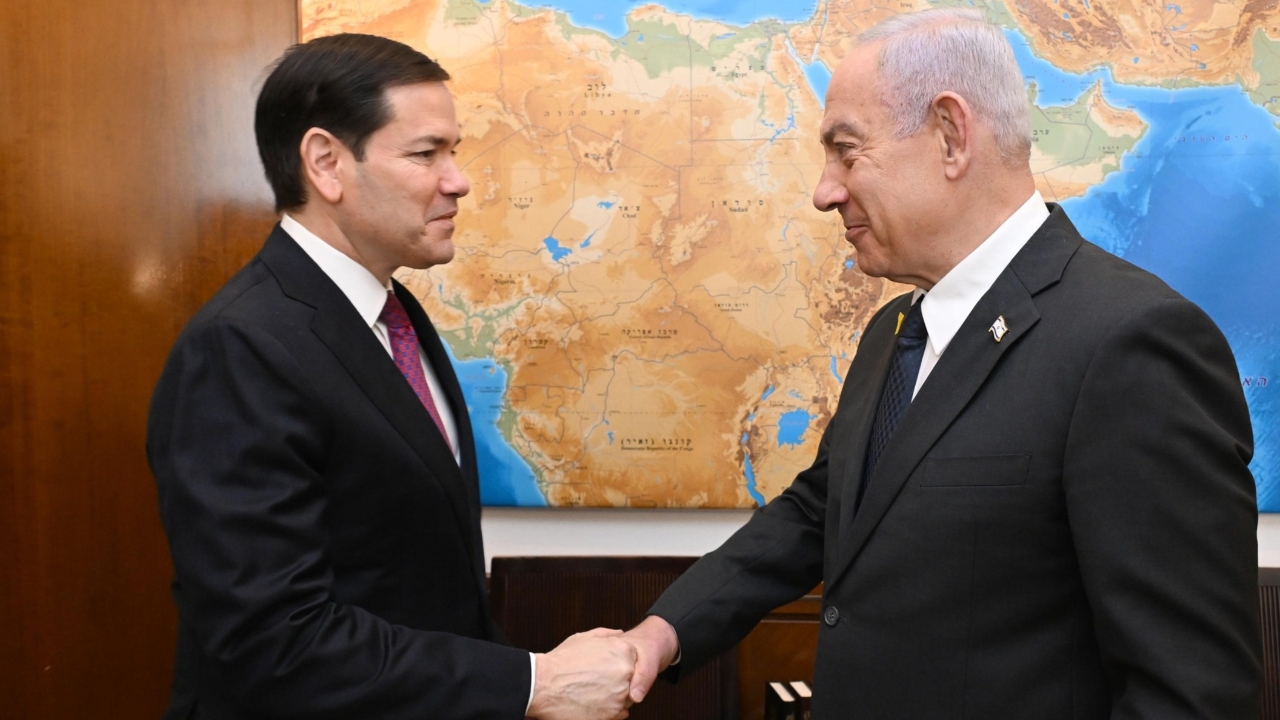
Israeli Prime Minister Benjamin Netanyahu sent a clear message this week. He refuses to rule out further attacks on Hamas leaders, even those living outside his country’s borders. “They have no immunity,” he stated, “no matter where they are.” This strong stance came during a press conference in Jerusalem with U.S. Secretary of State Marco Rubio.
Netanyahu made his remarks after a controversial Israeli strike aimed at Hamas leaders in Qatar. Qatar is a key American ally. The move drew criticism from many nations, including former U.S. President Donald Trump. Hamas claimed six people died in the attack, but said its top leaders were safe. This incident clearly put the U.S. in a tough spot.
Just days before this, the White House confirmed that Trump had assured Qatar that such an event “would not happen again on their territory.” This created visible tension during the joint appearance. When a reporter asked if the U.S. was involved in the strike, Netanyahu cut the question short. “We do it ourselves. Period,” he declared. Rubio, when asked by the BBC if the strike damaged U.S. regional ties, simply said the U.S. keeps “strong relationships with Gulf allies.”
Despite the obvious strain, both leaders tried to show a united front. Rubio praised the two nations’ ties in technology and culture. Netanyahu, for his part, said Israel “has no better ally” than the United States. This diplomatic show played out as Arab leaders met to back Qatar, with Qatar’s Prime Minister urging the world to drop its “double standards” and punish Israel.
Trump later reaffirmed his earlier promise to Qatar. When asked if Israel had guaranteed no further attacks there, he repeated twice that Netanyahu “will not attack Qatar.” This puts the tiny nation in a unique and critical position. Qatar hosts a major U.S. air base. It also plays a vital role in trying to end the war in Gaza, acting as a go-between for Hamas and Israel. The political office for Hamas has been located in Qatar since 2012.
Rubio is expected to travel to Qatar after his stop in Israel. Earlier on Sunday, Netanyahu told reporters that the U.S.-Israel relationship is “as durable as the stones in the Western Wall.” The two leaders had visited holy sites in Jerusalem’s Old City together. They also likely discussed Israel’s military plans for Gaza City and the continued expansion of Israeli settlements in the West Bank.
Over the past weekend, the Israeli army continued to demolish residential buildings in Gaza City. Local media reports suggest Israel is preparing for ground operations in the western part of the city. These high-stakes discussions between Netanyahu and Rubio come just before the United Nations General Assembly next week. Several key U.S. allies, including the UK, France, Canada, Australia, and Belgium, are expected to recognize a Palestinian state during this assembly.
Source: BBC