
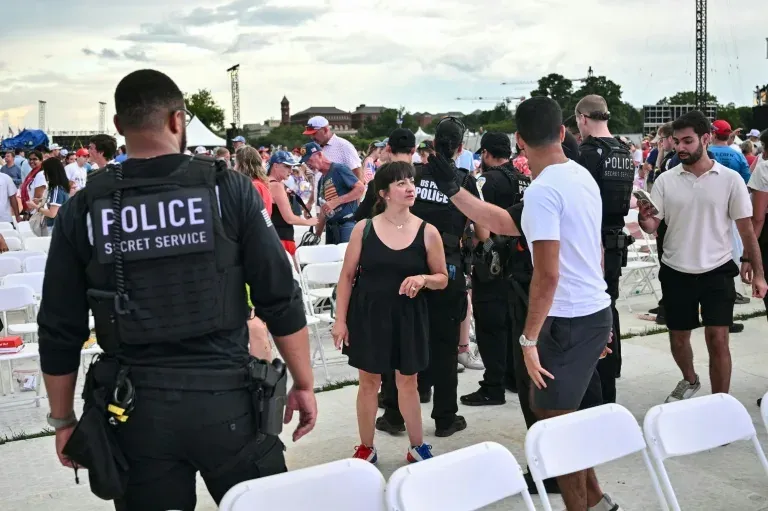
The National Mall in Washington, D.C., was abruptly evacuated Saturday evening as severe thunderstorms converged on the capital during the Freedom 250 Independence Day celebrations. The disruption compounded a chaotic holiday weekend already defined by dangerous extreme weather and visible political fractures across the city.
D.C. Homeland Security ordered all attendees to seek immediate shelter inside nearby federal buildings and museums. The U.S. Secret Service, coordinating with the Federal Emergency Management Agency and the National Park Service, temporarily suspended security checkpoints to prioritize the physical safety of guests, performers, and staff.
After the severe weather passed, Freedom 250 organizers announced the gates reopened at 9:45 p.m. ET. They stated the decision came directly at the direction of President Trump. His scheduled address was pushed to 11 p.m. ET to accommodate the logistical delays, followed by the planned fireworks display.
“Rain or shine, the American people deserve a celebration worthy of our nation’s historic 250th birthday,” organizers posted in a social media update.
But getting the crowds back inside proved complicated. As a strict security mandate, the Secret Service required every evacuated guest to undergo the complete screening process a second time before re-entering the grounds.
The evening storms arrived just hours after an extreme heat dome scorched the capital. High temperatures earlier Saturday forced the cancellation of the morning National Independence Day Parade. Officials also temporarily closed the Great American State Fair for safety reasons.
While military flyovers continued overhead throughout the day, masked demonstrators from the white nationalist group Patriot Front marched through Washington carrying U.S. and Confederate flags, according to Financial Times reporting.
The logistical hurdles of the Semiquincentennial highlight the growing strain on federal agencies tasked with securing massive public events amid increasingly volatile weather patterns. The Secret Service’s decision to mandate full rescreening for tens of thousands of evacuees establishes a rigid operational precedent for future National Special Security Events. It guarantees significant delays when unpredictable weather forces sudden evacuations, shifting the protocol entirely away from event scheduling toward absolute physical security.