
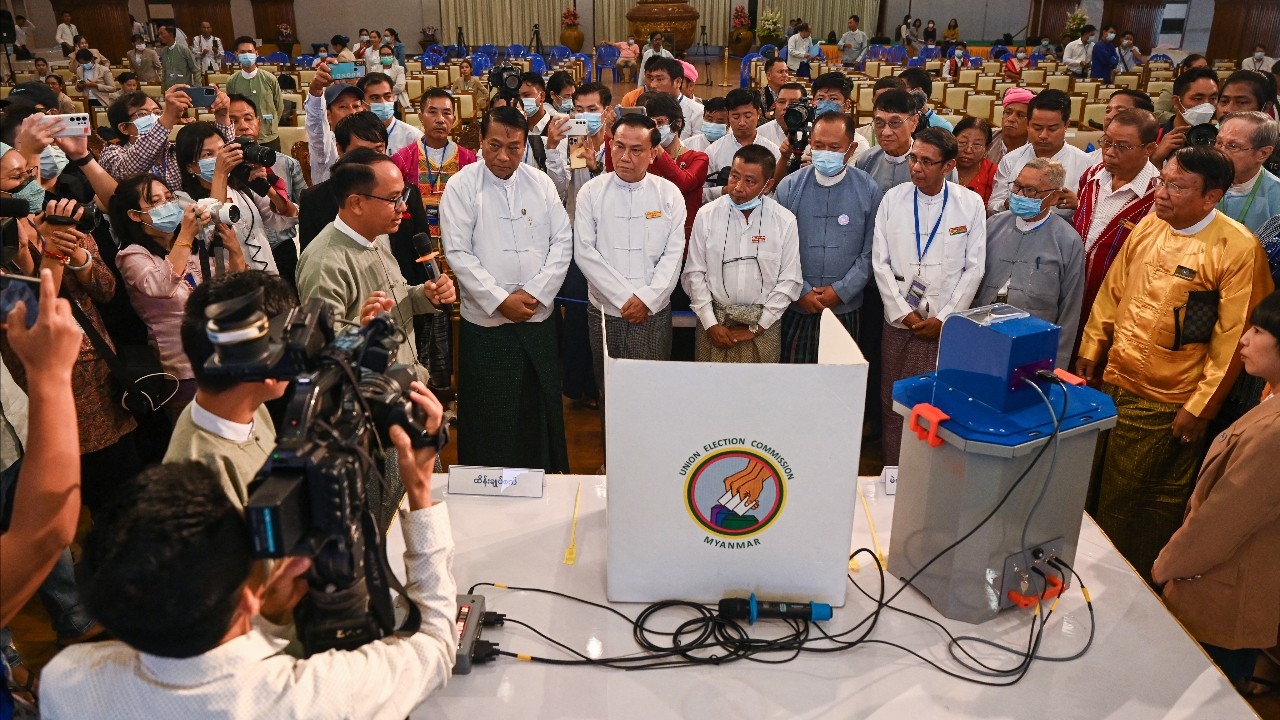
On September 3, 2025, the election commission announced the key players for a nationwide vote. They named nine major political parties that will field candidates across the country. These groups come from a larger pool of 61 registered parties. However, a shadow hangs over these plans. More than 200 townships remain outside government control, held by various anti-military forces.
Most of the chosen parties seem to have close ties to the military leader, Min Aung Hlaing. These connections range from direct links to less obvious but still strong relationships. The military government insists the election will go ahead later this year. This is despite the ongoing battles in many parts of the country.
The Line-Up: Parties and Their Connections
Local news outlets have sorted the participating parties into four main groups. This helps to see where their loyalties might lie.
Parties with Strong Military Links
These groups are practically extensions of the military itself.
- The Union Solidarity and Development Party (USDP) is a clear example. It’s led by U Khin Yee, a former general and police chief. He is a close friend of Min Aung Hlaing. Many see this party as the military’s own political arm, pushing to be the main force in the election.
- The National Unity Party (NUP) follows a similar path. It’s a direct descendent of the military government’s party from earlier times. Former generals also lead this group.
- The Democratic Party of National Politics (DNP) is another one to watch. It is also led by former generals. This party often acts as an ally of the military government.
Former Opposition, Now Aligned with the Military
Some parties once had links with the National League for Democracy (NLD). The NLD was the party of Aung San Suu Kyi. But these groups have since switched sides to support the military government.
- The People’s Pioneer Party (PPP) is one such group. Its leader is Daw Thet Thet Khine. She was an NLD Member of Parliament until 2018 when she was expelled. Today, she serves as a minister under the military government, overseeing social welfare and tourism. She represents a civilian face now supporting the military.
- The National Democratic Force (NDF) is another. It is led by U Khin Maung Swe. He was once a member of the military’s State Administration Council (SAC). He has since moved up to a top advisory role.
“Democratic” Parties with Questionable Stances
These parties try to look like democratic groups. However, their recent actions have caused many to wonder about their true position.
- The People’s Party fits this description. It’s led by U Ko Ko Gyi, a famous student leader from the 1988 uprising. He spent nearly 20 years in jail for his activism. He was once allied with the NLD but formed his own party in 2018. After the 2021 military takeover, he said he would fight peacefully. Yet, he now backs the military government’s election plans.
Smaller and Ethnic-Focused Parties
These groups often represent specific interests or ethnic communities.
- The Myanmar Farmers Development Party (MFDP) is a smaller party. It mainly focuses on the needs of farmers.
- The Shan and Ethnic Democratic Party (SEDP) is also on the list. Its leader, U Sai Ai Pao, even received an honorary title, “Thiri Pyanchi,” from Min Aung Hlaing himself.
- The Mon Women’s Party is another small group. It works to support women’s rights and the Mon ethnic community.
A Vote Under Fire
The election commission says the vote will happen in all 330 townships. But the reality on the ground is starkly different. About 144 townships are firmly under the control of resistance fighters. Another 79 townships are seeing constant battles. The military has launched heavy attacks, including bombings, in these areas. They aim to show their strength before the elections take place.
Resistance groups, ethnic armies, and international human rights organizations have all spoken out. They call this election a fake and a sham. They warn that election officials could face attacks. Many international groups that watch elections have already said they will not accept the results. This election is set to unfold against a backdrop of deep division and violence.