
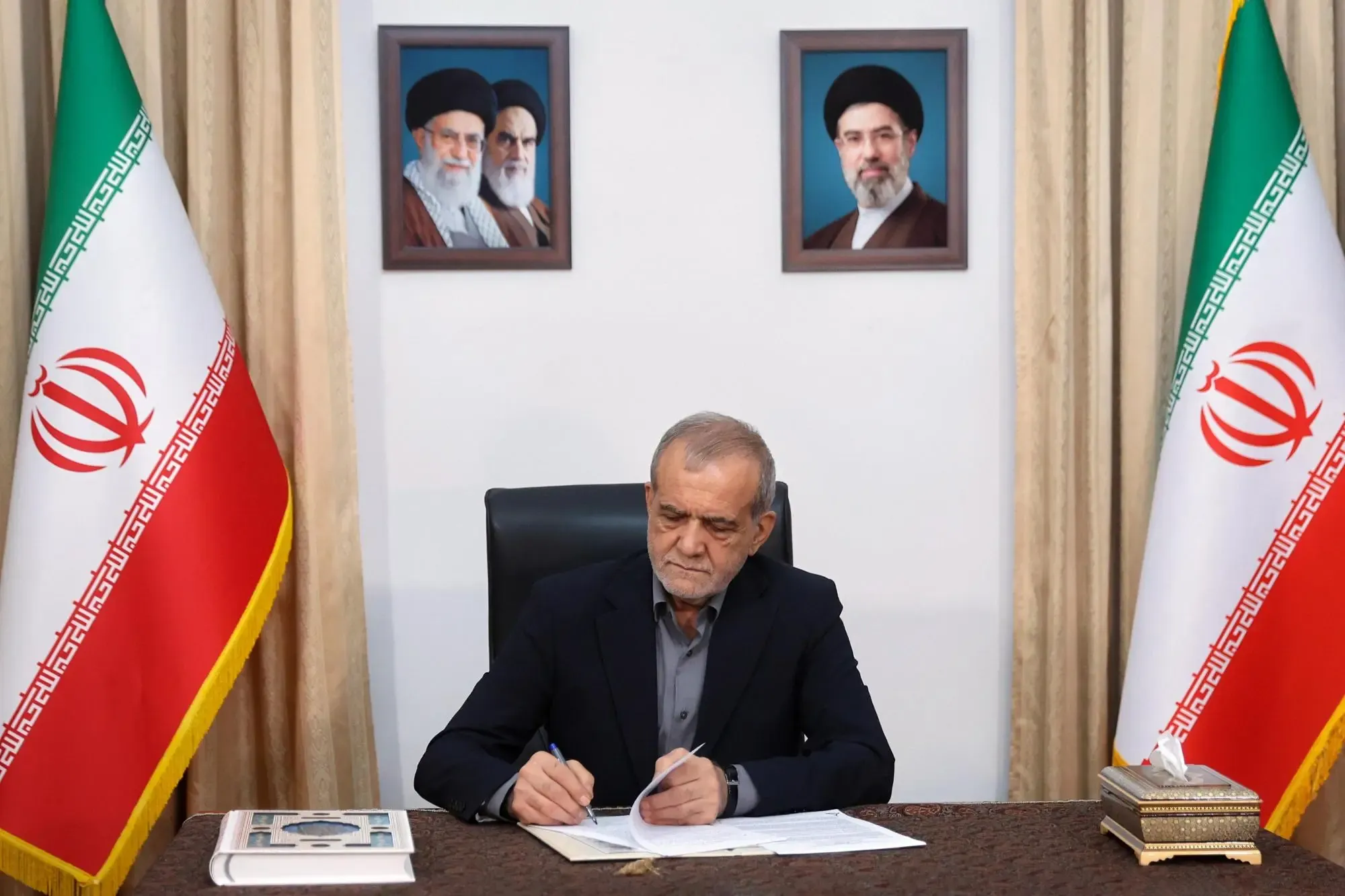
The framework of the US-Iran diplomatic truce is rapidly collapsing amidst the ongoing US-Israeli war on Iran, and newly elevated Supreme Leader Mojtaba Khamenei is publicly positioning President Masoud Pezeshkian to absorb the political fallout. The unraveling of the mid-June agreements follows recent US strikes that killed at least 18 people, exposing deep fractures within Tehran’s ruling elite over the country’s economic survival and military strategy.
The “Islamabad MoU,” initially signed between the Trump administration and the Iranian regime on June 17 and 18, established a 60-day negotiation window intended to halt kinetic operations in the Strait of Hormuz and unlock billions in frozen assets. The diplomatic progress deteriorated following the assassination of former Supreme Leader Ali Khamenei, which Iranian officials attributed to the US and Israel. As groups monitor widespread Iranian noncompliance with the truce, domestic anger over the plunging rial and crippling sanctions has escalated.
Rather than presenting a unified front, the regime’s leadership is fracturing. Supreme Leader Mojtaba Khamenei formally distanced himself from the diplomatic framework, stating he only permitted the negotiations because Pezeshkian “explicitly accepted responsibility for it,” according to an analysis published by Al Jazeera. The statement conspicuously shielded parliament speaker and chief negotiator Mohammad Bagher Ghalibaf from institutional blame.
The political isolation of the presidency coincides with open clashes between Pezeshkian and the Islamic Revolutionary Guard Corps. Pezeshkian recently declared that Iran is locked in a “hybrid and economic war,” warning military officials that without a formal ceasefire, the Iranian economy faces imminent collapse within weeks. His demands to consolidate executive authority within the civilian government were reportedly rejected by senior IRGC commanders, including Gen. Ahmad Vahidi.
The systematic transfer of blame to the civilian government indicates a hardline consolidation of power by the IRGC and the new Supreme Leader. By isolating Pezeshkian, Tehran’s clerical and military establishments secure a political buffer against public unrest if the economy collapses, while maintaining the flexibility to either abandon the MoU entirely or enforce stricter terms under a different negotiating proxy.