
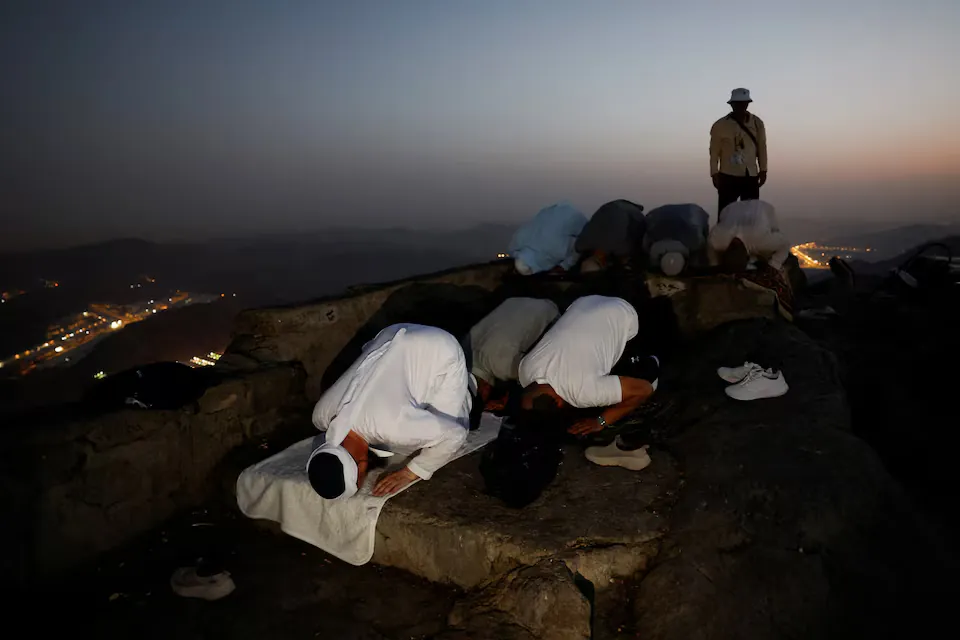
Millions of Muslims globally began observing Eid al-Adha on Wednesday, marking the culmination of the annual Hajj pilgrimage where approximately 1.5 million people gathered in Saudi Arabia. Known as the “Feast of Sacrifice,” the festival corresponds to the 10th day of Dhul Hijjah 1447 AH in the Islamic lunar calendar and immediately follows the Day of Arafah.
The holiday commemorates Prophet Ibrahim’s willingness to sacrifice his son in obedience to Allah. Traditional observances began early Wednesday morning with congregational prayers, known as Salat al-Eid, followed by the Qurbani ritual slaughter of livestock such as sheep, goats, or cows. The meat is then distributed among family members and the less fortunate.
Global celebrations are currently underway across Saudi Arabia, Gulf nations, Pakistan, and Indonesia, as documented in a global timeline provided by AP News. Because the Islamic calendar is strictly lunar and roughly 11 days shorter than the Gregorian calendar, the precise dates of the festival shift annually and depend heavily on local crescent moon sightings.
These regional moon sighting protocols triggered sudden administrative adjustments across South Asia this week. Due to a delayed sighting of the crescent moon, the Indian government’s Department of Personnel and Training (DoPT) formally shifted the mandated closure of government offices, stock markets, and the Supreme Court from Wednesday to Thursday, May 28, according to the Times of India. Specific regions including Jammu and Kashmir proceeded with Wednesday observances based on local astronomical confirmations.