
The global AI boom is quietly reshaping the hardware inside everyday electronics. Because datacenters are currently consuming the world’s supply of NAND storage and RAM from traditional manufacturers like Samsung and Micron, consumer PC builders are scrambling for parts to keep production lines moving. That supply chain squeeze just pushed a highly controversial component into the international market.
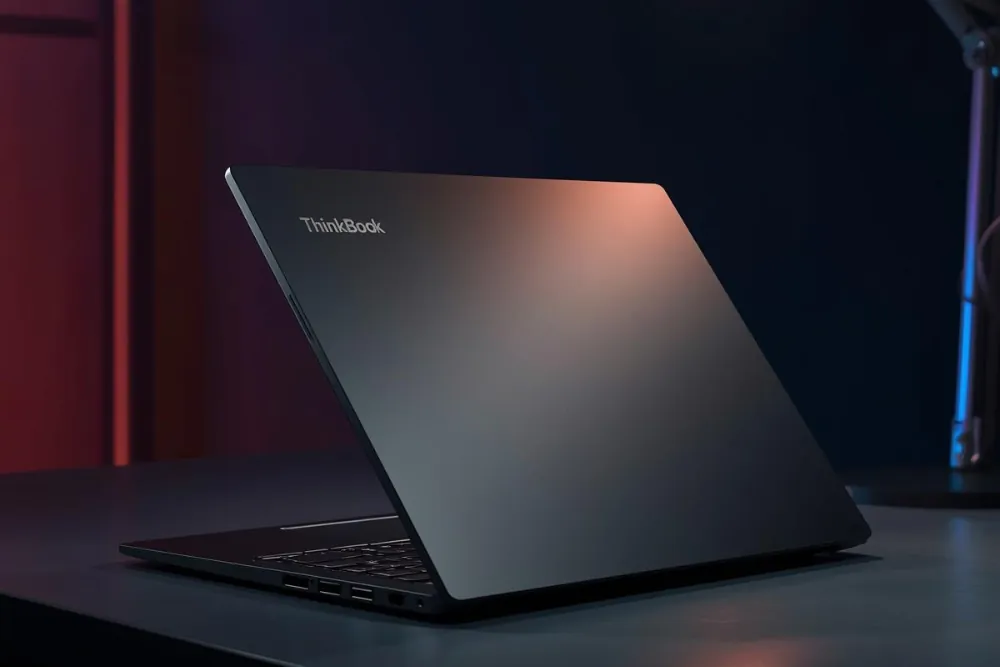
During a recent hardware review, outlet Notebookcheck cracked open a German SKU of the Lenovo ThinkBook 14 G9 IPL. Inside, they found a 512GB M.2 2242 NVMe PCIe 4.0 SSD built by Yangtze Memory Technologies (YMTC). That discovery marks the first recorded instance of a Chinese-manufactured YMTC drive entering the global finished-product PC supply chain outside of mainland China.
The performance numbers explain why OEMs are utilizing these chips for standard office hardware. The drive clocked sequential read speeds of 3,950 MB/s and write speeds of 2,514 MB/s. Reviewers flagged those speed benchmark results as below average for a modern office laptop, though perfectly functional for basic web browsing and document editing.
But the hardware’s origin is far more complicated than its transfer rates. The United States government added YMTC to its Entity List in 2022 and explicitly designated it as a Chinese military company.
Lenovo moved quickly to clarify the regional divide in its manufacturing process. An official Lenovo statement clarified that the company “does not use YMTC solid-state drives (SSDs) for products it configures and ships to the US market.” If you buy a ThinkBook in North America, you will receive different storage hardware than a buyer purchasing the exact same model number in Germany.
Lenovo is simply the first major brand caught navigating this specific bottleneck. The AI-driven memory shortage is hitting every corner of the industry. Apple is reportedly already negotiating with the U.S. government to secure clearance to use memory from CXMT, another sanctioned Chinese supplier, just to maintain their own production targets.
How Regional Hardware Fragmentation Changes Tech Procurement
This supply chain split creates immediate headaches for enterprise buyers. An office laptop is no longer a standardized global product. Because the hardware varies wildly depending on the shipping destination, IT departments managing international fleets now have to audit the specific internal components of every regional batch.
For government agencies and sensitive institutions, the stakes are significantly higher. Procuring international models for overseas offices now carries severe compliance risks due to the military designation of the hardware manufacturer. Until traditional memory suppliers catch up to the AI datacenter demand, consumers and IT admins will need to check their spec sheets closely.