
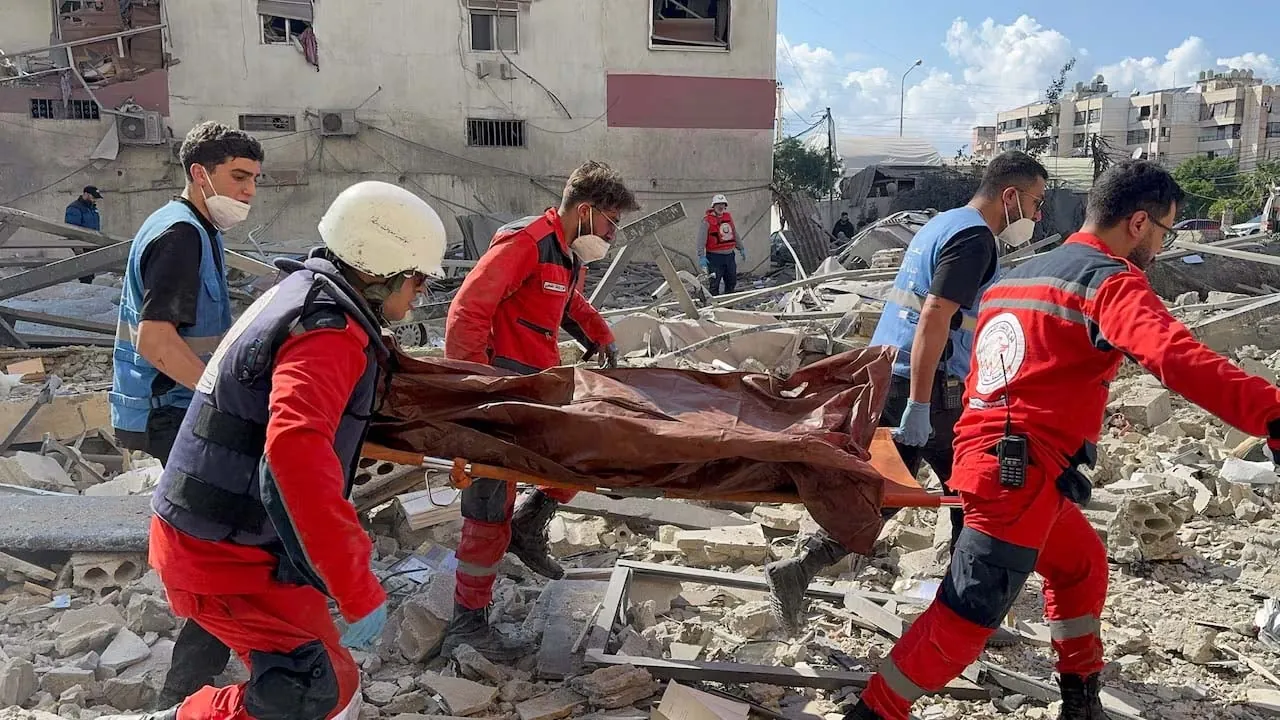
The Lebanese Health Ministry reported that at least 39 people died Saturday in a renewed wave of intense Israeli airstrikes across the country. The bombings mark the definitive collapse of a 10-day US-brokered ceasefire implemented by US President Donald Trump on April 16. The violence drags Lebanon back into the wider military conflict between Israel, Iran, and the United States that ignited in early March.
One of the most severe bombardments hit the southern town of Saksakiyeh. The localized strikes killed at least seven individuals, including a child, and injured 15 others, according to figures released by regional health officials. Emergency teams remain active in the blast radius.
The Israel Defense Forces said the aerial campaign targeted Hezbollah operatives and military infrastructure embedded in civilian structures. The IDF stated it utilized aerial surveillance and precision-guided munitions to limit civilian casualties. The military is reviewing reports of civilian harm.
Hezbollah forces immediately shifted their operational posture. The group launched an overnight rocket barrage at Israeli military vehicles and soldiers stationed along the border, shattering the temporary truce agreement. Hezbollah described the incoming fire as a defense against Israeli aggression.
The rapid deterioration of the agreement alarmed world leaders who were attempting to isolate the localized border fighting from the broader regional proxy war.
How Hezbollah’s Return to Active Engagement Alters the Border Conflict
Hezbollah has officially abandoned its brief defensive pause. The group’s immediate decision to target Israeli troop gatherings directly at the border signals a return to high-intensity, cross-border warfare. The April 16 ceasefire was the primary mechanism keeping Lebanon out of the escalating US-Iran regional crisis. Its failure removes the diplomatic buffer. Both militaries are now operating without constraints, forcing border communities back into permanent evacuation protocols.