
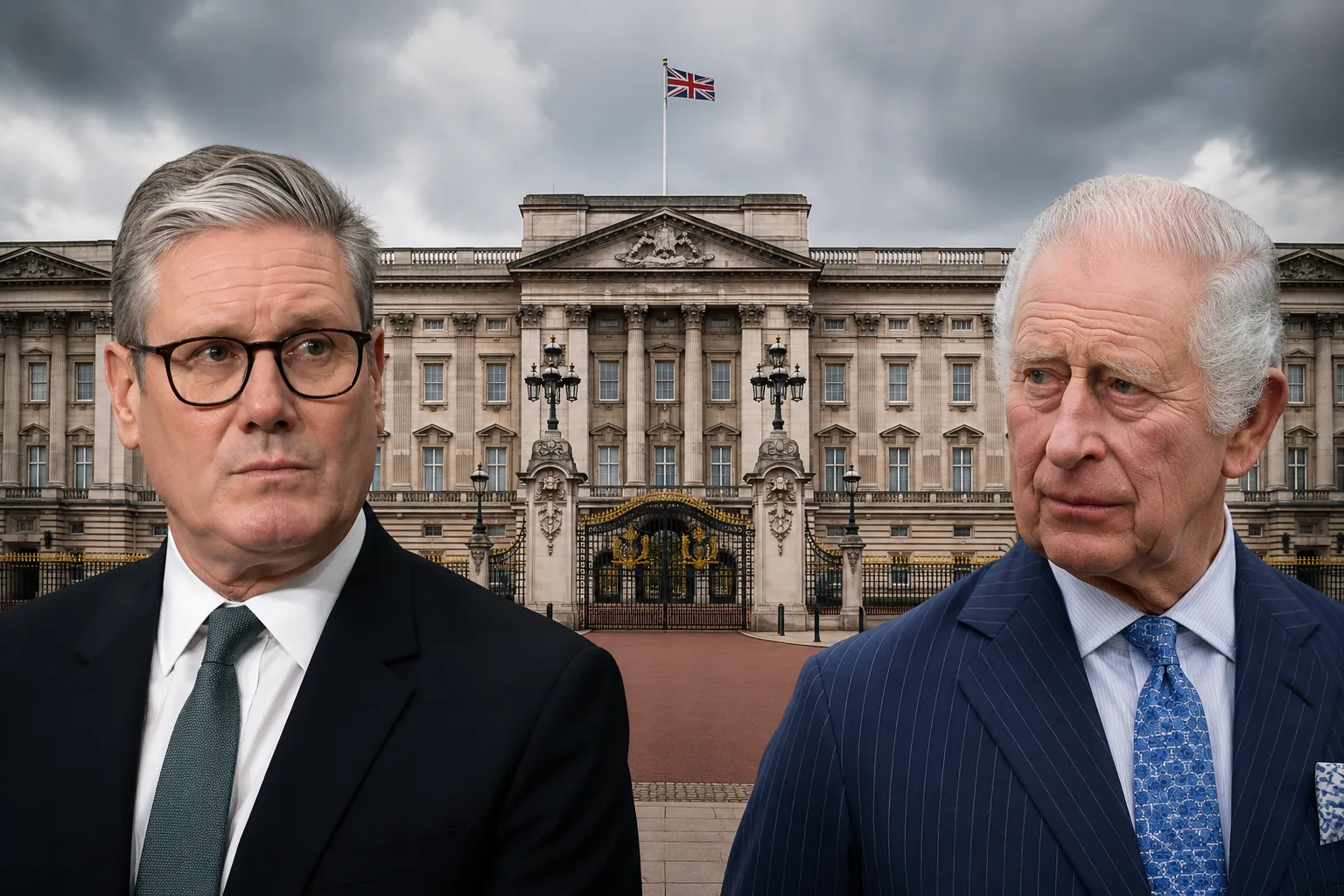
He is running out of time. Prime Minister Keir Starmer stood at the center of Westminster on Wednesday as King Charles III delivered a 11.5-minute legislative program designed to resuscitate a government currently in a state of total collapse. This 2026 King’s Speech arrives as the United Kingdom faces an existential cost-of-living crisis driven by the ongoing wars in Iran and Ukraine, coupled with a domestic political civil war that has seen Labour lose more than 1,400 council seats in recent days. The atmosphere was heavy as the King Charles III’s speech explicitly noted that the nation’s economic and national security are being tested by global volatility, according to a report by the Associated Press.
The legislative agenda is the most radical in decades. Starmer has moved to officially abolish NHS England in a desperate bid to strip back healthcare bureaucracy and centralize control. The speech also outlined plans to drastically limit trials by jury to clear record-breaking court backlogs and introduced a controversial Digital ID system for all citizens. In a bid to win back voters lost to the right, Home Secretary Shabana Mahmood is leading a charge for strict new immigration laws that will make it nearly impossible for migrants to secure settled status. The government is also moving to finally end the leasehold system in England and Wales, a promise that has been delayed for years.
Security is the new priority. New laws will allow courts to hand out 14-year sentences for acts of sabotage or violence linked to hostile foreign states. Crucially, these sentences can apply even if the individual was unaware they were working for a foreign power. This aggressive stance is paired with an Energy Independence Bill meant to force through renewable projects and grid upgrades as the Iran conflict continues to choke global energy markets. A detailed breakdown of the 35 separate bills confirms the government is pivoting toward a “war footing” economy.
But the policy blitz may be too late to save the Prime Minister. Starmer is currently facing a full-scale mutiny from his own benches. More than 70 Labour MPs have formally requested his resignation following the rise of Reform UK and the Greens in local elections. The presence of Wes Streeting at No 10 this week has fueled intense speculation that a leadership transition is already being mapped out by senior cabinet members. While Starmer survived the immediate fallout of the speech, the lack of popular support for his jury trial and Digital ID reforms suggests a difficult road ahead in the Commons.
The abolition of NHS England represents a total paradigm shift for British public services. By removing the arm’s-length body that has managed the health service for over a decade, Starmer is effectively betting the remainder of his premiership on a high-stakes centralization of power. Historically, no government has attempted such a massive structural overhaul while simultaneously trailing 20 points in the polls and facing an internal leadership challenge. For ordinary citizens, the takeaway is clear: the era of decentralized public management is over, replaced by a centralized, security-first state responding to a world at war.