
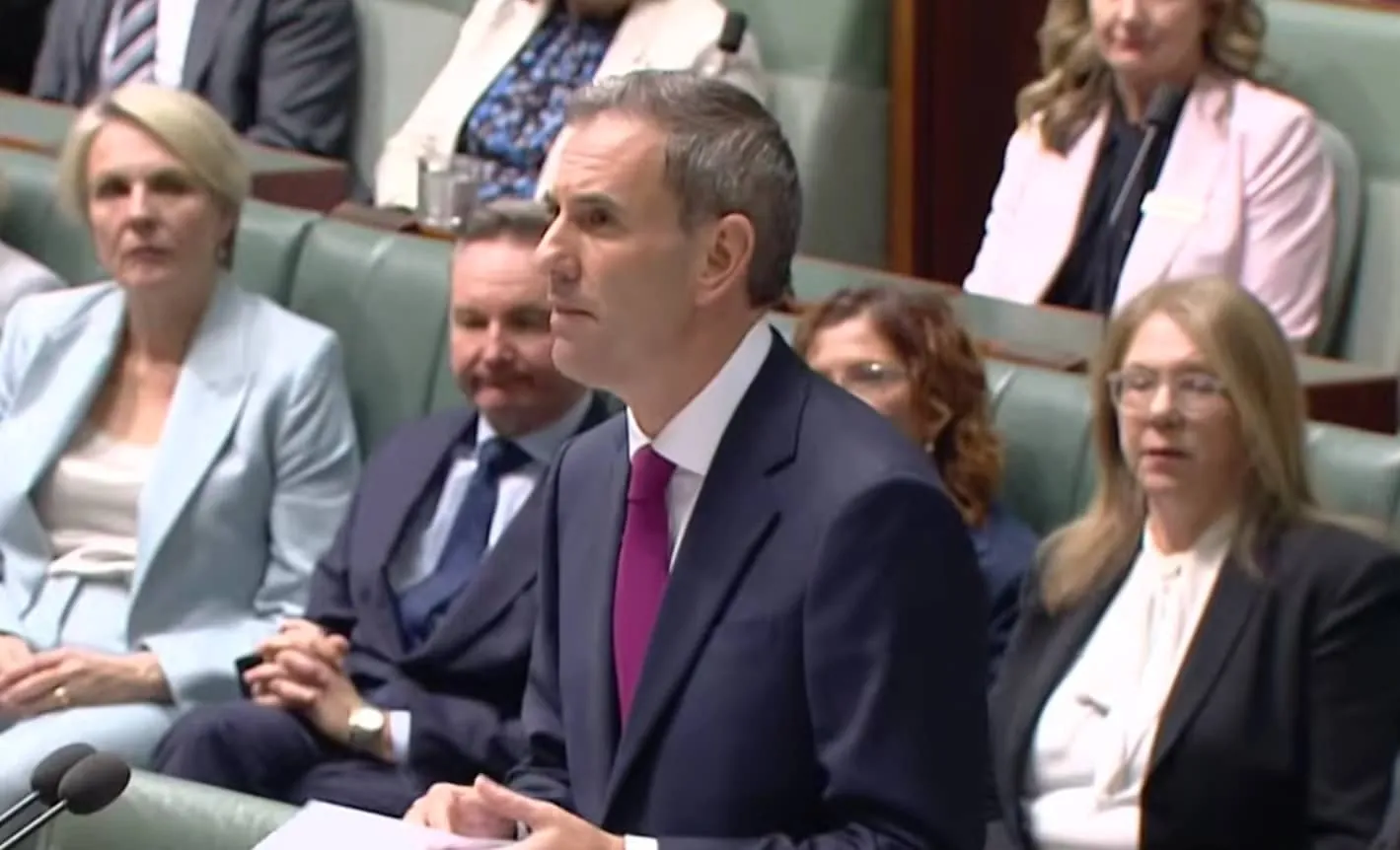
Treasurer Jim Chalmers handed down the 2026 Federal Budget today against a backdrop of global economic fragility, warning that the escalating US-Iran war has placed the Australian economy on a knife-edge. Addressing Parliament on Tuesday evening, Chalmers signaled a shift toward aggressive fiscal consolidation, citing the “Trump Middle East war” and the ongoing US-Iran deadlock as primary drivers for a blueprint that balances targeted relief with historic spending cuts.
The fiscal strategy explicitly addresses a looming domestic recession sparked by soaring global inflation and drained foreign exchange reserves. To combat these pressures, the government is implementing a one-off $250 tax cut for workers starting next year, while simultaneously slashing funding for the National Disability Insurance Scheme (NDIS) to shore up the national bottom line.
Property Reforms and the $36 Billion NDIS Consolidation
In what Chalmers described as the most sweeping changes to the property landscape in decades, the 2026 budget introduces major overhauls to negative gearing and capital gains tax (CGT). These measures target the deep-rooted intergenerational inequity that has locked younger generations out of the housing market. First-home buyers emerge as significant winners, gaining new leverage in a market long dominated by established investors.
However, the budget’s largest single cost-saving measure targets social infrastructure. The government confirmed a massive $36 billion cut to the NDIS, a move designed to ensure the scheme’s long-term sustainability. While the government insists these cuts will not compromise essential care, advocates for the disabled have voiced immediate concerns regarding the scale of the reduction.
The Winners and Losers of the 2026 Fiscal Blueprint
The 2026 winners list includes low-to-middle income taxpayers and younger Australians looking to purchase their first home. Conversely, the “losers” are clearly defined: wealthier families, overseas travelers, and illegal tobacco operators. Overseas travelers face increased levies as the government looks to capitalize on luxury spending, even as premium markets—like the Zeekr 7X dominating the SUV sector—show resilience among the top tier of earners.
According to a detailed report by ABC News, migrants and freight rail enthusiasts also face a tougher landscape. Planned infrastructure projects for freight rail have been deferred, and migration targets have been tightened to ease the strain on public services and housing stock during the current economic volatility.
Rising Defense Costs and the AUKUS Burden
Defense spending remains a volatile component of the 2026 outlook. Costs associated with the AUKUS submarine agency have ballooned, requiring an immediate injection of funding and a significant increase in specialized staffing. This surge comes as the government continues an urgent search for a permanent nuclear waste dump, a logistical challenge that remains unfunded in the long-term projections.
The Opposition has already signaled a fierce legislative battle ahead. Opposition Leader Peter Dutton stated on Tuesday night that the Coalition will move to repeal the negative gearing and CGT changes if they win the next election. While the Coalition supports the $250 worker tax cut, they argue the broader budget fails to provide a credible plan to exit the “inflationary trap” caused by global conflict.
How the NDIS Consolidation and Property Tax Shift Redefines the Australian Social Contract
This budget marks a fundamental pivot in Australian governance, moving away from the expansive social spending of the early 2020s toward a wartime austerity model. By tying domestic fiscal health directly to the US-Iran deadlock, the Chalmers budget admits that Australia can no longer insulate itself from Middle Eastern volatility. The $36 billion NDIS cut is more than a line-item adjustment; it is an admission that the current trajectory of the social safety net is incompatible with a high-inflation, high-defense-cost environment.
The gamble on property tax reform is equally significant. For the first time in a generation, a sitting government has dared to touch the “third rail” of Australian politics: negative gearing. This shift suggests that the Labor government believes the political risk of a housing-deprived youth vote now outweighs the risk of alienating property investors. If the Opposition follows through on its pledge to repeal these changes, the 2026 budget will serve as the primary battleground for a definitive national debate on wealth distribution and the definition of a “fair go” in a post-war economy.