
Federal agencies investigate standardized testing fraud primarily when the schemes cross state lines or involve federal crimes like wire fraud, mail fraud, and money laundering. State-level authorities handle local public school cheating scandals. Investigators use data forensics to flag abnormal erasure patterns on physical answer sheets. They conduct strict physical audits of test booklets to find missing materials. They also apply continuous monitoring systems to track suspicious testing behavior in real time. The Federal Bureau of Investigation (FBI) steps in for wide-reaching criminal networks, while the U.S. Department of Education and state boards manage systemic educational fraud within local districts.
Background: How We Got Here
The U.S. Department of Education oversees federal education funding, but it delegates the administration of tests to state authorities. State Boards of Education hold the primary responsibility for maintaining the integrity of public school assessments. When cheating occurs in a local classroom, it is a state issue. Federal investigators rarely visit local elementary or high schools to look at bubble sheets. According to legal experts, State Boards of Education and state-level bureaus hold primary responsibility for catching and stopping cheating in public school testing.
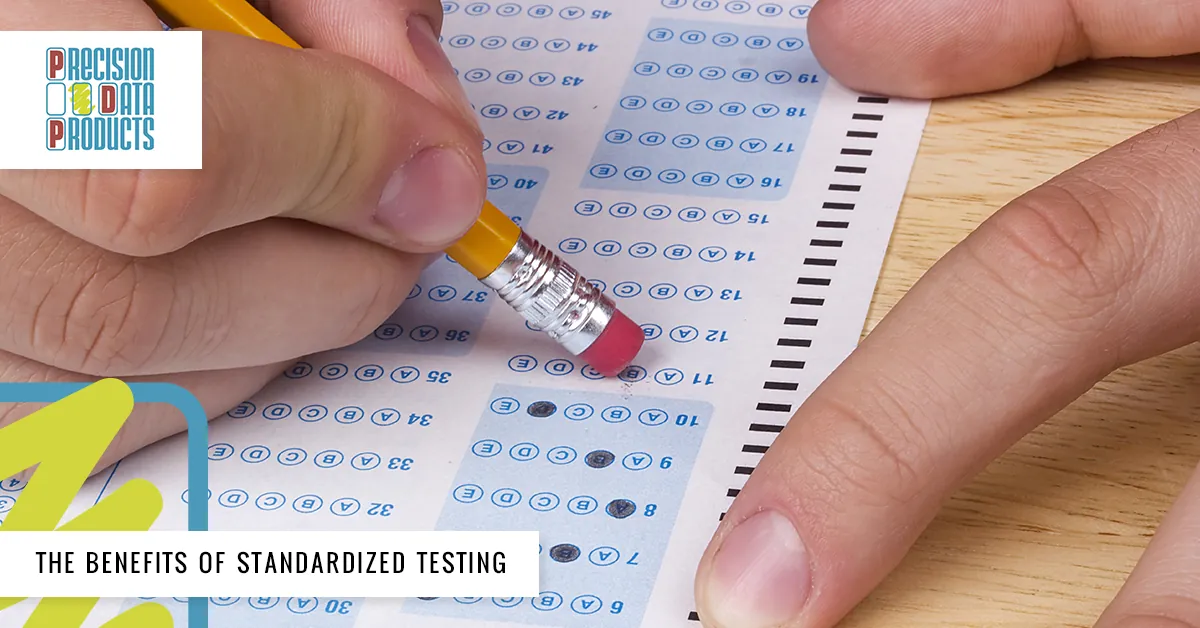
Investigators rely heavily on data forensics to uncover these local schemes. They use statistical analysis to flag unusual patterns on physical test sheets. A primary indicator of systemic cheating is an unnaturally high number of wrong-to-right erasures. When a student takes a test, they make a certain number of mistakes. If a teacher or administrator later erases those wrong answers and fills in the correct bubbles, the scanner detects the smudges. Statisticians compare the rate of these specific erasures against the state average. If a classroom shows a statistically improbable cluster of these changes, the state board opens an investigation.
Auditors also rely on physical tracking to prevent test tampering before the exam even begins. Federal guidelines demand strict inventory controls. Test materials arrive in sealed boxes. Administrators count the booklets and lock them away. On the morning of the exam, teachers sign them out. After the testing window closes, teachers return them to a central location. Investigators look for missing test booklets or signs that specific test items have been illicitly reproduced based on federal guidelines from the National Center for Education Statistics. If the numbers do not match the sign-out sheets, investigators know the chain of custody broke down.
Modern testing now involves continuous monitoring software. Technological indexes measure testing integrity on a continuous scale from zero to one hundred. When scores drop below an acceptable threshold, the system flags the testing session. This indicates statistically suspicious behavior. State and federal agencies use these alerts to determine which schools or testing centers require in-person audits.
Key Players and Stakeholders
The FBI is the most recognizable federal agency involved in standardized testing fraud, but its jurisdiction is highly specific. The FBI gets involved when the fraud constitutes a federal crime. Operation Varsity Blues is the most famous example of this. Uncovered in 2019, the scheme involved mastermind Rick Singer. Singer bribed SAT and ACT administrators at specific testing centers. He arranged for proxies to take tests for wealthy students or had corrupt proctors correct the students’ answers after the fact.
Because Singer moved money across state lines and used telecommunications to coordinate the bribery, the FBI charged him with wire fraud, mail fraud, and racketeering. Singer went to prison in 2023 and gained release in August 2024. The FBI did not investigate the schools themselves; they investigated the interstate criminal enterprise that manipulated the testing system.
State bureaus of investigation handle the large-scale public school scandals. The Atlanta Public Schools scandal remains the largest public school cheating event in U.S. history. Because the manipulation happened within local school districts, the Georgia Bureau of Investigation (GBI) led the inquiry. The FBI stayed out of it. The GBI released its report in 2011. Investigators found widespread cheating across dozens of schools. By 2013, the state indicted dozens of educators for their roles in altering test scores.
The Office of Inspector General (OIG) handles internal federal testing fraud. The Department of Justice OIG monitors the behavior of federal employees. Federal agents must pass standardized tests to keep their jobs or earn promotions. The FBI requires its agents to take the Domestic Investigations and Operations Guide (DIOG) exam. In 2010, an investigation found that numerous employees violated test protocols, proving federal agencies police their own standardized testing requirements, a fact verified by the 2010 DOJ-OIG federal investigation. The OIG ensures that the people enforcing the laws also follow the rules when taking their own mandated exams.
What’s at Stake
Major cheating investigations force the public to debate the pressures of excessive mandated testing. High-stakes testing controls school funding and dictates teacher evaluations. When educators face the threat of losing their jobs or seeing their schools closed due to low scores, some choose to alter the results. The fallout from these scandals alters educational policy.
After the Atlanta public schools scandal, lawmakers across the United States drafted new state laws. They aimed to rethink the heavy reliance on standardized tests. Policy experts argue that tying money directly to test scores creates an environment where cheating is highly incentivized. State boards are constantly trying to balance accountability with fair evaluation methods.
A common public misconception is that the FBI raids local schools to catch cheating teachers. Search records indicate no substantial evidence of the FBI directly investigating elementary or high school teachers for state test manipulation. State authorities like the GBI strictly handle these matters. The federal government only steps in if investigators specifically allege federal grant fraud or interstate criminal activity.
Frequently Asked Questions
Who investigates standardized test cheating in public schools?
State-level agencies investigate cheating in public schools. The U.S. Department of Education monitors overall compliance, but the actual on-the-ground investigations fall to groups like the State Bureau of Investigation or the State Board of Education. The Atlanta Public Schools scandal was investigated entirely by state authorities, not federal agents.
How do investigators prove test cheating occurred?
Investigators rely on data forensics. They analyze test results for statistically improbable “wrong-to-right” erasure patterns. They look for unexplainable score jumps from one year to the next for specific cohorts of students. They also conduct physical audits of test booklets to check for missing pages or broken chain-of-custody protocols.
What was the FBI’s role in the Varsity Blues testing scandal?
The FBI led Operation Varsity Blues because the fraud involved specific federal crimes. Mastermind Rick Singer bribed SAT and ACT exam administrators across state lines. The FBI used wire fraud, mail fraud, and racketeering statutes to prosecute the network of corrupt proctors and wealthy parents.