
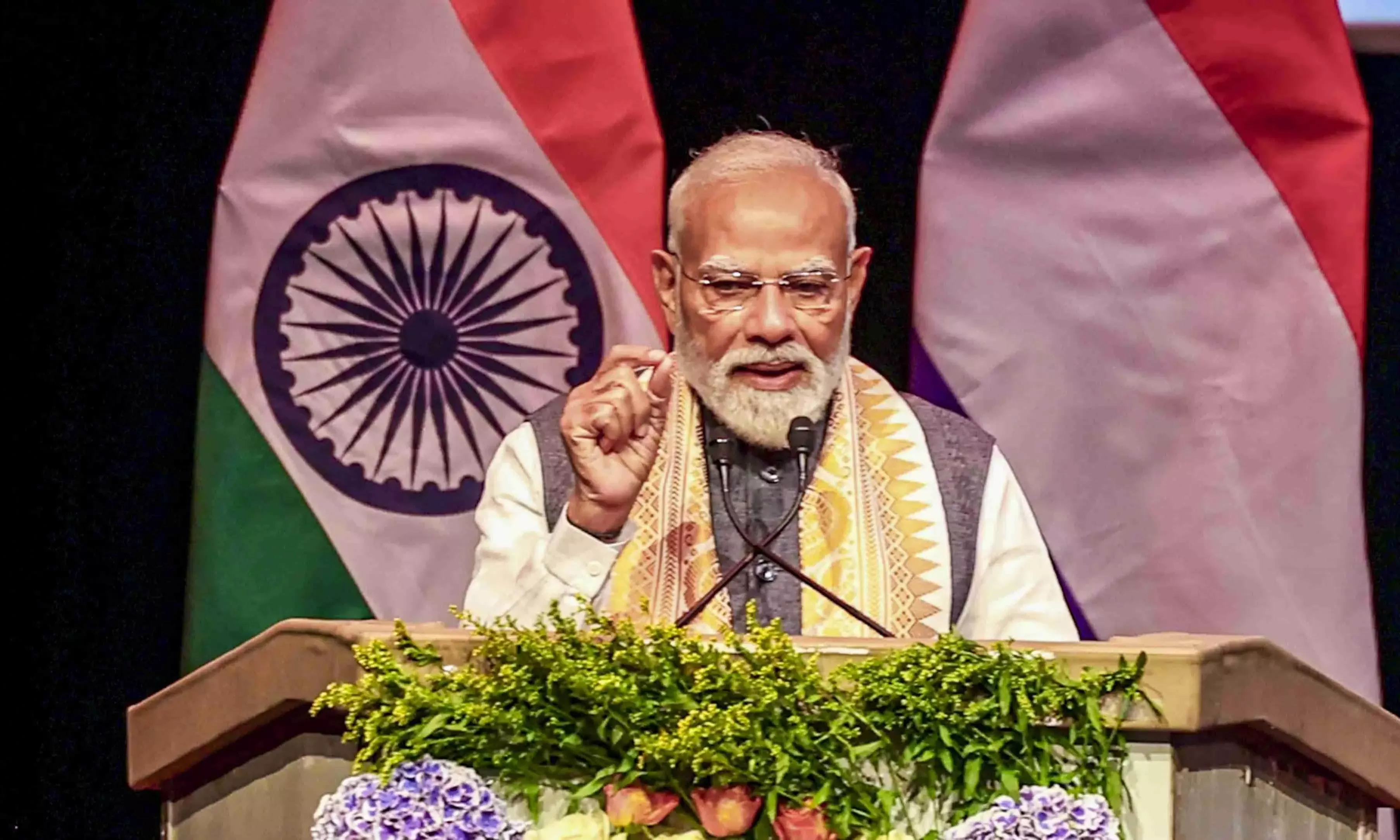
Indian Prime Minister Narendra Modi concluded a two-day visit to the Netherlands by signing 17 bilateral agreements aimed at securing green energy supply lines and localizing semiconductor manufacturing. The diplomatic push comes as a prolonged global energy crisis and fragile tech supply chains force New Delhi to accelerate its domestic production capabilities. The summit officially elevated the relationship between the two nations to a “Strategic Partnership.”
A key component of the summit is a direct agreement between India’s Tata Electronics and Dutch equipment manufacturer ASML. Tata is developing a ₹91,000 crore ($11 billion) 300-mm semiconductor fabrication plant in Dholera, Gujarat, according to a detailed report by Hindustan Times. ASML will provide its advanced photolithography tools to equip the facility. The hardware is necessary for AI and automotive chip production, as noted by Business Recorder.
The broader package of 17 agreements targets multiple infrastructure sectors. Officials signed memorandums to expand cooperation in green hydrogen production, water management, healthcare, and education. The green energy frameworks are designed to help India secure stable power supplies during the ongoing global energy crisis and reduce reliance on traditional fuel imports. The agreements follow the recent conclusion of the India-European Union Free Trade Agreement.
The summit also included the repatriation of historical artifacts. The Leiden University Library officially restituted the 11th-century Chola Copper Plates to the Indian government. The royal charters from the Chola Kings were handed over in the presence of both prime ministers, according to ANI.