
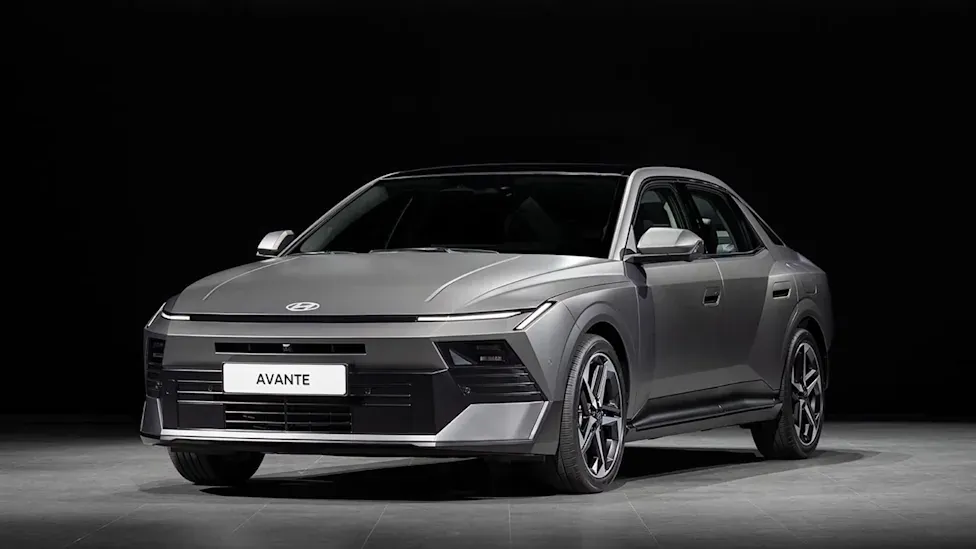
Hyundai is gearing up for a significant evolution in its high-performance lineup, as company executives recently confirmed the upcoming 2027 Elantra N will adopt a wider, more aggressive stance. During the 2026 Busan Mobility Show in South Korea, leadership pointed toward a design direction inspired by the N Vision 74 concept, prioritizing a wider track for increased stability and a more distinct presence.
The standard 2027 Elantra model, which serves as the foundation for the upcoming N variant, already features a significant dimensional update. It now measures 1,855 millimeters in width, making it 30 millimeters wider than the outgoing generation, according to a detailed report by CarBuzz. This increase is part of a broader strategy to refine the sedan’s aesthetic, moving away from past geometric styling in favor of flatter lines and vertical LED taillights.
Sangyup Lee, Executive Vice President and Head of Hyundai and Genesis Global Design Center, highlighted the design philosophy behind the upcoming model. He noted that the team is focused on making the fenders even wider to enhance the overall sporty feel. While Hyundai has not provided a firm release date, current industry speculation suggests the high-performance variant could see an official launch in 2027.
Performance and Dimensional Upgrades
The structural changes extend beyond mere aesthetics. The eighth-generation platform features a wheelbase of 108.3 inches, a change that provides a functional advantage in the compact sedan market. This dimension allows the new Elantra to surpass the 107.7-inch wheelbase of the Honda Civic, as noted in coverage from Autoblog.
Engineering expectations for the N variant are also shifting. Former Head of R&D Albert Biermann previously indicated the potential for a 2.5-liter turbocharged engine. This would be a departure from the current 2.0-liter unit, which delivers 276 horsepower and 289 pound-feet of torque. These upgrades, combined with the new “Pleos Connect” operating system and generative AI integration, represent a shift toward integrating hardware performance with advanced digital infrastructure.
What the Dimensional Expansion Means for the Compact Sedan Market
Hyundai’s decision to increase the wheelbase and width of the Elantra signals a clear attempt to redefine the physical capabilities of the compact segment. By positioning the Elantra as a larger, more aggressive option, Hyundai is directly challenging competitors to reconsider their own dimensional baselines. The shift toward a wider track not only suggests an improvement in handling and tire footprint but also serves to differentiate the N brand from its more mass-market counterparts. With the integration of AI-assisted interfaces and potential powertrain upgrades, the focus remains on balancing traditional mechanical performance with contemporary digital expectations.