
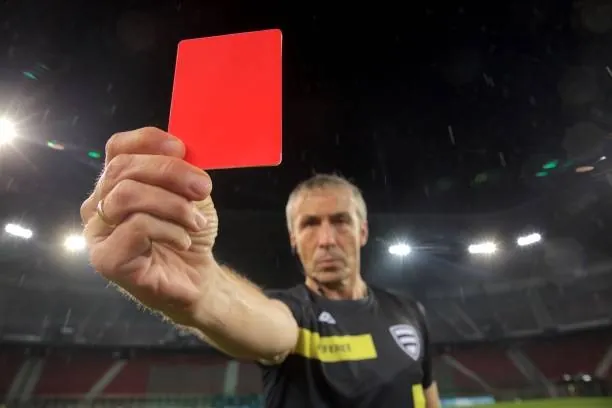
The most frustrating way a player can exit a knockout soccer tournament is not by losing, but by watching from the stands due to a suspension. In major international competitions, accumulating two yellow cards across two different matches results in an automatic one-match suspension for the subsequent fixture.
If a player receives two yellow cards in the exact same game, it becomes a direct red card. The player is sent off immediately, their team plays a man down, and they serve a mandatory minimum ban of one match. But when a tournament stretches for weeks, punishing a player for two minor fouls spread out over a month feels overly harsh.
That brings us to the amnesty rules.
How the Amnesty Wipe Timeline Works
To prevent players from missing crucial late-stage games for basic fouls, FIFA wipes the disciplinary slate clean at specific points in the tournament. In the expanded 48-team format for the 2026 World Cup, tournament officials implemented a strict two-phase reset system.
- Post-Group Stage Wipe: Once the group stage concludes, all single yellow cards are erased. Every player enters the Round of 32 with zero cards on their record.
- Post-Quarterfinal Wipe: A second reset happens immediately after the quarter-final matches. Any single yellow cards picked up during the Round of 32, Round of 16, or Quarterfinals vanish completely.
The primary goal here is simple. Tournament organizers want the best players on the field for the biggest games. Thanks to that second wipe, a player enters the semi-finals completely clean.
Why Teams Strategize Around Suspensions
A single yellow card might seem harmless, but it dictates how managers run their benches. If a team secures qualification to the knockout rounds after just two games, you will almost always see the manager strategically rotate the starting lineup for the final group match.
Former USMNT player Clint Dempsey explained to The Independent that resting starters carrying a yellow card does two things. First, it protects them from picking up a second booking that would suspend them for the Round of 32. And in the expanded tournament schedule, sitting out that final group game can give a key starter between 12 and 18 days of complete rest between competitive appearances.
Discipline also goes beyond aggressive tackles. Referees can now issue yellow or red cards if a player purposefully covers their mouth to hide verbal abuse during a confrontation. They can also punish players who leave the field of play in protest of a call.
The Role of Video Review in Suspensions
Another layer of complexity comes from the Video Assistant Referee (VAR). When a player gets a standard yellow card, VAR generally does not step in. The video officials let the referee on the field manage basic fouls. But the situation changes entirely when suspensions are on the line.
If a referee issues a second yellow card—which automatically triggers an ejection and a suspension—VAR is allowed to intervene. They will review the foul to ensure it actually warranted a booking. If the referee made a clear and obvious error, VAR can overturn that second yellow. This keeps the player in the game and saves them from an automatic ban.
They hold the exact same power over direct red cards. A mistaken red card can ruin a team’s entire tournament run. Video review acts as a safety net to ensure that players only face ejections and multi-match suspensions for genuine, severe infractions.
Famous Examples from Major Tournaments
In a detailed review of tournament regulations conducted by Barnaby Lane at Sports Illustrated, the 2026 World Cup provided clear examples of how these rules play out on the pitch. South Africa’s Teboho Mokoena and Cabo Verde’s Sidney Lopes Cabral both picked up yellow cards in their first two opening matches. The result? They were automatically suspended and forced to miss their respective final group stage games.
On the other hand, the amnesty rule saved others. England players Declan Rice and Jarell Quansah collected single yellow cards during their group stage matches against Ghana and Panama. Because of the post-group stage wipe, those cards were erased. Both players entered the knockout rounds with clean records.
Timing is everything. Jude Bellingham picked up a yellow card in the 19th minute of England’s Round of 32 match against DR Congo. Because that foul happened in the knockout phase before the quarter-final reset, he had to play the entire Round of 16 knowing one slip-up would trigger a suspension.
And sometimes, suspensions stretch far beyond a single game. Qatar’s Assim Madibo earned an extended five-match ban after a severe challenge injured Canada’s Ismaël Koné. A disciplinary panel always reviews direct reds, and they have the authority to end a player’s tournament entirely for violent conduct.
Common Misconceptions About the Final
The biggest myth among casual soccer fans is that a player can easily miss the World Cup Final because they accidentally tripped someone in the semi-final. Before modern rule changes, this actually happened. Legendary players missed the biggest match of their lives due to a basic yellow card accumulation.
Today, that is impossible by design. Because FIFA erases all accumulated single yellow cards right after the quarter-finals, every player starts the semi-final with a zero balance.
The only way a player can be suspended for the tournament final is if they receive a direct red card during the semi-final match, or if they manage to pick up two yellow cards within that exact same semi-final game. Barring an ejection, accumulation alone will never keep a star out of the championship.