
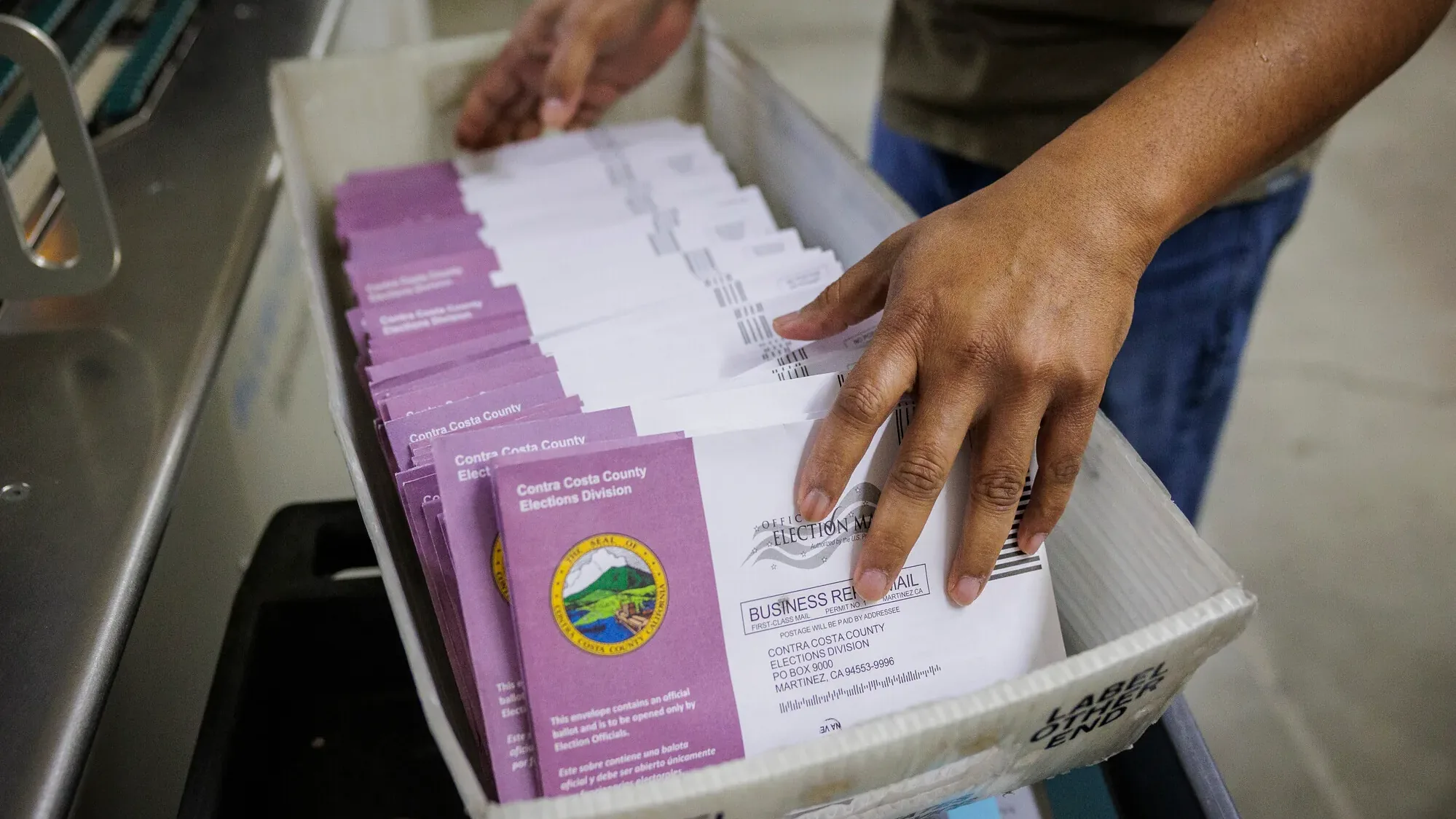
In US elections, provisional ballots are fail-safe paper ballots given to in-person voters whose registration status or identification cannot be immediately confirmed at the polling place. Ballot curing is a separate verification process that allows voters, mainly those voting by mail, to fix minor technical errors on their ballot envelope, such as a missing or mismatched signature, before the final vote canvass. In both cases, election officials keep the ballot sealed and separate until they verify the voter’s eligibility or identity by the state’s statutory deadline.
Because verifying voter registration records and inspecting cure affidavits happens after polls close, these two safeguards often determine when tight post-election vote counts finish. Understanding how each process works clarifies why election offices continue tallying valid votes for days or weeks after Election Day.
What is a provisional ballot and when do you use one?
Congress established provisional voting nationwide as a federal fail-safe under Section 302 of the Help America Vote Act of 2002 (HAVA) after more than one million registered voters were left off registration rolls or denied ballots during the 2000 presidential election, according to the Cornell Law School Legal Information Institute (2024). Depending on state law, election officials also refer to these ballots as affidavit ballots or challenged ballots.
Since HAVA took effect in 2002, every state must offer provisional ballots except states that already provided same-day voter registration when the National Voter Registration Act was enacted in 1993, according to the MIT Election Data and Science Lab (2025). Under federal rules summarized by the U.S. Election Assistance Commission (2023), poll workers must issue a provisional ballot in federal elections whenever your name does not appear on the eligible voter list, an election official challenges your eligibility, or a court order extends polling hours.
Most states expand provisional voting beyond those baseline federal triggers. You will commonly receive a provisional ballot if you arrive at the polls without required photo identification, moved recently without updating your registration address, show up at the wrong precinct, or appear in the poll book as having already requested a mail-in ballot (U.S. Election Assistance Commission, 2023; Ballotpedia, 2024).
When you mark a provisional ballot, you do not feed it directly into the polling place tabulator. Instead, you seal the ballot inside a special secrecy envelope attached to a signed written affirmation, and election officials review government registration records after the polls close before opening the envelope and counting the vote (MIT Election Data and Science Lab, 2025). In the 2024 federal general election, local election officials issued 1,736,209 provisional ballots nationwide; 1,281,399 of those (about 73.8%) were verified and counted, while 436,258 were rejected, according to data from the U.S. Election Assistance Commission’s 2024 Election Administration and Voting Survey (2026).
How do provisional ballots and ballot curing work during the post-election count?
While a provisional ballot is an in-person paper ballot cast at a polling site when eligibility is uncertain on Election Day, ballot curing is the post-submission procedure for fixing technical errors on an already submitted ballot envelope (MIT Election Data and Science Lab, 2025). According to the Center for Election Innovation & Research (2026), ballot curing applies primarily to mail-in or absentee ballots flagged during pre-processing because the outer return envelope is missing a voter signature, carries a signature that does not match the state’s voter file, or lacks a required identification number or witness signature.
State curing laws divide the verification workflow into two distinct statutory phases: notification, which sets the deadline and delivery method (mail, phone, text message, or email) by which officials must alert you of a problem, and correction, which sets how and by when you must return a signed cure affidavit or identification copy (Ballotpedia, 2024). Some voters who cast a provisional ballot specifically because they lacked a required photo ID at the polling place must also complete a post-election cure step by presenting acceptable ID to their local election office.
If your mail or provisional ballot is flagged for a missing signature or identification issue in a state that allows curing, you follow four steps to verify your ballot:
- Check your ballot status through your state Secretary of State’s online ballot tracker, or watch for an official deficiency notice by mail, email, phone, or text message from your county clerk or board of elections (Center for Election Innovation & Research, 2026; Ballotpedia, 2024).
- Obtain the official signature verification statement or cure affidavit by downloading it from your local election official’s website or using the form mailed by the county office (Ballotpedia, 2024; VoteAmerica, 2026).
- Sign the cure affidavit affirming that you cast the ballot, and attach a copy of an accepted photo ID or government document if your state’s rules require one (Center for Election Innovation & Research, 2026; VoteAmerica, 2026).
- Submit the completed cure documentation to your county election office in person, by mail, or electronically (where state law permits, such as in Florida or New Mexico) before your state’s statutory post-election deadline (Ballotpedia, 2024; VoteAmerica, 2026).
Once election workers confirm your identity, they separate the outer verification envelope from the anonymous inner ballot before sending the ballot to the tabulators, ensuring that nobody can see which candidates you supported (Center for Election Innovation & Research, 2026).
How do rules and deadlines vary across US states?
Although HAVA sets a national floor for federal races, state legislatures write the specific rules governing which provisional ballots count and how long voters have to cure envelope defects. Across the country, 47 states allow provisional voting in at least one situation, 44 allow it in multiple circumstances, and 41 allow voters to cast a provisional ballot when they lack required identification (Ballotpedia, 2024). In three states (Delaware, Kentucky, and Louisiana), provisional ballots are used strictly for federal elections (Ballotpedia, 2024).
States also split sharply on how they handle “out-of-precinct” provisional ballots cast by registered voters who go to the wrong polling place. Most states reject an entire provisional ballot if it was cast in the wrong precinct, whereas a minority of states partially count the ballot for the statewide or federal races the voter was eligible to vote in (MIT Election Data and Science Lab, 2025; Ballotpedia, 2024).
Mail-ballot curing rules vary just as widely. Between 33 and 35 states plus Washington, D.C., enforce a statewide ballot curing process, while states such as Idaho, Missouri, Nebraska, New Hampshire, and Oklahoma do not provide a post-election cure period for signature defects, according to VoteAmerica (2026) and the Center for Election Innovation & Research (2026). Pennsylvania leaves ballot curing procedures to individual county boards rather than mandating a uniform statewide window.
Among states that permit curing, statutory correction deadlines range from the close of polls on Election Day in Connecticut to two or three weeks after the election, including up to 14 days after Election Day in Illinois and up to 21 days in Oregon (VoteAmerica, 2026). Because rules and deadlines change by statute, check your state election office or Secretary of State website for the exact cutoff in your jurisdiction.
What common misconceptions surround provisional voting and curing?
When high-stakes races remain uncalled after Election Night, misunderstandings about how election boards process remaining ballots spread quickly. Three points often trip voters up:
- Every eligible provisional ballot counts regardless of the margin. A frequent myth holds that election officials only examine provisional ballots when a race is close enough for them to change the winner. In reality, election workers review every provisional ballot cast and count every valid one before certifying official results, no matter how wide the lead is (U.S. Election Assistance Commission, 2023).
- Ballot curing does not let anyone change their vote or vote twice. Curing only verifies the voter’s identity on the sealed outer return envelope of a ballot that was already submitted on time; voters never receive access to alter their candidate selections (Center for Election Innovation & Research, 2026).
- Voting provisionally at any convenient polling site can void your ballot. Because most states reject out-of-precinct provisional ballots in full, casting a provisional ballot at the wrong polling location instead of traveling to your assigned precinct often means the vote will not be counted (MIT Election Data and Science Lab, 2025).
Frequently asked questions
How can you check if your provisional ballot was counted?
Under Section 302 of the Help America Vote Act, every state using provisional ballots must provide a free access system, such as a toll-free telephone number or an official state website, that allows you to check whether your provisional ballot was accepted or rejected, and if rejected, the specific reason why (U.S. Election Assistance Commission, 2023). Poll workers hand you written instructions for accessing this tracking system when you cast your provisional ballot.
Does curing a mail ballot compromise the secret ballot?
No. Election staff review your cure affidavit and signature against the outer return envelope while the ballot itself remains sealed inside a separate secrecy sleeve or inner envelope. Only after officials confirm your eligibility do they remove the anonymous ballot and mix it with other accepted ballots for tabulation (Center for Election Innovation & Research, 2026).