
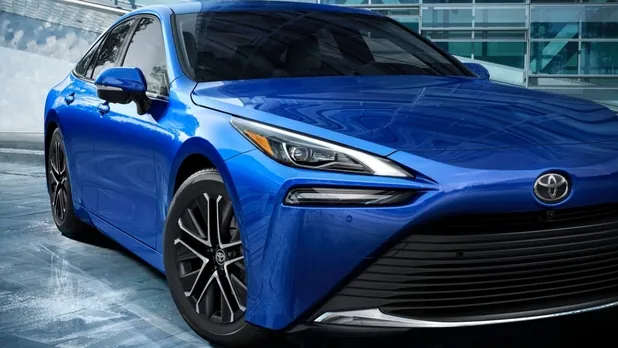
Automakers build hydrogen fuel cell electric vehicles to solve a very specific physical problem: the long wait times attached to standard battery charging. When you drive a traditional battery electric vehicle, you have to park it and pull energy from the local power grid. That process takes time. A hydrogen car skips the plug entirely. Instead, it generates its own electricity directly onboard the vehicle while you drive.
You pull up to a pump, attach a nozzle, and fill the tank with compressed gas in three to five minutes. You drive away with hundreds of miles of range. And the only byproduct coming out of the tailpipe is pure water and a bit of heat. This technology offers the environmental benefits of electric driving paired with the exact refueling habits people already use for gasoline cars.
Step-by-Step Breakdown: Generating Onboard Power
A hydrogen vehicle is driven by an electric motor. But the way it gets the electricity to spin that motor looks completely different from a standard electric car. The magic happens inside a component called the fuel cell stack. This heavy piece of engineering sits right where a traditional internal combustion engine would go. It acts as a miniature, onboard power plant.
The chemical reaction inside this stack runs constantly while the car is on. Here is exactly how the vehicle turns a highly pressurized gas into forward momentum on the highway.
- Pressurizing the fuel source: The vehicle stores hydrogen gas at extreme pressures inside heavily reinforced carbon-fiber tanks. When you press the accelerator, this gas flows out of the tanks and directly into one side of the fuel cell stack.
- Pulling in outside oxygen: The car cannot generate power with hydrogen alone. The vehicle constantly inhales ambient air from the road. It filters this air and channels the oxygen into the opposite side of the fuel cell stack.
- Splitting the atom: Inside the cell, the hydrogen gas hits a chemical catalyst. This catalyst forces the hydrogen atoms to separate into two parts: electrons and protons.
- Routing the electrical current: The protons pass straight through a specialized membrane. But the electrons get blocked. To get to the other side, the electrons get forced through a specific conductive circuit. This forced movement of electrons generates the exact electrical current that powers the traction motor.
- Exhausting the byproducts: Once the electrons finish their trip through the circuit, they meet up with the protons and the incoming oxygen from the road. The three elements combine to form H2O. The car then expels pure water out of the tailpipe.
The system works fast. But it is not the only power source inside the car. Modern fuel cell vehicles utilize a hybrid power strategy. Data from the Alternative Fuels Data Center shows that these cars also carry a high-voltage traction battery pack. This battery does not need to be plugged into a wall. It simply captures free kinetic energy from regenerative braking as you slow down. When you hit the gas pedal to pass someone on the highway, this battery kicks in and supplies supplemental power to the electric motor, keeping the acceleration smooth and responsive.
Feature Comparison: Hydrogen vs. Plug-In Battery Systems
Automakers continue to invest heavily in hydrogen because standard lithium-ion batteries have rigid physical limits. The most obvious difference is the refueling speed. A standard electric vehicle takes 30 minutes at a commercial fast charger to get a decent amount of range. If you charge at home on a standard wall outlet, it takes hours. A hydrogen vehicle fills up just as fast as a traditional gas car.
The driving range is also highly competitive. Current consumer models carry enough compressed hydrogen for 300 to 400 miles of driving before needing a refill. The Hyundai Nexo, a popular production model in this space, hits an estimated 414 miles of range on a single tank. To push past consumer hesitation regarding the high retail cost of the fuel itself, automakers frequently bundle up to three years of complimentary hydrogen and free maintenance right into the vehicle lease packages.
There are also state-level benefits for early adopters. Experts at DriveClean point out that drivers in places like California qualify for single-occupant access to carpool lanes when they apply for a state-issued Clean Air Vehicle decal. That alone moves a lot of inventory in congested urban areas.
Safety engineering is another major selling point. Hydrogen is a highly flammable gas. Engineers know this, so they build the cars with extreme structural integrity to prevent disasters. A technical breakdown by TWI Global highlights the safety mechanisms built into the Toyota Mirai. Toyota places its patented hydrogen tanks completely outside the passenger cabin. If the car gets into a collision, the system instantly and automatically shuts off the fuel flow. Because hydrogen gas is significantly lighter than air, any gas that leaks during a crash vents harmlessly upward into the atmosphere, rather than pooling dangerously under the chassis like spilled gasoline.
Common Issues and Infrastructure Roadblocks
You rarely see hydrogen cars on the street today. The technology works flawlessly, but the real-world logistics of owning one are incredibly frustrating. The main problem is the complete lack of refueling stations.
Unlike the electrical grid, which already runs to every home and business in the country, pressurized hydrogen requires entirely new physical infrastructure. Global tracking data shows there are only around 400 hydrogen stations operating worldwide. Most of these stations sit clustered in a few specific tech corridors in California and parts of Europe. Mainstream consumer adoption stalls out because people cannot easily drive these cars outside of their local metro area without getting stranded.
Then there is the reality of the manufacturing footprint. Building these complex chemical systems requires intense industrial energy. Data from TWI Global estimates that manufacturing the fuel cell stacks for a car like the Toyota Mirai creates a carbon footprint of roughly 120g of CO2 for every kilometer of its expected lifecycle. Automakers can push that number down substantially, but only if they transition their factories to run purely on renewable green energy.
The gas itself also presents an environmental challenge. Hydrogen is the most abundant element in the universe, but it does not just sit around waiting to be pumped into a car. We have to separate it from other compounds. The cleanest way to do this is through water electrolysis powered by solar or wind energy. But right now, most commercial hydrogen gets extracted from natural gas, specifically methane. This industrial process is highly energy-intensive.
When you pull hydrogen from methane, you create “well-to-wheel” carbon emissions. The car itself produces zero tailpipe emissions, but the factory that made the fuel pumped greenhouse gases into the air. But even with this dirtier sourcing method, the math still favors the fuel cell. Research from the Union of Concerned Scientists confirms that current hydrogen vehicles still cut overall emissions by well over 30 percent when compared directly to standard gasoline cars on the road today.
Alternative Uses in Commercial Fleets and Heavy Transport
While consumer adoption struggles against the lack of public stations, automakers are finding massive success moving hydrogen technology into the commercial sector. Long-haul trucking and delivery fleets are perfectly suited for this hardware.
Heavy-duty trucking creates a huge percentage of global vehicle emissions. Logistics companies want to electrify their 18-wheelers, but standard batteries create a massive physics problem. Lithium-ion battery packs are incredibly heavy. If you put enough batteries inside a semi-truck to move it 500 miles, the truck becomes so heavy that it cannot legally carry a full load of cargo. Research from Horizon Educational indicates that hydrogen systems bypass this problem entirely. Compressed gas gives heavy-duty commercial trucks the extended range they need without the severe weight penalty of massive battery packs.
Industry analysts from EIN Presswire track fleet transitions closely. Their data shows that standard battery-electric trucks dominate short, urban delivery routes under 250 kilometers. But hydrogen fuel cell deployment is highly concentrated on long-haul transport corridors. Stopping a massive truck at a charging depot for several hours kills supply chain efficiency. Refueling a hydrogen semi-truck takes minutes, getting the driver right back on the highway.
Smaller commercial operators are taking advantage of this speed as well. Fleet manufacturers like Renault use hydrogen as a range extender in their commercial vans. Models like the Kangoo Z.E. Hydrogen and the Master Z.E. Hydrogen operate as specialized fuel cell hybrids. These vans routinely achieve over 350 kilometers of combined range, which translates to about 217 miles. Delivery managers deploy these vehicles because the rapid turnaround times at the depot keep the vans out making deliveries, rather than sitting idle in a parking lot waiting for a battery to tick up to 100 percent.