
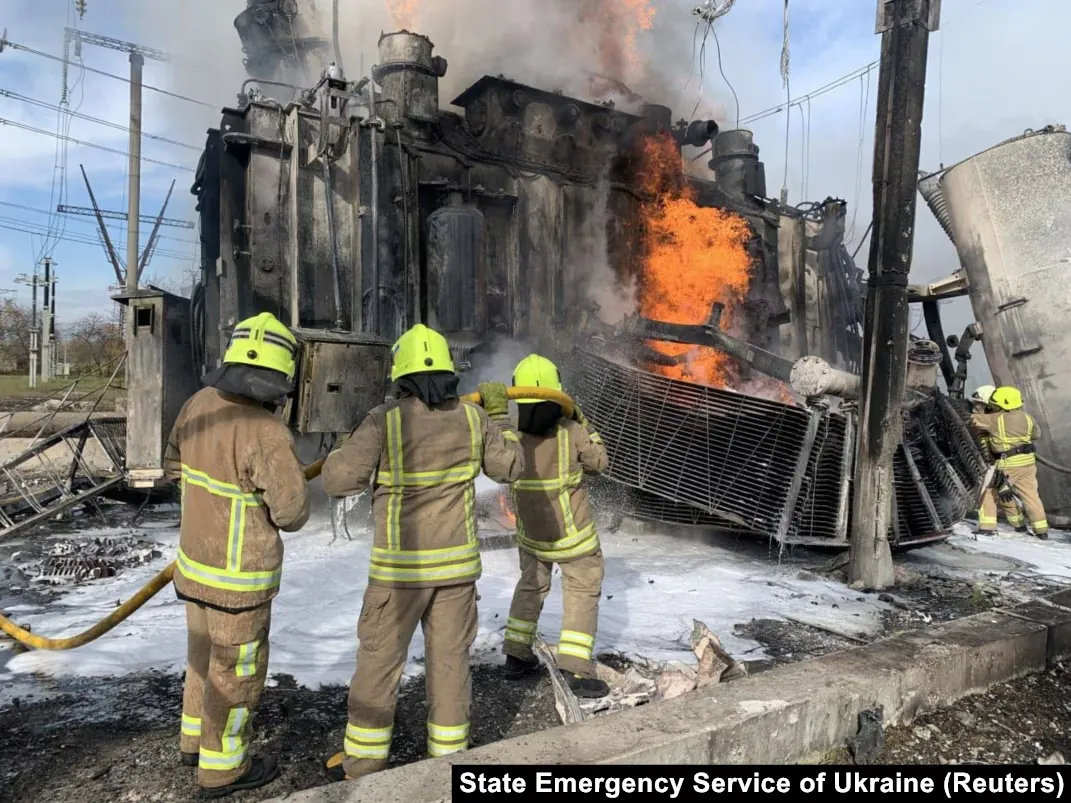
Targeted energy infrastructure strikes are deliberate physical or cyber attacks aimed at power grids, oil refineries, liquid natural gas facilities, and pipelines. These strikes cause immediate, cascading failures across an entire national economy. Modern societies run entirely on electricity and fuel. When a power grid goes offline, critical sectors like banking, healthcare, digital identification systems, and clean water distribution halt instantly. The economic damage extends far beyond the immediate repair costs. Prolonged energy disruptions trigger high consumer inflation, commercial paralysis, and a long-term loss of investor confidence.
Military and political actors target energy sectors specifically to exert intense pressure on an adversary. By choking off fuel and power, attackers aim to disrupt military logistics and stop war production. But this strategy directly hits civilian daily life. The cost of survival goes up, local businesses close, and governments must spend heavily just to keep basic services running.
Background: How We Got Here
Energy grids are fundamentally vulnerable because they are centralized. A country often relies on a few large power plants or key import terminals to supply millions of people. Analysts at the Center for Strategic and International Studies (CSIS) note that the energy sector underpins virtually all other critical infrastructure. If a heating grid or fuel supply fails, everything connected to it fails.
Attacks on these systems come in two forms. Physical, or kinetic, strikes use drones and missiles to destroy physical machinery like step-up transformers and substations. Cyber warfare uses advanced malware and ransomware to compromise Operational Technology (OT) and IT systems. During a major ransomware attack on the Colonial Pipeline, operators had to manually shut down the physical pipeline to stop the computer virus from spreading. This single digital breach choked off roughly half of the fuel supply to the U.S. East Coast for several days.
Physical destruction takes much longer to fix. In Eastern Europe, a prolonged military campaign systematically targeted local step-up transformers and city heating grids. This forced constant electricity deficits across the country. Replacing custom-built, heavy grid machinery takes years, not weeks. The targeted nation then takes on heavy, long-term financial burdens just to fund continuous grid repairs and import emergency generators.
Key Players and Stakeholders
The immediate victims of an energy strike are the utility and production companies. When a facility is bombed, the company cannot physically operate. They then invoke a legal clause known as force majeure. This legal shield allows them to escape their contract liabilities without penalty because an act of war prevented them from delivering their product. In recent conflicts across the Gulf Cooperation Council (GCC) region, dozens of national and international firms declared force majeure after strikes damaged local sites.
For example, coordinated drone strikes on high-value Middle Eastern energy assets severely damaged liquid natural gas facilities. This reduced local export capacity heavily. Experts estimate it will take several years just to rebuild the destroyed terminals. When these companies stop exporting, global shipping companies have less freight to move, and foreign factories have less fuel to run their machines.
Governments act as the secondary stakeholders. They must instantly step in to manage the fallout. Authorities usually enact emergency resource rationing. Following strikes on fuel storage depots in major metropolitan areas, governments often slash civilian fuel distribution quotas. They also implement emergency transportation measures, like waiving public transit fees, to keep urban centers from shutting down entirely.
What’s at Stake
The economic impact crosses borders immediately. Global commodity shocks happen within hours of a major strike. When disruptions hit major energy hubs, global supply drops and prices spike. This spills directly into core economic indicators globally. High fuel prices increase the cost of manufacturing and the cost of transporting consumer goods. This forces global inflation up and often leads central banks to keep interest rates high to cool the economy down.
On the ground, the human cost is severe. Energy grids are dual-use. They power military bases, but they also heat civilian homes and run hospital ventilators. Destroying these systems during freezing winters causes direct public health crises, destroys local sanitation networks, and displaces vulnerable populations over the long term. Legal scholars frequently debate the legality of these strikes under international humanitarian law because the civilian suffering heavily outweighs the military advantage.
To insulate themselves from these centralized vulnerabilities, many nations now accelerate their transition to decentralized renewable energy. Researchers at the Institute for Energy Economics and Financial Analysis (IEEFA) track how Asian markets shifted policy following recent global conflicts. Countries like Pakistan, the Philippines, and South Korea rapidly pivoted away from expensive, centralized liquid natural gas infrastructure. By importing millions of solar panels, governments build a decentralized power grid. It is much harder for a military strike to take out thousands of individual rooftop solar panels than it is to bomb a single large gas refinery.
Frequently Asked Questions
Why do countries target energy infrastructure during conflicts?
Militaries target energy sectors to cripple an adversary’s economy. The direct goal is to disrupt military logistics, halt weapons production, and exert intense pressure on political leaders by making daily civilian life difficult and costly to maintain. Without power, a nation struggles to sustain a prolonged conflict.
How do cyberattacks physically affect the energy sector?
Advanced persistent threats target Operational Technology (OT) and IT systems. When critical software is compromised by ransomware, operators are often forced to physically shut down pipelines or grids to contain the virus. This stops the physical flow of oil, gas, or electricity even if no physical machinery was actually destroyed.
Can an economy recover quickly from an energy infrastructure strike?
Generally, no. Heavy infrastructure, like custom-built step-up transformers or massive liquid natural gas terminals, cannot be easily replaced off a shelf. Rebuilding and replacing this capacity often takes several years, forcing the affected economy to rely on expensive imports and emergency generators in the meantime.
Do energy strikes lead to global inflation?
Yes. Disruptions in major energy hubs create global supply shortages, which spike the price of oil and gas. This increases the cost of manufacturing and transporting almost all physical goods. Those extra costs are passed down to regular consumers at the grocery store, which drives up inflation and interest rates worldwide.