
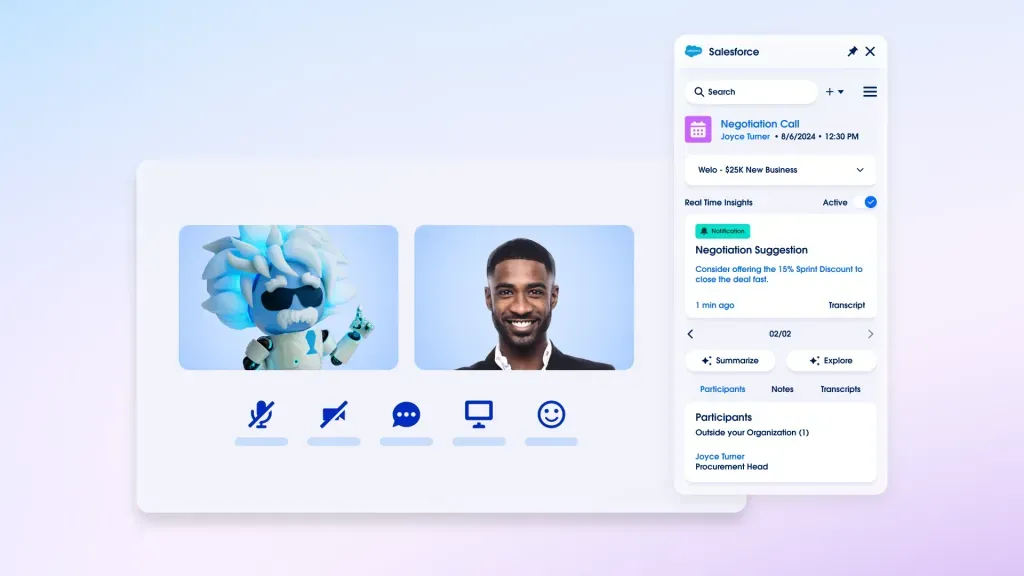
How do autonomous AI support agents qualify sales leads? They act as always-on data detectives. Instead of waiting for a human to manually review form submissions, these software programs use natural language processing and machine learning to evaluate a prospect’s behavior instantly. The agent enriches the buyer’s profile with background data, assigns a priority score based on actual buying intent, and automatically routes the hot lead to the right human salesperson.
And it happens in milliseconds. A buyer clicks a pricing tier at midnight, and by 12:01 AM, the agent updates the central database and sends a personalized follow-up.
The speed is radically altering the math for business-to-business pipelines. A May 2026 survey published by Gartner indicates that sales organizations providing sellers with AI-enabled recommendations routinely more than double their chances of achieving commercial growth. A 2025 Allego Revenue Enablement Report featured in Forbes found that roughly half of revenue teams credit these generative tools with shortening their sales cycles. In enterprise pilot programs, leads flagged by these automated systems consistently close much faster and yield noticeably higher contract values than those sorted by hand.
The Science Behind the Software
To understand how these agents work, you have to look under the hood. For a long time, chatbots were basically interactive phone menus. You clicked a button, and it gave you a pre-written response. Today’s autonomous agents operate differently. They run on large language models. These are the same neural networks that power advanced conversational AI. They read thousands of words of text and summarize the core intent behind them.
When a prospect sends a messy, rambling email asking about a dozen different features, the agent uses natural language processing to dissect the text. It identifies the specific products the buyer cares about, flags any mentioned budget constraints, and detects the urgency in their tone. Predictive analytics form the second half of the brain. The system does not just react to what the buyer says. It constantly runs statistical models in the background. It predicts what the buyer will do next.
The data intake process relies heavily on Application Programming Interfaces, commonly called APIs. An API is essentially a digital bridge that lets two different pieces of software talk to each other. The autonomous agent uses APIs to plug directly into a company’s website analytics, email servers, and calendar systems.
When a potential buyer interacts with a company online, they leave a digital footprint. The agent sweeps up this footprint. It grabs the IP address from the website visit and cross-references it with a commercial database. It figures out exactly which company the visitor works for, even if they never filled out a contact form. This is called intent data. Intent data tells the sales team that an account is actively researching a solution right now. Catching a buyer in this exact research phase is the hardest part of sales. Autonomous agents solve this timing problem entirely.
We see major enterprise adoption happening right now. At its Conversations conference in London this month, Meta unveiled its Business Agent. This system qualifies leads and processes transactions directly through WhatsApp. It pushes the artificial intelligence directly into the chat interface that billions of people already use. Meanwhile, Salesforce recently partnered with Siemens to deploy Agentforce. They built an autonomous system that starts conversations and evaluates early-stage industrial buyers. Instead of waiting for a factory manager to ask a question, the AI actively reaches out, asks qualifying questions, and constraints the conversation to relevant technical topics.
Step-by-Step: How AI Agents Process a Lead
Most businesses connect their software directly to an orchestration platform. Tools like Make or n8n act as the digital wiring. They tie the AI to the company’s existing systems. Here is exactly how a lead moves through the automated pipeline.
-
Multi-Channel Signal Capture
These agents watch for intent signals across multiple platforms simultaneously. They track exactly how long a visitor lingers on a specific pricing page. They log when a prospect attends a webinar, opens an email, or interacts with a social media post.
It is a level of continuous account monitoring that no human team could realistically maintain. The agent actively surveils the entire account base at all times. Buying signals do not follow standard business hours. The AI never sleeps.
-
Automated Data Enrichment
Nobody likes filling out long web forms. An autonomous agent only needs a basic email address to start building a profile. From there, it searches external databases to pull in the company’s revenue, recent funding rounds, the software stack they currently use, and the prospect’s exact job title.
This happens instantly. By the time a human representative even looks at the file, the CRM record is completely fleshed out with accurate firmographic and technographic data.
-
Real-Time Lead Scoring
This is where the machine learning kicks in. The agent compares the new prospect’s profile against historical data. It looks for patterns. If previous buyers who downloaded a specific guide and visited the site three times converted at a high rate, the agent recognizes the pattern and assigns a high priority score.
The scoring process updates constantly. If a prospect stops opening emails for a week, their score drops automatically. The human sales team never wastes time chasing a cold lead because the AI filters them out before they even reach the rep’s desk.
-
Intelligent Routing
Once a lead hits a specific quality threshold, the agent acts like an ultra-efficient dispatcher. It checks the calendars and current workloads of human sales representatives. It matches the prospect’s industry to a rep with relevant expertise and books a meeting right on their calendar.
Routing logic can get incredibly specific. A company might configure the agent to send all leads from the healthcare sector with a budget over fifty thousand dollars straight to their senior enterprise seller. Meanwhile, smaller inbound queries get routed to junior representatives. The agent checks the company’s internal chat channels to see who is currently online and available to take a call. If a seller is on vacation, the agent bypasses them entirely and finds the next available person.
-
Bidirectional CRM Sync
An agent is useless if it creates disconnected data silos. Production-grade tools write every interaction, score update, and new piece of data directly back to the company’s central database in real time. The human sales team wakes up, opens their dashboard, and sees a prioritized list of fully vetted prospects.
Common Issues and Fixes
Dirty CRM Data
The single most common failure point for any AI sales deployment is poor data hygiene. Artificial intelligence is incredibly fast, but it is not inherently wise. If you feed it garbage, it processes that garbage at lightning speed.
A database filled with duplicate records, outdated email addresses, and conflicting contact information completely breaks the agent’s logic. The agent might score the same person twice or route a high-value lead to an inactive account.
The fix here is foundational. Before deploying an autonomous agent, companies must run deduplication tools and verify their existing contact lists. Clean data is a strict prerequisite, not an optional upgrade.
The Explainability Trust Gap
Human sales representatives are naturally skeptical of automated systems handing them tasks. If an agent simply assigns a lead a score of 87 without any context, a busy rep will often ignore it.
This is known as the explainability problem. Sellers need to see the math. If they cannot understand why the system made a decision, they do not trust the recommendation.
Modern platforms solve this by requiring explainable scoring. The agent must attach a plain-text note to the record. It writes out exactly why the score is high. It notes that the prospect fits the ideal customer profile, downloaded a specific guide, and visited the site three times in a week.
Over-Automation and Robotic Tone
Sometimes, an AI agent tries to do too much. Letting an autonomous system handle the entire outreach sequence often results in robotic, tone-deaf emails. If an agent misreads a prospect’s objection and fires back a generic pricing sheet, the deal falls apart.
The safest fix is implementing a human-in-the-loop protocol. The AI handles the heavy lifting of signal detection and data enrichment. It uses its language model to write a single personalized opening sentence based on the prospect’s recent activity. A human-tested template handles the rest of the message. A human rep reviews the drafted message and handles the actual conversation from there. High-value enterprise deals always require a governed escalation path that hands control back to a person.
Alternative Methods or Tools
Traditional Point-Based Scoring
Before machine learning took over, marketing teams relied on static, rule-based systems. A marketer manually assigned point values to specific actions. Downloading a whitepaper might equal ten points. Visiting the contact page was worth twenty points.
Once a prospect hit fifty points, the system flagged them as a qualified lead. It was a rigid system. It could not understand context or intent. A college student researching a term paper would rack up the same points as a corporate buyer.
Many smaller businesses still use this method because it is inexpensive and built into basic email marketing software. But it requires constant manual tweaking and misses the nuanced behavioral patterns that machine learning catches instantly.
Assistive AI Co-Pilots
Not every team wants a fully autonomous system talking to their customers. Assistive AI offers a middle ground. Instead of sending emails on its own, an assistive agent acts like an invisible researcher sitting next to the salesperson.
During a live phone call, the assistive AI listens to the conversation in real time. It automatically generates call notes, updates the data fields, and pulls up relevant product specs on the seller’s screen.
It can even detect sentiment in the buyer’s voice and suggest specific talking points to handle objections. This setup keeps the human completely in control of the relationship while stripping away the administrative busywork.