
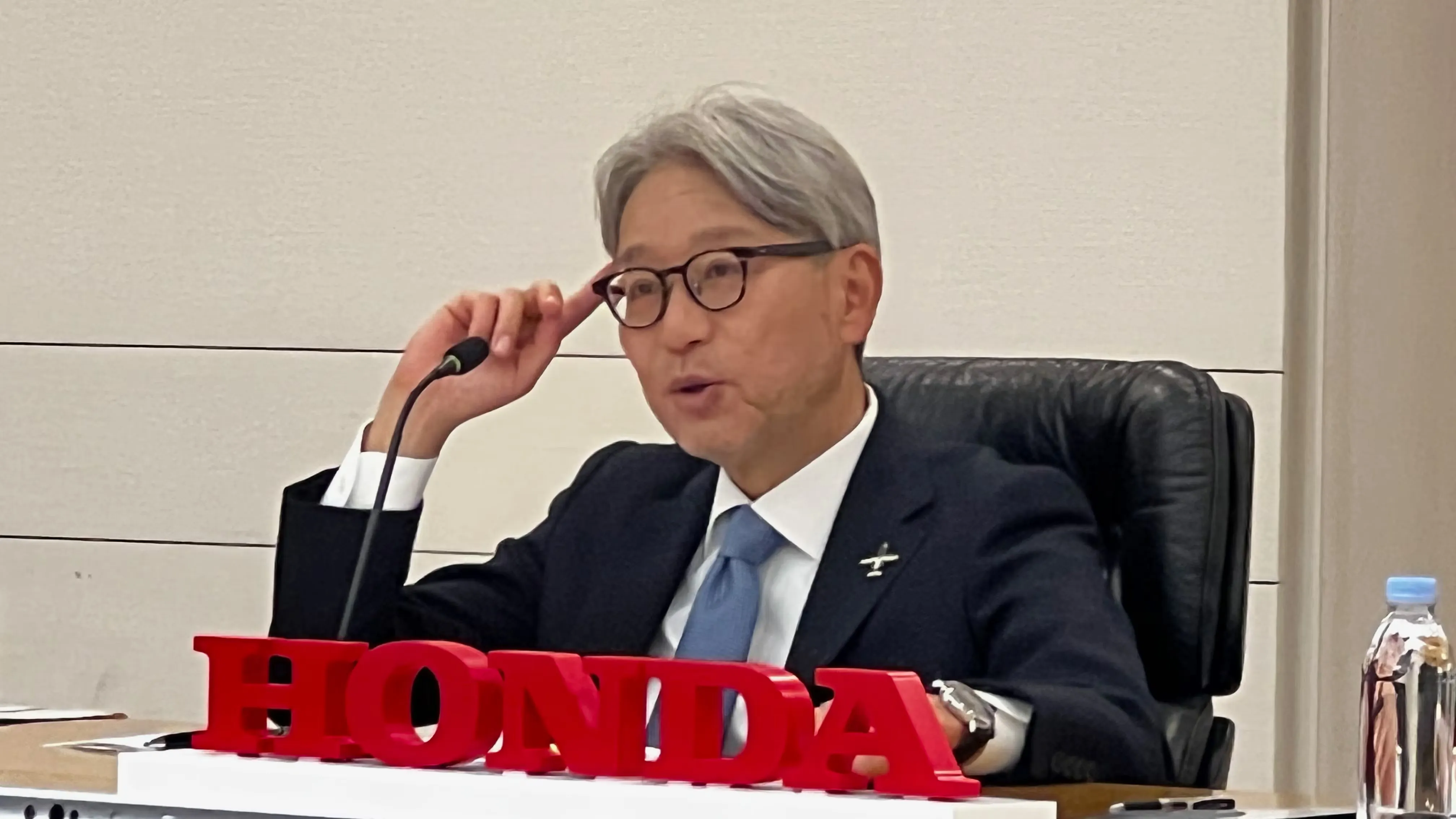
Honda Global CEO Toshihiro Mibe unveiled two new prototypes Thursday: a Honda Hybrid Sedan and an Acura Hybrid SUV. The vehicles preview the next-generation Accord and Acura RDX. The pivot back to hybrid powertrains follows a slump in global EV adoption, rising economic pressures, and the threat of U.S. import tariffs on automotive components.
The prototypes are scheduled to reach the North American market within two years. To fund the restructuring, the automaker absorbed a $9.9 billion EV write-down, canceled three previously planned pure electric models, and is aiming to roll out 15 next-generation hybrid models globally by the end of 2029, according to a report by CarScoops.
The upcoming vehicles will operate on a redesigned hybrid platform arriving in 2027. The updated architecture targets a 30 percent reduction in system costs and a 10 percent improvement in fuel economy.
The production shift alters operations for Honda’s joint venture partner, LG Energy Solution. The companies are converting portions of the EV battery production lines at their L-H Battery Company facility to manufacture hybrid batteries. Honda reallocated excess capacity at its Ohio auto plants back to gasoline and hybrid vehicle production.
How Import Tariffs Forced Honda’s Supply Chain Relocation
To mitigate the impact of U.S. tariffs and international supply chain vulnerabilities, Honda implemented a policy to increase the local North American content of hybrid assemblies, motors, and inverters by more than four times its current level.
The decision walks back the company’s prior pure-EV transition timeline. By localizing the hybrid supply chain at the Ohio facilities, Honda limits its exposure to overseas trade disputes while securing immediate component production for the Accord and RDX lines.