
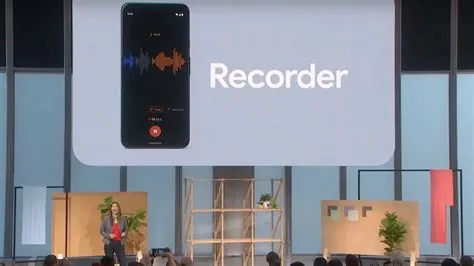
Paying $100 a year for meeting transcriptions feels completely obsolete right now. Pixel users are dropping premium services like Otter.ai in favor of a free, pre-installed tool that simply works better: Google Recorder. This migration accelerates as cloud-based meeting bots face serious enterprise scrutiny, highlighted by the August 2025 Brewer v. Otter.ai federal class-action lawsuit over unconsented recordings.
Google Recorder bypasses those cloud privacy concerns entirely. By utilizing the device’s local Neural Processing Unit (NPU), the app processes audio locally on the phone. Users are rapidly canceling Otter.ai subscriptions for Google Recorder precisely because this local NPU processing guarantees strict data privacy alongside a zero-friction interface.
How Gemini Nano Rebuilt the Recorder
The app originally launched in October 2019 as a highly restricted exclusive for the Pixel 4, running entirely on Google’s early Tensor Processing Unit. The 2024 version 4.2 update completely rebuilt the software. It brought a Material 3 UI redesign and integrated Google’s Gemini Nano on-device AI model. This allows the app to generate intelligent summaries of hour-long meetings without ever connecting to the internet.
Recent updates gave the app aggressive AI audio editing capabilities. The software automatically detects and deletes filler words like “ums” and “ahhs” from the final file. It instantly crops out irrelevant sections of dead air. Real-time, multilingual transcription is baked right in, and files sync effortlessly via recorder.google.com.
Competitors are struggling to keep pace with these hardware-level features. Aside from its ongoing legal battles, Otter.ai is constrained by restricted language support, currently capping out at just four languages.
The NotebookLM Hack
Google Recorder does lack one major feature: you cannot upload pre-existing audio files directly into the app for transcription. Users found a clever workaround to fix this gap. You export the raw audio as an .m4a file and the transcript as a .txt file. Users are taking those exported text files and feeding them straight into Google’s NotebookLM. This connects the offline transcription directly with a deep-dive text processing engine to organize complex notes perfectly.
Why Local NPU Processing Defeats Cloud Bots
The enterprise shift away from third-party meeting bots is entirely about data ownership. Cloud-dependent apps train their underlying algorithms on user audio. Google Recorder’s strategy of running transcription on the local NPU completely eliminates that security risk. When the transcription happens directly on the silicon inside your pocket, corporate data never touches an external server. This hardware-level privacy makes the expensive premium subscription models fundamentally unnecessary for Android owners.