
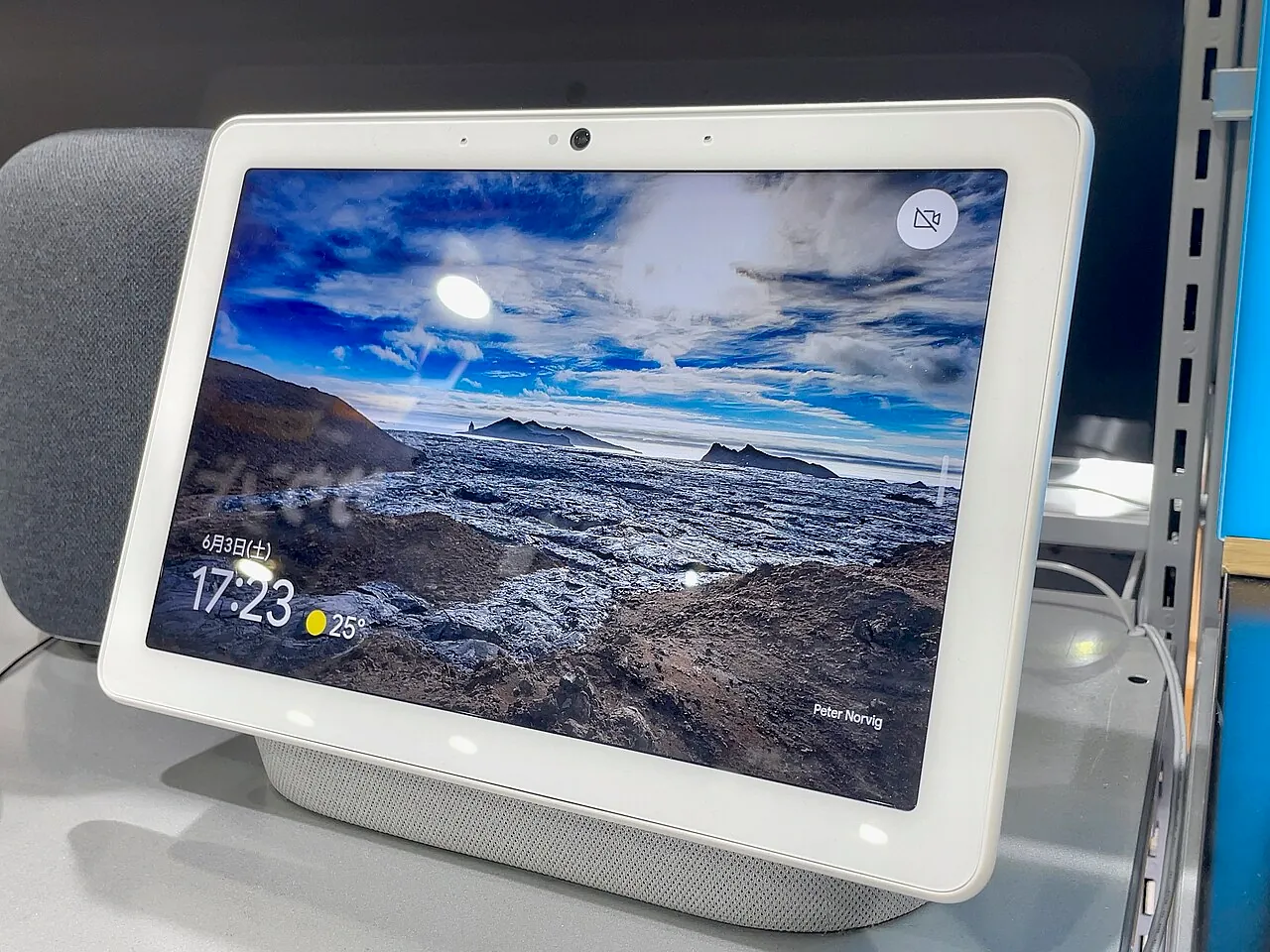
Smart home owners upgrading their Google Nest speakers and displays from Google Assistant to Gemini face a permanent, one-way switch that has left some users dealing with broken routines, misrouted light commands, and execution delays past 8 seconds. In a hands-on XDA Developers report published Saturday, November 14, a smart home user detailed ripping out cloud-based Google Home voice control entirely in favor of a self-hosted Home Assistant setup to restore fast, offline reliability.
For anyone using Google smart speakers, smart clocks, or Nest Hubs, the biggest catch is that the AI upgrade cannot be undone. According to Google Home support documentation, “Once you switch your home to Gemini for Home voice assistant, it can’t switch back to Google Assistant.” Compatible devices in the household permanently run Gemini instead of the classic rule-based assistant, meaning users hit by voice regressions must either wait for software fixes or move their devices to another platform.
Why Gemini struggles with basic smart home commands
While Google designed its large language model to handle conversational requests, the XDA Developers author reported that everyday tasks like toggling a single bulb, changing a thermostat set point, or firing off custom routines became unreliable after the switch. “It feels like Gemini absolutely degraded Google Home execution, and my day-to-day usage began to suffer when I was issuing commands with precise target parameters,” the XDA Developers writer wrote.
In one example from the report, asking Google to turn on kitchen light number two caused Gemini to turn on every light in the kitchen at once while the speaker reported that the command succeeded. The legacy Google Assistant matched structured voice phrases directly to individual device traits through Google Smart Home API integrations, whereas Gemini parses conversational text in the cloud before picking which smart home tool to trigger.
That extra cloud processing adds latency at every step. A voice command on Google Home must digitize audio, stream it to Google servers, run Gemini model inference, format a tool payload, and send a round-trip request through third-party vendor cloud APIs linked via OAuth. Following the Gemini migration, the XDA Developers author reported frequent routine misfires, phantom success confirmations, repeated “Sorry, I couldn’t reach X device” errors, and waits of more than 8 seconds in the dark before lights turned on. Unlinking and relinking third-party device accounts or rebuilding routines inside the Google Home app did not fix the entity-mapping bugs.
How local Home Assistant voice control replaces the cloud
To cut out cloud servers and internet dependency, the XDA Developers writer migrated to Home Assistant, an open-source automation platform that tracks device states on local hardware inside the home. Unlike Google Home, where many integrations rely on vendor cloud servers even when Matter and Thread are supported, Home Assistant talks directly to devices over local protocols including Zigbee (a low-power wireless mesh standard), Z-Wave, Matter, Thread, and local Wi-Fi APIs such as ESPHome.
Moving a household off Google Home takes four steps and requires replacing incompatible cloud-only hardware:
- Install Home Assistant OS directly on bare-metal hardware, such as an Intel N100 mini PC or a dedicated Home Assistant Green box, to avoid virtualization overhead and give the system direct USB access to wireless radio dongles.
- Plug in dedicated Zigbee and Thread USB coordinators to build an offline mesh network, unlink proprietary cloud bridges, and re-pair compatible switches, sensors, and bulbs directly to Home Assistant.
- Rebuild basic Google Home routines as Home Assistant YAML or visual UI automations that use multi-condition triggers, device state checks, numerical thresholds, and local backups.
- Swap out Google Nest speakers for local voice satellites, such as an ESP32-S3 microcontroller box running ESPHome Voice Assistant firmware or Nabu Casa’s $69 (59 EUR) Home Assistant Voice Preview Edition, which packs dual microphones, an XMOS audio chip, and a physical mute switch. DIY voice satellites built on ESP32 microcontrollers start at $13.
Home Assistant processes voice commands locally through its Assist pipeline, handling wake word detection, speech-to-text, intent parsing, and text-to-speech on home hardware. “Assist’s built-in intent matching is deterministic, meaning it only understands sentence patterns it has templates for,” the XDA Developers writer noted, adding that giving up Gemini’s looser phrasing was a worthwhile trade-off for fast, predictable local control.
A one-way upgrade across Google Home devices
Google kicked off the transition on October 1, 2025, when Google Home and Nest Chief Product Officer Anish Kattukaran announced the AI overhaul alongside Google Home Premium subscriptions starting at $10 a month. “Gemini for Home is a new, foundational intelligence that transforms your relationship with your home,” Kattukaran wrote on the Google Blog. On June 25, 2026, Google published a guide promoting natural-language lighting commands such as asking the assistant to “turn on all the lights, except for the bedrooms.”
User reports across Google’s support forums and Reddit throughout 2026 paint a divided picture of the rollout. While some households on Reddit’s Google Home community reported that Gemini controlled more than 40 connected devices without issues, others complained in January, April, and November 2026 about broken routine announcements, lost multilingual support, and smart clocks failing to set alarms by voice. In a January 29, 2026 Google Gemini Apps Community thread, Gold Product Expert Penelope R. noted that while classic Google Assistant handled rigid voice commands reliably, Gemini favors natural phrasing and can overcomplicate simple requests. Google’s own support pages also note that certain legacy Google Home routine starters and actions do not work when triggered through Gemini.
Home Assistant launched its Assist voice platform in January 2023 and released the Voice Preview Edition hardware in December 2024, giving users a ready-made local alternative as Google phases out classic Google Assistant across phones and home devices through the rest of 2026.