
Software development is shifting away from single-window text editors. A new benchmark shows that combining Anthropic’s Claude Code with Google Antigravity for a development project cut the total build time in half compared to a traditional Microsoft VS Code workflow.
The test, which involved building a complete resume builder microsite, revealed that single-agent coding assistants frequently get bogged down working sequentially. By running two distinct AI agents in parallel—one managing the architecture and the other executing the code—developers can mimic a human engineering team and practically eliminate idle waiting time.
What We Know
- Google Antigravity handled the architectural planning, database schema generation, and code review for the microsite.
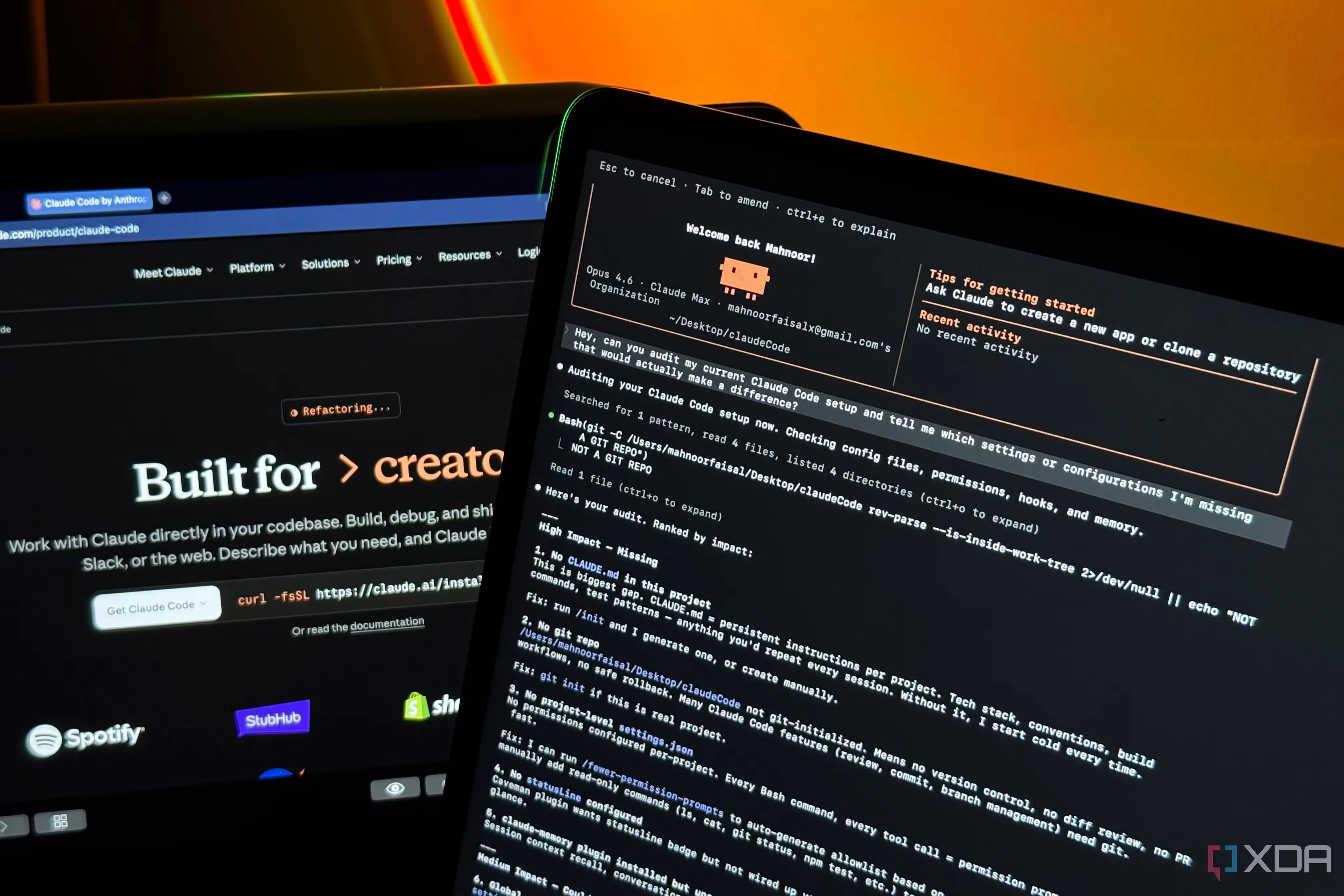
- Claude Code took control of the repository, directly writing the code, running tests, and managing local files.
- The split-responsibility approach completed the project twice as fast as a developer working manually with a single-agent VS Code setup.
- Microsoft is currently working to counter this workflow shift by integrating deeper Copilot-based agent features directly into its IDE.
The hands-on benchmark, detailed today according to a review by XDA Developers, highlights a growing frustration with standard coding assistants. When a single AI agent is asked to build both a backend database and a frontend user interface, it has to complete one before starting the other. The dual-agent strategy bypasses this speed limit entirely.
During the microsite build, the author assigned Google Antigravity to act as the lead architect. It planned the structure and reviewed the outputs. Meanwhile, Claude Code acted as the hands-on programmer. It interacted directly with the local repository to write and test the actual files. This division of labor meant the frontend and backend could be developed at the exact same time.
The review noted that Microsoft’s VS Code is currently lagging behind this native, multi-agent approach. Traditional IDEs still rely heavily on developers manually jumping between tabs to guide a single assistant. Microsoft is aware of the gap and is actively pushing Copilot updates to try and keep developers inside their ecosystem rather than relying on independent command-line tools.
How Multi-Agent Workflows Threaten Microsoft’s IDE Dominance
The success of this Anthropic and Google pairing points to a fundamental change in how software gets written. For years, the Integrated Development Environment (IDE) was the absolute center of a programmer’s universe. If developers find it faster to deploy independent agents directly from the command line, the IDE becomes less of a workspace and more of a simple text viewer.
By splitting tasks between specialized agents, developers are effectively building custom engineering teams on their local machines. If Google and Anthropic continue to optimize their tools for this kind of cross-collaboration, Microsoft will need to prove that keeping everything contained within a single VS Code window still offers a speed advantage. Right now, the parallel agents are winning the race.