
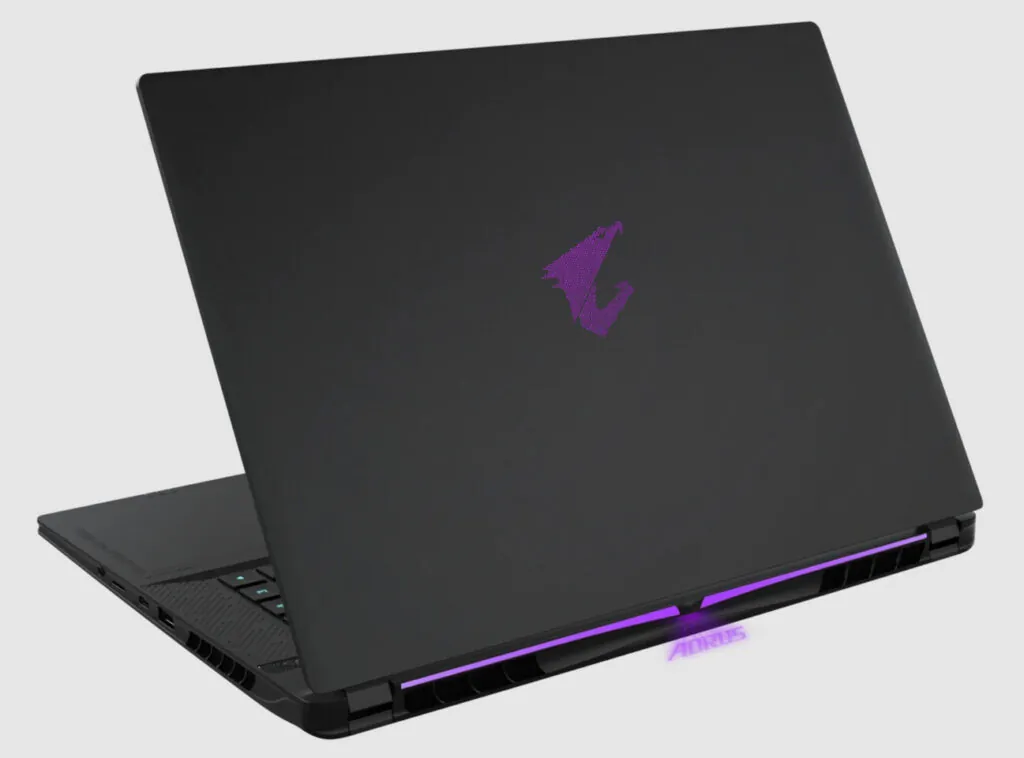
The Gigabyte Aorus Master 16 Gen 2 pairs an AMD Ryzen 9 9955HX3D processor with Nvidia’s RTX 50-series graphics. But the silicon isn’t the real story. The glossy HDR True Black 1000 OLED display takes center stage. It hits a peak SDR brightness of 556.9 nits. It also covers 100% of the sRGB and P3 color gamuts, alongside 93% of AdobeRGB.
The visual output is exceptional. In a recent hands-on hardware test by XDA Developers, the laptop pushed an average of 100 FPS in Cyberpunk 2077 at native resolution with Ray Tracing set to Low. Forza Horizon 6 on the Extreme preset hovered around 94 FPS.
But all that visual fidelity demands a severe acoustic toll. Keeping the Ryzen chip under 96°C requires the cooling fans to spin up to a painful 84 dB at the keyboard. Step back a meter, and it still reads 62 dB. And if you unplug the machine? Expect just over two hours of battery life at 200 nits brightness.
How the Aorus Master 16 Battles the Panther Lake Heavyweights
Laptop makers are taking wildly different approaches to the RTX 50-series era. Gigabyte opted for a traditional clamshell relying on AMD’s cache-heavy X3D chips. Competitors are moving in a completely different direction.
The Asus ROG Zephyrus Duo GX651 utilizes Intel’s Panther Lake (Core Ultra 9 386H) architecture and dual OLED screens. But it pushes the price to around €6,700 while adding significant physical bulk. Lenovo’s 18-inch Legion 9i Gen 10 also leans heavily on Intel processing. The Aorus positions itself as a slimmer, traditional alternative. It strictly prioritizes raw visual output over dual-screen gimmicks.